
Last Updated: February 2026
Sweden is the most accessible of the Scandinavian countries — and increasingly, the most affordable. With 64.1 million overnight stays in 2024 (surpassing pre-pandemic peaks), Sweden is hitting its stride as a year-round destination. The country stretches 1,500 kilometers from the bridge-connected southern coast to the Arctic wilderness of Lapland, where the ICEHOTEL rebuilds itself from frozen river ice every winter. Stockholm’s Old Town, Gothenburg’s food scene, the midnight sun, the northern lights, and right-to-roam camping — it all runs on the Swedish krona, not the euro. Sweden is an EU member and full Schengen participant where the standard 90-day visa-free rules apply. Here’s everything you need to know for 2026.
🇸🇪 Sweden at a Glance
| Capital | Stockholm |
| Population | ~10.68 million (2026) |
| Currency | Swedish Krona (SEK) — not the euro |
| Language | Swedish · Sami in northern regions |
| Time Zone | CET (UTC+1) · CEST in summer (UTC+2) |
| Plug Type | Type C and F · 230V / 50Hz |
| Driving Side | Right |
| International Driving Permit (IDP) | Recommended — see IDP guide |
| Schengen Member | Yes — EU member since 1995, Schengen since 2001 |
| Emergency Number | 112 (EU-wide) |
Entry Requirements for Sweden
Sweden is a member of the European Union (since 1995) and a full Schengen member (since 2001). Despite EU membership, Sweden uses its own currency — the Swedish krona — having never adopted the euro. Entry requirements follow standard Schengen rules.
Visa-Exempt Visitors (US, UK, Canada, Australia, and Others)
Citizens of 59 visa-exempt countries — including the United States, United Kingdom, Canada, Australia, New Zealand, Japan, and most Latin American nations — can enter Sweden without a visa for short stays of up to 90 days within any 180-day period. This is the standard Schengen 90/180-day rule, and it applies across all 29 Schengen countries combined, not just Sweden.
To enter as a visa-exempt visitor, your passport must meet two requirements. It must have been issued within the last 10 years at the time of entry, and it must remain valid for at least three months after your planned departure date from the Schengen area.
At the border, Swedish officials may ask for proof of accommodation, proof of sufficient funds, and evidence of onward or return travel. These documents aren’t always requested, but having them available avoids potential complications.
Visitors Who Need a Visa
If your country is not on the visa-exempt list, you’ll need to apply for a Schengen short-stay visa (Type C) through the Swedish embassy or consulate in your home country before traveling. This visa allows stays of up to 90 days within a 180-day period and typically costs €80 for adults.
For longer stays — work, study, or family reunification — you’ll need a Swedish residence permit, applied for separately. Use our Europe Travel Planner to find out exactly what your nationality requires.
What’s Changing at Swedish Borders in 2026
Two major systems are transforming how non-EU visitors enter Sweden and the rest of the Schengen area. Both are rolling out in 2026, and travelers need to be aware of the timeline.
Entry/Exit System (EES)
The Entry/Exit System began its phased rollout on October 12, 2025, and is expected to be fully operational at all Schengen border crossings by April 10, 2026. EES replaces the old passport-stamping process with a digital system that records biometric data — fingerprints and facial images — along with your passport details and entry/exit dates.
The first time you enter the Schengen area under EES, border officials will collect your fingerprints and take a facial photograph. Once registered, the data stays valid for three years, and subsequent entries only require identity verification rather than a full re-registration.
For Sweden, EES is most relevant at international airports — primarily Stockholm Arlanda (ARN), Gothenburg Landvetter (GOT), and Malmö Sturup (MMX). If you’re arriving from another Schengen country like Denmark, Norway, or Finland, there are no routine border checks.
ETIAS — Europe’s New Travel Authorization
The European Travel Information and Authorization System (ETIAS) is expected to launch in late 2026, likely in October or November. Once operational, all visa-exempt travelers — including Americans, Britons, Canadians, and Australians — will need to apply for ETIAS authorization before boarding a flight or ferry to Sweden or any other Schengen country.
The ETIAS application is completed online and takes roughly 10 minutes. The fee is €20 for travelers aged 18 to 70 (free for those younger or older). Once approved, ETIAS is valid for three years or until your passport expires, whichever comes first. It covers all 29 Schengen countries.
Getting to Sweden
Sweden’s central Scandinavian position and the Öresund Bridge connection to Denmark make it easily accessible from multiple directions.
By Air
Stockholm Arlanda (ARN) is Sweden’s main international gateway, with direct flights from most major European cities and long-haul routes to the US, Asia, and the Middle East. SAS, Norwegian, and budget carriers connect Arlanda to dozens of destinations. Gothenburg Landvetter (GOT) has growing European connections. Malmö is conveniently close to Copenhagen Airport (CPH) — connected by a 20-minute train across the Öresund Bridge — giving access to Copenhagen’s much larger international network. The Arlanda Express train reaches Stockholm Central Station in 20 minutes (280 SEK one-way).
By Train
Sweden has strong rail connections to its neighbors. The Öresund Bridge connects Malmö to Copenhagen (35 minutes by train, frequent departures). SJ operates permanent service between Oslo and Stockholm (~5 hours). The Vy service connects Oslo, Gothenburg, and Malmö. The new EuroNight overnight train from Basel to Copenhagen/Malmö launches in spring 2026. From Hamburg, the SJ EuroNight sleeper runs to Stockholm (overnight, from €45 in a couchette). Snälltåget runs seasonal services to Berlin.
By Ferry
Ferries connect Sweden to Finland, Estonia, Latvia, Lithuania, Germany, Denmark, and Poland. Major routes include Stockholm–Helsinki and Stockholm–Turku (Viking Line, Tallink Silja, ~11–15 hours with cabins), Gothenburg–Frederikshavn (Stena Line, ~3 hours), Trelleborg–Rostock and Trelleborg–Sassnitz (TT-Line, Stena Line), and Nynäshamn–Gdańsk (Polferries). The Stockholm–Finland ferries are famous as floating party ships with tax-free shopping.
By Car
The Öresund Bridge (toll ~500 SEK/€47 per car) connects Copenhagen to Malmö. The Svinesund Bridge connects Norway to Sweden’s west coast (small toll). Sweden shares a Schengen-internal land border with Norway and Finland — no routine passport checks, though always carry your passport.
Getting Around Sweden
Sweden has an excellent rail network connecting all major cities, supplemented by buses, domestic flights, and ferries. The train system, in particular, is modern, comfortable, and — when booked early — surprisingly good value.
Trains
SJ (formerly Swedish State Railways) is the primary operator, running high-speed X2000 trains between Stockholm, Gothenburg, Malmö, and international routes to Oslo and Copenhagen. MTRX competes on the Stockholm–Gothenburg route with modern, affordable trains. Snälltåget offers an alternative on Stockholm–Malmö and seasonal services. SJ also operates night trains — Stockholm to Kiruna/Narvik (Arctic), and Gothenburg/Malmö to northern Sweden — with seats, couchettes, and private sleeper cabins.
SJ uses airline-style dynamic pricing: book early for the best fares. Advance tickets on Stockholm–Gothenburg can start as low as 195–345 SEK (~€18–32), while last-minute fares may exceed 800 SEK. The scenic Inlandsbanan railway runs through Sweden’s wilderness interior from Mora to Gällivare (summer only), offering a unique Arctic experience. Book through sj.se or omio.com.
| Service | Best For | Cost Range | Notes |
|---|---|---|---|
| X2000 High-Speed (SJ) | Stockholm–Gothenburg, Malmö | 195–900 SEK | Stockholm–Gothenburg ~3h · Stockholm–Malmö ~4h 30min · Bistro car, Wi-Fi, power outlets |
| MTRX | Stockholm–Gothenburg (budget) | 149–500 SEK | ~3h 15min · Modern trains · Café · Competes with SJ on price |
| SJ Night Train | Arctic Sweden, Lapland | 295–1,500 SEK | Stockholm–Kiruna ~17h · Seats, couchettes, private sleeper cabins · Gateway to ICEHOTEL and northern lights |
| Snälltåget | Stockholm–Malmö, seasonal Berlin | 199–600 SEK | Competitor on southern routes · Seasonal sleeper to Berlin · Ski trains in winter |
| FlixBus / Vy Bus | Budget intercity travel | 99–400 SEK | Supplements rail network · Stockholm–Gothenburg ~6h 30min · Wi-Fi |
| Domestic Flight | Long distances to north | 400–2,000 SEK | SAS, Norwegian · Stockholm–Kiruna ~1h 30min · Essential for Lapland unless taking night train |
Local Transit
Stockholm’s SL network (metro, buses, commuter trains, ferries) is excellent. The T-bana metro is famous for its art-adorned stations — 90 of the 100 stations feature installations, earning it the title of “world’s longest art gallery.” An SL single ticket costs about 42 SEK (75-minute validity). Day and multi-day passes offer better value. Gothenburg has an extensive tram network (Västtrafik). Malmö’s Skånetrafiken connects seamlessly to Copenhagen via the Öresund trains.
Driving
Sweden’s roads are well-maintained and largely toll-free, making driving a great option for exploring the countryside, archipelagos, and northern wilderness. Traffic is light outside major cities, and road signs are clear and easy to follow.
Sweden drives on the right. Speed limits are 30 km/h in residential areas, 50 km/h in urban zones, 70–90 km/h on rural roads, and 110–120 km/h on motorways. Sweden has one of the world’s strictest drink-driving limits at 0.02% blood alcohol — effectively zero tolerance. Headlights (dipped beam or daytime running lights) must be on at all times, year-round.
Winter driving: Winter tires are mandatory from December 1 through March 31 when snow or ice is present. Studded tires are allowed October 1–April 15 (but banned on certain streets in Stockholm, Gothenburg, and Uppsala). Rental companies handle tire changes automatically. Watch for moose and reindeer on rural roads, especially at dawn and dusk — Sweden has an estimated 300,000 moose, and collisions are a real hazard.
International Driving Permit: US, Canadian, Australian, and all EU/EEA licenses are valid in Sweden. An IDP is recommended for licenses not in Latin script. You must be at least 18 to drive and 20 to rent a car (with 2 years of license experience). See our International Driving Permit guide for details.
Where to Go in Sweden
Sweden stretches from the cosmopolitan south to the Arctic north, with cities, archipelagos, forests, and frozen wilderness offering dramatically different experiences.
Stockholm
Sweden’s capital is built across 14 islands where Lake Mälaren meets the Baltic Sea. Gamla Stan (the Old Town) has cobblestone lanes, colorful 17th-century buildings, and the Nobel Prize Museum. The Vasa Museum — housing a near-intact 17th-century warship salvaged from Stockholm Harbor — is Sweden’s most visited museum (the new 230 SEK admission includes a Vasa-specific audio tour). Djurgården island packs the ABBA Museum, Skansen open-air museum, and the Gröna Lund amusement park. Södermalm is the hip neighborhood for vintage shopping, coffee, and nightlife. Stockholm’s metro stations double as an underground art gallery — don’t miss the blue line. The Stockholm archipelago stretches 80 kilometers into the Baltic with 30,000 islands, many accessible by public ferry using an SL pass.
Gothenburg
Sweden’s second city is widely considered the country’s food capital. The Feskekörka (Fish Church) fish market, Michelin-starred restaurants, and a thriving street food scene make it a culinary destination. The Haga district’s cobblestone streets are lined with cafés perfect for fika — Sweden’s ritual coffee-and-pastry break. Liseberg amusement park is Scandinavia’s largest. The Gothenburg archipelago’s car-free southern islands (Styrsö, Donsö, Vrångö) are reachable by public ferry and offer a quieter alternative to Stockholm’s islands. Universeum science center and the Gothenburg Museum of Art round out the cultural offerings.
Malmö and the Öresund Region
Sweden’s third-largest city sits just 35 minutes by train from Copenhagen, making the two cities function as a single cross-border region. The Turning Torso — Scandinavia’s tallest building — dominates the skyline. Malmö’s multicultural population has created a diverse food scene, with falafel shops and global cuisine rivaling the traditional Swedish restaurants. Malmö hosted Eurovision 2024 and has reinvented itself from an industrial city to a design and sustainability hub. The medieval town center, Slottsträdgården park, and Ribersborg beach (“Ribban”) give the city a relaxed, human-scale feel.
Swedish Lapland
Above the Arctic Circle, Swedish Lapland offers some of Europe’s most extraordinary experiences. The ICEHOTEL in Jukkasjärvi (near Kiruna) rebuilds entirely from ice harvested from the Torne River each November — you sleep in rooms sculpted by international artists at temperatures around -5°C. The Abisko National Park is one of the world’s best spots for northern lights viewing (September–March), thanks to a microclimate that creates unusually clear skies. Dog sledding, snowmobile safaris, and Sami culture experiences are available throughout winter. In summer, the midnight sun doesn’t set for weeks, and the landscape transforms into a hiking paradise.
Gotland
Sweden’s largest island — a 3-hour ferry ride or 35-minute flight from Stockholm — is a medieval gem in the Baltic Sea. The walled town of Visby is a UNESCO World Heritage Site with 3.5 kilometers of intact medieval walls, ruins of 13 churches, and lanes that feel unchanged since the Hanseatic era. Gotland draws crowds in summer for Medieval Week (early August), excellent beaches, and a growing food-and-wine scene. Fårö, the smaller island off Gotland’s north coast, was filmmaker Ingmar Bergman’s home and features dramatic limestone sea stacks (raukar).
The West Coast and Bohuslän
North of Gothenburg, the Bohuslän coast is a granite archipelago of fishing villages, seafood restaurants, and smooth rock islands perfect for swimming and kayaking. Smögen, Fjällbacka (Camilla Läckberg’s crime novels are set here), and Marstrand are the most popular villages. The region is famous for its shellfish — oysters, langoustines, and shrimp hauled in fresh daily. The Kosterhavet National Park, Sweden’s only marine national park, protects the waters around the Koster Islands. This stretch is best explored by car in summer, hopping between villages and islands connected by small ferries.
Dalarna and Central Sweden
Dalarna is the heartland of traditional Swedish culture — Midsummer celebrations here, with maypole dancing around Lake Siljan, are the most iconic in the country. The Dalarna horse (Dalahäst), painted in bright red with floral motifs, originates from workshops in Nusnäs that you can still visit. In winter, the region transforms into cross-country skiing territory, and the annual Vasaloppet (90 km ski race from Sälen to Mora) is the world’s oldest and largest cross-country ski event.
How Much Does Sweden Cost?
Sweden is expensive by global standards, but it’s consistently the most affordable of the Scandinavian countries — 10–15% cheaper than Oslo and Copenhagen for most tourist expenses. A weak krona (hovering around 10.5–11 SEK per dollar and 11.5 per euro in early 2026) is further improving value. And starting April 2026, Sweden is cutting VAT on food from 12% to 6%, which will directly lower restaurant and grocery prices.
💰 Sweden Daily Budget Ranges (per person)
| Budget | 700–1,000 SEK (~€65–95) | Hostel dorms, supermarket meals, public transport, free museums and hiking |
| Mid-Range | 1,500–2,500 SEK (~€140–235) | 3-star hotel, dagens lunch + one restaurant dinner, trains, paid attractions |
| Comfort | 3,000+ SEK (~€280+) | 4-star hotel, restaurants, guided tours, ICEHOTEL or similar experiences |
Accommodation: Hostel dorms run 200–300 SEK per night. A mid-range hotel double room averages 1,000–1,800 SEK. Prices rise in Stockholm year-round and in Lapland during winter (northern lights season) and summer (midnight sun).
Eating out: The budget traveler’s secret weapon is dagens lunch — weekday lunch specials (typically 11am–2pm) at 100–150 SEK including a main course, salad, bread, and coffee. It’s how locals eat and the best restaurant value in Sweden. A main course at a mid-range restaurant runs 250–350 SEK for dinner. A cappuccino costs about 43 SEK. A beer in a bar is 55–65 SEK (cheaper than Norway). Supermarkets (Lidl, Willys, ICA) are the budget option.
Transport: A single SL ticket in Stockholm costs 42 SEK. Advance-purchase SJ train tickets offer excellent value (Stockholm–Gothenburg from ~195 SEK). The Arlanda Express airport train is 280 SEK one-way.
Power and Connectivity
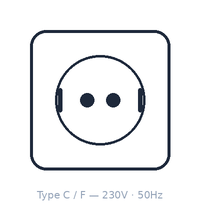
Sweden uses Type C and Type F power sockets — the standard continental European round two-pin plugs. Voltage is 230V at 50Hz. If you’re coming from the US, Canada, or another country that uses different plug types, you’ll need a travel adapter. Most modern phone and laptop chargers are dual-voltage (check the label for “INPUT: 100–240V”) and need only a plug adapter, not a voltage converter.
Sweden has excellent 4G/5G coverage nationwide, including surprisingly good coverage in rural and northern areas along main roads. Free Wi-Fi is common in hotels, cafés, trains, and public spaces. Stockholm’s metro has full connectivity. For heavy data use, consider a local SIM (Telia, Tele2, Tre) or international eSIM.
📱 Need mobile data? An eSIM is the easiest way to stay connected in Europe — no SIM swapping, activate before you land. Compare the best eSIM providers for Europe →
Essential Tips for Visiting Sweden
Fika: Sweden’s coffee-and-pastry ritual is a cultural institution. Fika isn’t just a coffee break — it’s a social tradition that happens at least once (often twice) daily. Kanelbullar (cinnamon buns) are the classic accompaniment. Embrace it; it’s the best way to understand Swedish daily life.
Right to roam (allemansrätten): Like Norway, Sweden’s freedom-to-roam law gives everyone the right to walk, cycle, ski, or camp on any uncultivated land, regardless of who owns it. You can pitch a tent for one or two nights (150 meters from the nearest dwelling) and pick berries, mushrooms, and flowers. Leave no trace.
Alcohol: Alcohol above 3.5% ABV is only sold at Systembolaget, the state liquor monopoly. Stores are typically open Monday–Saturday (closed Sunday) with limited hours. Supermarkets sell only beer and cider under 3.5%. Bars and restaurants serve normally.
Tipping: Not expected. Service is included in prices. Rounding up or leaving 5–10% at restaurants for good service is appreciated but never obligatory.
Tap water: Excellent quality throughout Sweden. Bring a reusable bottle and refill freely.
Language: Virtually everyone speaks fluent English. Sweden consistently ranks among the world’s best non-native English-speaking countries. You’ll have zero communication issues.
Daylight: Like Norway, Sweden’s latitude creates extreme seasonal daylight variation. In Kiruna (Arctic), the sun doesn’t set from late May to mid-July (midnight sun) and doesn’t rise from mid-December to early January (polar night). Even Stockholm gets 18+ hours of daylight in June and only 6 hours in December.
Best time to visit: Summer (June–August) for the longest days, warmest weather, and outdoor activities — this is peak season. Winter (December–March) for northern lights, skiing, ICEHOTEL, and Lapland experiences. September offers autumn colors and fewer crowds. Midsummer (late June) is Sweden’s most celebrated holiday.
Frequently Asked Questions
Do I need a visa to visit Sweden?
Citizens of 59 countries — including the US, UK, Canada, and Australia — can visit Sweden visa-free for up to 90 days within any 180-day period under the Schengen 90/180-day rule. This limit is shared across all 29 Schengen countries. If you’re unsure, use the Europe Travel Planner at schengentraveler.com.
Is Sweden in the EU?
Yes. Sweden has been an EU member since 1995. However, it does not use the euro — the currency is the Swedish krona (SEK). Sweden is also a full Schengen member since 2001.
What currency does Sweden use?
The Swedish krona (SEK). Sweden does not use the euro despite being an EU member. Cards (Visa, Mastercard) are accepted virtually everywhere — Sweden is one of the world’s most cashless societies. Some businesses don’t accept cash at all. Always pay in SEK to avoid dynamic currency conversion.
When is the best time to visit Sweden?
Summer (June–August) for the warmest weather, midnight sun, and longest days — this is peak season. Winter (December–March) for northern lights, ICEHOTEL, and Lapland snow activities. September and May offer fewer crowds and good weather in the south. Midsummer (late June) is the most festive time to visit.
How expensive is Sweden?
Sweden is the most affordable Scandinavian country, about 10–15% cheaper than Norway and Denmark. Budget around 1,500–2,500 SEK per day (~€140–235) for mid-range travel. Use dagens lunch specials (100–150 SEK for a full meal) to save significantly. The food VAT cut in April 2026 (from 12% to 6%) will further reduce restaurant and grocery prices.
How do I get from Copenhagen to Sweden?
Trains cross the Öresund Bridge from Copenhagen to Malmö in about 35 minutes, with departures every 20 minutes. From Malmö, connect to Stockholm (~4h 30min), Gothenburg (~3h), or anywhere in Sweden. You can also drive across the Öresund Bridge (toll ~500 SEK per car).
Can I see the northern lights in Sweden?
Yes. Abisko National Park (near Kiruna) is considered one of the world’s best northern lights viewing spots thanks to a unique microclimate that keeps skies clear. The season runs September through March. Kiruna and Jokkmokk are also prime viewing locations. Night trains from Stockholm reach Kiruna.
What is the ICEHOTEL?
The ICEHOTEL in Jukkasjärvi (near Kiruna, Swedish Lapland) is rebuilt every November from ice blocks harvested from the Torne River. Guest rooms are sculpted by international artists and maintained at around -5°C — you sleep in thermal sleeping bags on ice beds. An overnight stay costs approximately 7,000 SEK (~€660). Day visits are available for about 315 SEK. A permanent “ICEHOTEL 365” with solar-cooled ice rooms operates year-round.
🌍 Plan Your Trip to Sweden
Entry requirements, visa status, and a full travel briefing — personalized for your nationality.
Use the Europe Travel Planner →📚 Related Articles
- Schengen 90/180-Day Rule — How the visa-free stay limit works across Europe
- ETIAS: Europe’s New Travel Authorization — What you’ll need starting late 2026
- Entry/Exit System (EES) — How the new biometric borders work
- International Driving Permit in Europe — Country-by-country IDP requirements
- Best Travel Insurance for Europe — Protect your trip
- Travel to Norway: Complete Guide
- All Europe Country Guides
This article is for informational purposes only and does not constitute legal or travel advice. Entry requirements can change — always verify with official government sources before traveling. Last updated: February 2026.