
Home › Country Guides › Travel to Romania
Last Updated: August 2026
Romania is one of Europe’s most underrated destinations — a country where medieval castles rise above forested mountains, painted monasteries dot the northern hills, the Danube empties into a vast wildlife delta, and vibrant cities blend communist-era grit with booming contemporary culture. From Transylvania’s Gothic atmosphere to the Black Sea coast, Romania offers an extraordinary amount of variety at a fraction of Western European prices. Here’s everything a visitor needs to know to plan a trip to Romania in 2026.
🇷🇴 Romania at a Glance
| Capital | Bucharest |
| Population | ~19 million |
| Currency | Romanian Leu (RON) — not the euro |
| Language | Romanian |
| Time Zone | EET (UTC+2) · EEST in summer (UTC+3) |
| Plug Type | Type C and F · 230V / 50Hz |
| Driving Side | Right |
| International Driving Permit | Recommended — see IDP guide |
| Schengen Member | Yes — full member since January 2025. See the map |
| Emergency Number | 112 (EU-wide) |
Entry Requirements for Romania
Romania became a full member of the Schengen Area on January 1, 2025, after years of partial membership (air and sea borders only from March 2024). This means Romania now follows the same entry rules as the other 28 Schengen member countries, with no border checks for travelers arriving from other Schengen nations.
Visa-Exempt Visitors (US, UK, Canada, Australia, and Others)
Citizens of around 60 visa-exempt countries — including the United States, United Kingdom, Canada, Australia, New Zealand, Japan, and most Latin American nations — can enter Romania without a visa for short stays of up to 90 days within any 180-day period. This is the standard Schengen 90/180-day rule, and it applies across all 29 Schengen countries combined, not just Romania.
To enter Romania as a visa-exempt visitor, your passport must meet two requirements. It must have been issued within the last 10 years at the time of entry, and it must remain valid for at least three months after your planned departure date from the Schengen area.
At the border, Romanian officials may ask for proof of accommodation, proof of sufficient funds, and evidence of onward or return travel. These documents aren’t always requested, but having them available avoids potential complications.
Visitors Who Need a Visa
If your country is not on the visa-exempt list, you’ll need to apply for a Schengen short-stay visa (Type C) through the Romanian embassy or consulate in your home country before traveling. This visa allows stays of up to 90 days within a 180-day period and typically costs €80 for adults. The application requires travel medical insurance with minimum €30,000 coverage — see our guide to the best travel insurance for Europe for policies that meet Schengen visa requirements.
For longer stays — work, study, or family reunification — you’ll need a Romanian national long-stay visa, which must be applied for separately from a Schengen visa. Use our Europe Travel Planner to find out exactly what your nationality requires.
🛂 Need a Schengen visa for Romania?
If your nationality isn’t visa-exempt, iVisa handles the Schengen visa application end to end — document review before you submit, appointment guidance, and tracking through to a decision. A flat service fee applies on top of the government fee.
Start your application on iVisa →Affiliate partner — we may earn a commission at no extra cost to you.
What’s Changing at Romania’s Borders
Two major systems are transforming how non-EU visitors enter Romania and the rest of the Schengen area. One is fully in place; the other has been pushed back.
Entry/Exit System (EES)
The Entry/Exit System completed its phased rollout and has been fully operational at all Schengen border crossings since April 2026. EES replaced the old passport-stamping process with a digital system that records biometric data — fingerprints and facial images — along with your passport details and entry/exit dates.
The first time you enter the Schengen area under EES, border officials will collect your fingerprints and take a facial photograph. This is done either at a self-service kiosk (if you have a biometric passport) or by a border guard. Once you’re registered, the data stays valid for three years, and subsequent entries only require identity verification rather than a full re-registration.
Romania’s full integration into the Schengen Area has simplified the EES rollout, since the country is no longer subject to the more complex provisions that applied during its partial membership. EES processing is relevant at Romania’s external borders — primarily Bucharest Henri Coandă Airport for flights from outside the Schengen zone, and land crossings with Moldova, Ukraine, and Serbia.
ETIAS — Europe’s New Travel Authorization
The European Travel Information and Authorization System (ETIAS) will require visa-exempt travelers — including Americans, Britons, Canadians, and Australians — to apply for a travel authorization online before traveling to any Schengen country, including Romania. The EU removed the previously confirmed Q4 2026 launch target in July 2026, and 2027 is now the most likely launch year.
The ETIAS application is completed online and takes roughly 10 minutes. It asks for personal details, passport information, and security-related questions. The fee is €20 for travelers aged 18 to 70 (free for those younger or older). Once approved, ETIAS is valid for three years or until your passport expires, whichever comes first. It covers all 30 participating countries — the 29 Schengen members plus Cyprus — so you don’t need a separate authorization for each destination.
Getting to Romania
Romania’s location in southeastern Europe makes it slightly less connected than central hubs like Germany or France, but Bucharest has solid international air links and the country’s Schengen membership has simplified overland travel from neighboring EU countries.
By Air
Bucharest Henri Coandă International Airport (OTP) is Romania’s main international hub, handling the majority of international traffic. Wizz Air, Romania’s dominant low-cost carrier, offers extensive routes across Europe from Bucharest and several regional airports. Ryanair, Tarom (Romania’s flag carrier), and other carriers connect Bucharest with major European cities. Direct transatlantic flights are limited — most US-originating travelers connect through a European hub (London, Frankfurt, Munich, Istanbul, or Vienna).
Beyond Bucharest, Cluj-Napoca (CLJ) has emerged as a significant secondary hub with growing international connections. Timișoara, Iași, Sibiu, Craiova, and Oradea also receive international flights, primarily from Western European cities with large Romanian diaspora communities.
By Train
Romania has direct international train connections that have improved significantly following Schengen accession. Direct services run between Bucharest and Budapest (Hungary) via InterRegio trains, and the Vienna–Bucharest route has been restored via Budapest. Border stop times on international routes have been reduced since Romania’s full Schengen entry. Trains also connect to Sofia (Bulgaria), and seasonal services run to Ruse (Bulgaria) in summer. A train connection with Ukraine operates via the Prietenia service between Kyiv and Bucharest.
By Car
Romania shares land borders with Hungary, Serbia, Bulgaria, Ukraine, and Moldova. As a Schengen member, there are no border controls between Romania and its Schengen neighbors Hungary and Bulgaria. Crossings with Serbia, Ukraine, and Moldova remain external Schengen borders with full passport checks. Romania’s motorway network is expanding rapidly but remains limited compared to Western Europe — be prepared for slower-than-expected road travel on many routes.
Getting Around Romania
Romania is a large country — roughly the size of the UK — with significant distances between major cities. The transportation infrastructure is improving but remains a mixed bag, with modern trains on some routes and aging equipment on others. A combination of trains, buses, and a rental car is often the most effective way to explore.
Trains
Romania’s rail network is operated primarily by CFR Călători (the national railway company), with several private operators on regional routes. The network is extensive, connecting most cities and towns, though service quality varies significantly by route.
| Train Type | What It Is | Key Details |
|---|---|---|
| InterCity | Fastest trains on key routes | New Alstom Coradia Stream trains (up to 160 km/h) on select routes · Air conditioning, Wi-Fi, power outlets · Bucharest to Constanța ~2 hrs · Reservation required |
| InterRegio (IR) | Long-distance express trains | Connect major cities · Bucharest to Brașov ~2.5–3 hrs, Bucharest to Cluj-Napoca ~8–10 hrs · Night trains with sleeper cabins available · Reservation recommended |
| Regio (R) | Regional stopping trains | Slower, stop at every station · Very cheap · No reservation needed · Quality varies — older rolling stock on many routes |
Rail passes: The Eurail Romania Pass covers CFR Călători trains. However, given how inexpensive Romanian train tickets are (a Bucharest–Brașov InterRegio ticket costs roughly €10), a rail pass only makes sense if you’re combining Romania with travel across multiple European countries. Individual tickets booked through the CFR website or app are usually the better value.
Bucharest Public Transit
Bucharest has the most comprehensive public transit system in Romania, including a metro system (Metrorex) with five lines, plus an extensive network of buses, trams, and trolleybuses operated by STB (Societatea de Transport București).
The metro is the fastest way to get around the city and covers most key areas. A single metro trip costs under a euro, making it one of the cheapest metro systems in Europe. Rechargeable cards are available at metro stations. The STB surface network uses a separate ticketing system — the easiest option for visitors is the 24-hour STB pass. Bucharest traffic is notoriously congested, so the metro is strongly recommended over taxis or ride-hailing during peak hours.
Uber and Bolt are widely used in Bucharest and other major Romanian cities, offering reliable and affordable alternatives to traditional taxis.
Buses
Long-distance buses and minibuses (maxi-taxis) complement the rail network and are often faster than trains on certain routes, particularly in mountainous areas where rail lines take indirect paths. FlixBus operates on major intercity routes, while smaller local operators cover regional connections. Buses are the primary way to reach many smaller towns and rural areas not well served by rail.
Domestic Flights
Given Romania’s size and the sometimes-slow rail connections, domestic flights can save significant time. Wizz Air and Tarom connect Bucharest with Cluj-Napoca (45 minutes by air vs. 8–10 hours by train), Timișoara, Iași, Oradea, and Suceava, often for as little as €15–30 if booked early.
Driving
A car is the best way to explore rural Romania — Transylvania’s villages, the Carpathian mountain passes, Maramureș, and the countryside of Bucovina are difficult to reach by public transit. Major rental companies are available at airports and city centers.
Romania drives on the right. Speed limits are 130 km/h on motorways, 100 km/h on expressways, 90–100 km/h on national roads outside built-up areas, and 50 km/h in urban areas. Speed cameras (both fixed and mobile) are common. Fines can be paid at a discount if settled quickly.
Rovinieta (road vignette): All vehicles except motorcycles must have a valid electronic vignette (rovinieta) to drive on Romania’s national roads and motorways. Unlike most European toll systems, the rovinieta covers nearly all intercity roads, not just motorways. Short-duration options for a standard car are inexpensive — a few euros for a week. Purchase online at roviniete.ro before entering the country and check the current rate there, as prices have been revised more than once. Enforcement is via automatic camera surveillance, and driving without one triggers a fine.
Low emission zones: Romania has no low-emission zones affecting passenger vehicles as of 2026. No stickers or environmental registrations are required.
International Driving Permit: EU/EEA license holders can drive in Romania with their domestic license. For all other nationalities, an IDP is recommended alongside your national license. US and Canadian drivers should carry an IDP to avoid any issues with rental companies or police. See our International Driving Permit guide for how to get one in your country.
Other driving rules: Headlights must be on at all times, day and night. Romania has zero tolerance for drink-driving — the blood alcohol limit is 0.0 g/L, meaning any detectable alcohol is illegal. Handheld phone use is prohibited. Seatbelts are mandatory for all passengers. Children under 12 cannot sit in the front seat. A warning triangle, first-aid kit, fire extinguisher, and reflective vest must be carried in the vehicle.
Where to Go in Romania
Romania packs an exceptional range of landscapes and experiences into a single country — Carpathian mountain peaks, medieval walled cities, vast river deltas, Black Sea beaches, and some of the last truly wild forests in Europe.
Bucharest
Romania’s capital is a city of contrasts — elegant Belle Époque boulevards alongside brutalist communist architecture, with the enormous Palace of the Parliament (the world’s heaviest building and second-largest administrative structure after the Pentagon) as its defining landmark. The Old Town (Centrul Vechi) has transformed into a lively district of restaurants, bars, and cafés. Key sights include the Romanian Athenaeum (a stunning neoclassical concert hall), the Village Museum (an open-air museum with traditional buildings from across Romania), Revolution Square, and Herăstrău Park. Bucharest’s nightlife scene is among the most vibrant in Eastern Europe.
Transylvania
The region that launched a thousand vampire stories is Romania’s most popular tourist area, and for good reason. Brașov is a beautifully preserved medieval city at the foot of the Carpathians, with the Gothic Black Church, a charming Old Town, and easy access to Bran Castle (popularly known as “Dracula’s Castle,” though the Vlad Ţepeș connection is largely marketing) and the magnificent Peleș Castle in Sinaia. Sibiu, European Capital of Culture in 2007, has a stunning medieval center with pastel-colored buildings and eyes-like dormer windows. Sighișoara is one of the best-preserved inhabited medieval citadels in Europe and the actual birthplace of Vlad Ţepeș. Cluj-Napoca, Transylvania’s largest city, is a youthful university town with a thriving cultural and culinary scene.
Maramureș and Bucovina
Romania’s northern regions feel like stepping back in time. Maramureș is famous for its wooden churches (several are UNESCO World Heritage Sites), traditional village life, and the extraordinary Merry Cemetery in Săpânța — where colorful carved tombstones depict scenes from the deceased’s lives with dark humor. Bucovina (southern Bukovina) is home to the Painted Monasteries — a series of 15th- and 16th-century Orthodox monasteries whose exterior walls are covered with vivid biblical frescoes that have survived centuries of weather. Voroneț, known as the “Sistine Chapel of the East,” and Sucevița are the most famous.
The Carpathian Mountains
The Carpathian arc sweeps through the center of Romania, offering outstanding hiking, skiing, and wildlife encounters. Romania has Europe’s largest population of brown bears, wolves, and lynx. The Transfăgărășan Highway — a dramatic mountain road climbing to 2,042 meters through hairpin turns and tunnels — is often called one of the world’s greatest driving roads (open June through October, weather permitting). The Transalpina is an equally spectacular but less crowded alternative. Ski resorts at Poiana Brașov, Sinaia, and Predeal offer affordable winter sports, though facilities are modest compared to the Alps.
The Danube Delta
The Danube Delta, where Europe’s second-longest river empties into the Black Sea, is a UNESCO World Heritage Site and one of the continent’s largest wetland ecosystems. It’s a paradise for birdwatchers — over 300 species of birds, including pelicans, have been recorded here. The delta is explored by boat from the gateway town of Tulcea, and a stay of at least two nights is recommended to experience its remote channels, floating villages, and extraordinary biodiversity.
The Black Sea Coast
Romania’s Black Sea coast stretches from the Danube Delta south to the Bulgarian border. Constanța, Romania’s main port city, has a seafront promenade, a historic casino, and Roman ruins. The beach resorts of Mamaia, Vama Veche, and Neptun draw large summer crowds, primarily domestic tourists. The coast is best visited from June through September. Bulgaria’s coast continues south of the border, and both countries are now full Schengen members, so there are no border checks between them.
Practical Information for Visitors
Money and Costs
Romania uses the Romanian Leu (RON), not the euro. While Romania is an EU member and will eventually adopt the euro, no target date has been set — neighbouring Bulgaria made the switch in January 2026, but Romania has not followed. Cards are increasingly accepted in cities, major hotels, and chain restaurants, but cash remains important — many smaller shops, rural guesthouses, markets, and some restaurants are cash-only. ATMs are widely available in cities and towns.
Romania is one of the most affordable countries in Europe for visitors. Budget roughly €50–100 per day for mid-range travel including accommodation, meals, transport, and activities. Bucharest and popular tourist areas like Brașov are more expensive but still well below Western European levels. Rural guesthouses (pensiuni) offer excellent value — a double room with breakfast typically costs €25–50, and a full restaurant meal rarely exceeds €10–15 per person.
Tipping is common in Romania. In restaurants, leaving 10% of the bill is standard for good service. Taxi drivers, hotel staff, and tour guides also appreciate tips, typically rounded up or a few lei extra.
Language
Romanian is the official language — a Romance language descended from Latin, making it surprisingly similar to Italian, Spanish, and French in vocabulary and grammar. Unlike its Slavic-speaking neighbors, Romania’s linguistic connection to Western Europe means that speakers of other Romance languages can often pick up written Romanian with relative ease.
English is widely spoken among younger Romanians, particularly in cities like Bucharest, Cluj-Napoca, Brașov, and Timișoara. Romania has strong English proficiency overall, especially in tourist-facing businesses. In rural areas and among older generations, English proficiency is more limited. Learning a few Romanian phrases — “mulțumesc” (thank you), “bună ziua” (good day), and “vă rog” (please) — is always appreciated.
Power and Connectivity
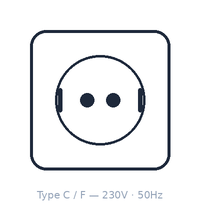
Romania uses Type C and Type F power plugs at 230V/50Hz. If you’re traveling from the US, Canada, UK, or Australia, you’ll need a plug adapter.
Most modern electronics (phones, laptops, cameras) handle the voltage difference automatically — check the label on your charger for “INPUT: 100-240V” to confirm. Hair dryers and straighteners from North America may need a voltage converter, or it’s easier to buy or borrow one locally.
Romania has excellent mobile internet infrastructure — surprisingly fast, in fact. Romania consistently ranks among the top countries in Europe for mobile data speeds, a legacy of rapid telecom investment. EU residents benefit from “roam like at home” regulations with no extra charges. For visitors from outside the EU, prepaid SIM cards and eSIMs are readily available — Vodafone, Orange, and Digi are the main operators. Wi-Fi is widespread in hotels, restaurants, and cafés, even in smaller towns.
📱 Need mobile data? An eSIM is the easiest way to stay connected in Europe — no SIM swapping, activate before you land. Compare the best eSIM providers for Europe →
Health and Safety
EU/EEA citizens can use the European Health Insurance Card (EHIC) or its replacement, the Global Health Insurance Card (GHIC), for necessary medical treatment. Non-EU visitors aren’t covered — while medical costs in Romania are lower than in Western Europe, private clinics in Bucharest and Cluj bill full rates and quality varies significantly between urban and rural areas. Comprehensive travel insurance for Europe ensures access to private care and covers evacuation from remote regions like the Carpathians, the Danube Delta, and rural Maramureș.
🏥 Cover your whole Romania trip with one policy
SafetyWing Nomad Insurance covers emergency medical treatment and hospital care in Romania and every other stop on your route, including evacuation — which matters here more than most places, given Carpathian hiking, the Transfăgărășan, Danube Delta boat trips, and rural areas where the nearest capable hospital is hours away. One continuous plan across Schengen and non-Schengen alike, and it meets the €30,000 Schengen visa medical minimum.
Get a quote from SafetyWing →Affiliate partner — we may earn a commission at no extra cost to you.
In any emergency, call 112. Pharmacies (farmacie) are well-stocked and pharmacists can provide advice for minor ailments. Major cities have well-equipped hospitals, though standards in rural healthcare facilities can be basic.
Romania is generally safe for visitors. Petty theft can occur in Bucharest (particularly on public transit and in the Old Town area) and at popular tourist sites, but violent crime against tourists is rare. The most common practical concerns for visitors are stray dogs (still present in some areas, though numbers have decreased significantly), aggressive driving, and uneven sidewalks and infrastructure in some cities. In rural areas, Romania is remarkably safe and welcoming.
Food and Dining Culture
Romanian cuisine is hearty, meat-heavy, and strongly influenced by the country’s agricultural traditions and its Ottoman, Hungarian, and Slavic neighbors. Signature dishes include mici (grilled minced-meat rolls — a national obsession, often served with mustard and bread), sarmale (cabbage rolls stuffed with spiced meat and rice), ciorbă (sour soups — ciorbă de burtă, or tripe soup, is the classic), mămăligă (polenta, served as a side with almost everything), and cozonac (a sweet braided bread served at holidays).
Romania is an emerging wine destination with excellent and surprisingly affordable wines. The main wine regions include Dealu Mare, Murfatlar (near the Black Sea), Jidvei (in Transylvania), and Recaș (in the Banat). Local grape varieties like Fetească Neagră and Fetească Albă produce distinctive wines rarely found outside Romania. Țuică (plum brandy) and palincă (double-distilled fruit brandy) are traditional spirits served as aperitifs — turning them down from a host in rural Romania would be considered impolite.
Restaurant hours are broadly European — lunch from noon to 3:00 PM, dinner from 6:00 or 7:00 PM. In cities, many restaurants stay open late. Portions tend to be generous and prices are very reasonable.
Romania: Economy and Context
Romania has one of the largest economies in southeastern Europe, with a population of roughly 19 million. The country joined the European Union in 2007 and became a full member of the Schengen Area on January 1, 2025, after over a decade of political negotiations. Romania joined NATO in 2004.
Tourism is a growing sector, boosted by smoother travel following Schengen accession. Germany, Italy, and the United Kingdom are the top source markets for international visitors. Bucharest, Brașov, and Constanța are the most-visited destinations.
Romania’s combination of low costs, dramatic natural landscapes, well-preserved medieval heritage, and improving infrastructure makes it one of Europe’s best-value destinations. The country’s rapid economic growth, expanding motorway network, and new train fleet signal a destination that’s becoming steadily easier and more comfortable to visit — while still retaining the off-the-beaten-path character that makes it special.
Frequently Asked Questions
Do I need a visa to visit Romania?
Citizens of around 60 countries, including the US, UK, Canada, and Australia, can visit Romania without a visa for up to 90 days within any 180-day period. This is the Schengen 90/180-day rule, which applies across all Schengen countries combined. Use our Europe Travel Planner to find out if your nationality requires a visa.
Will I need ETIAS to visit Romania in 2026?
Not in 2026. The EU removed the Q4 2026 ETIAS launch target in July 2026, and 2027 is now the most likely launch year. Once operational, visa-exempt visitors will need to apply online before traveling — €20 for adults, valid for three years, covering all 30 participating countries. Until ETIAS launches, you only need your valid passport. See our ETIAS guide for the latest timeline.
Does Romania use the euro?
No. Romania uses the Romanian Leu (RON), and no euro adoption date has been set. This is a common point of confusion because neighbouring Bulgaria adopted the euro in January 2026 — but Romania did not follow. Cards are widely accepted in cities, but carry cash for rural areas, markets, and smaller establishments. ATMs are readily available.
What is the best time to visit Romania?
Late spring (May–June) and early autumn (September–October) offer the best combination of pleasant weather and manageable crowds. Summer (July–August) is peak season, with the hottest weather (Bucharest can exceed 35°C) and the busiest Black Sea resorts. Winter (December–March) is ideal for skiing in the Carpathians and Christmas markets, though temperatures drop well below freezing in mountainous areas.
Do people speak English in Romania?
English is widely spoken among younger Romanians and in tourist areas, particularly in Bucharest, Cluj-Napoca, Brașov, and Timișoara. In rural areas and among older generations, you may encounter a language barrier. Romanian is a Romance language, so speakers of Italian, Spanish, or French often find it partially intelligible.
How much does a trip to Romania cost?
Romania is one of Europe’s most affordable destinations. Budget roughly €50–100 per day for mid-range travel including accommodation, meals, transport, and activities. A two-week trip for two people typically costs €1,500–3,500 total — significantly less than Western Europe.
Do I need travel insurance for Romania?
Not required for entry for visa-exempt visitors, but strongly recommended — non-EU visitors aren’t covered by Romania’s public healthcare, and private clinics in Bucharest and Cluj bill full rates. Coverage matters especially if you’re driving the Transfăgărășan, hiking the Carpathians, or heading into remote Maramureș or Delta country. If you need a Schengen visa, travel medical insurance with at least €30,000 coverage is mandatory. See our Europe travel insurance guide for policies that meet the requirement.
Is Romania safe for tourists?
Romania is generally safe. Petty theft can occur in Bucharest and popular tourist spots, but violent crime against visitors is rare. The main practical concerns are aggressive driving habits, stray dogs in some areas, and variable road conditions. Rural Romania is exceptionally safe and welcoming.
Do I need a road vignette to drive in Romania?
Yes. All vehicles except motorcycles need an electronic vignette called a rovinieta to drive on Romania’s national roads and motorways — not just motorways, which catches people out. Purchase it online at roviniete.ro before you start driving and check the current rate there, as prices have been revised more than once. Driving without one is detected by camera surveillance and results in a fine.
🌍 Plan Your Trip to Romania
Entry requirements, visa status, stay limits, currency, plugs and driving rules — generated for your passport and every country on your route.
Use the Europe Travel Planner →📚 Related Articles
- Europe Travel Planner — Get a full travel briefing for Romania and beyond
- Schengen 90/180-Day Rule — How the visa-free stay limit works across Europe
- Schengen Area Map — Schengen, the EU and ETIAS on one interactive map
- ETIAS: Europe’s New Travel Authorization — What you’ll need when it launches
- Entry/Exit System (EES) — How the new biometric borders work
- International Driving Permit in Europe — Country-by-country IDP requirements
- Best Travel Insurance for Europe — Protect your trip
- Travel to Bulgaria: Complete Guide
- Travel to Hungary: Complete Guide
- All Europe Country Guides
This article is for informational purposes only and does not constitute legal or travel advice. Entry requirements can change — always verify with official government sources before traveling. Last updated: August 2026.