
Last Updated: February 2026
Poland is quietly one of Europe’s best travel destinations — and still one of its best values. With 38.8 million tourists accommodated in 2024 (a 7.2% jump over 2023), the secret is getting out, but prices remain 40–50% below Western Europe. Kraków’s medieval Old Town, the Wieliczka Salt Mine, Auschwitz-Birkenau, and Gdańsk’s waterfront are world-class draws — and beyond the cities, you’ll find Europe’s last primeval forest, the Tatra Mountains, and the sandy Baltic coast. Poland is an EU and Schengen member that uses its own currency (the Polish złoty, not the euro), has a rapidly improving rail network, and delivers some of Europe’s heartiest food at prices that feel like a time warp. Here’s everything you need to know for 2026.
🇵🇱 Poland at a Glance
| Capital | Warsaw |
| Population | ~37.6 million (2026) |
| Currency | Polish Złoty (PLN) — not the euro |
| Language | Polish |
| Time Zone | CET (UTC+1) · CEST in summer (UTC+2) |
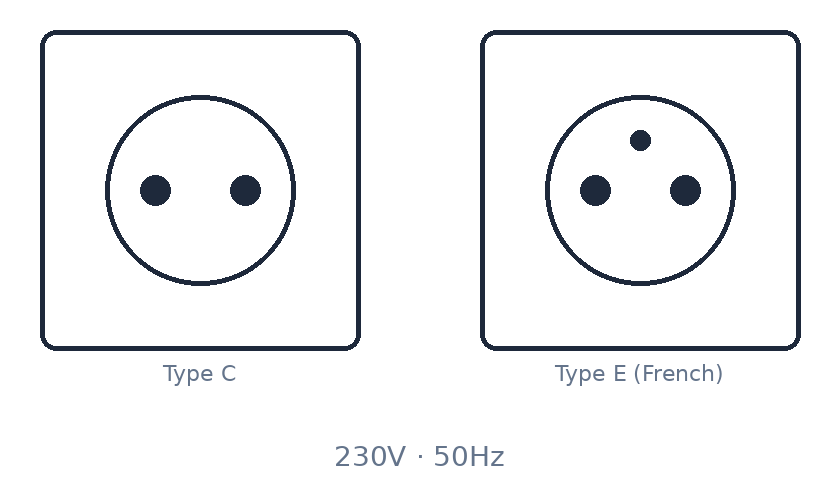
| Plug Type | Type C and E · 230V / 50Hz |
| Driving Side | Right |
| International Driving Permit (IDP) | Recommended — see IDP guide |
| Schengen Member | Yes — EU member since 2004, Schengen since 2007 |
| Emergency Number | 112 (EU-wide) |
Entry Requirements for Poland
Poland joined the European Union in 2004 and became a full Schengen member in 2007. Despite EU membership, Poland uses its own currency — the Polish złoty (PLN). Entry requirements follow standard Schengen rules.
Visa-Exempt Visitors (US, UK, Canada, Australia, and Others)
Citizens of 59 visa-exempt countries — including the United States, United Kingdom, Canada, Australia, New Zealand, Japan, and most Latin American nations — can enter Poland without a visa for short stays of up to 90 days within any 180-day period. This is the standard Schengen 90/180-day rule, and it applies across all 29 Schengen countries combined, not just Poland.
To enter as a visa-exempt visitor, your passport must meet two requirements. It must have been issued within the last 10 years at the time of entry, and it must remain valid for at least three months after your planned departure date from the Schengen area.
At the border, Polish officials may ask for proof of accommodation, proof of sufficient funds, and evidence of onward or return travel. These documents aren’t always requested, but having them available avoids potential complications.
Visitors Who Need a Visa
If your country is not on the visa-exempt list, you’ll need to apply for a Schengen short-stay visa (Type C) through the Polish embassy or consulate in your home country before traveling. This visa allows stays of up to 90 days within a 180-day period and typically costs €80 for adults.
Use our Europe Travel Planner to find out exactly what your nationality requires.
What’s Changing at Polish Borders in 2026
Two major systems are transforming how non-EU visitors enter Poland and the rest of the Schengen area. Both are rolling out in 2026, and travelers need to be aware of the timeline.
Entry/Exit System (EES)
The Entry/Exit System began its phased rollout on October 12, 2025, and is expected to be fully operational at all Schengen border crossings by April 10, 2026. EES replaces the old passport-stamping process with a digital system that records biometric data — fingerprints and facial images — along with your passport details and entry/exit dates.
The first time you enter the Schengen area under EES, border officials will collect your fingerprints and take a facial photograph. Once registered, the data stays valid for three years, and subsequent entries only require identity verification rather than a full re-registration.
For Poland, EES is most relevant at Warsaw Chopin Airport (WAW), Kraków Airport (KRK), and Gdańsk Airport (GDA). If you’re arriving from another Schengen country, there are no routine border checks.
ETIAS — Europe’s New Travel Authorization
The European Travel Information and Authorization System (ETIAS) is expected to launch in late 2026, likely in October or November. Once operational, all visa-exempt travelers — including Americans, Britons, Canadians, and Australians — will need to apply for ETIAS authorization before boarding a flight to Poland or any other Schengen country.
The ETIAS application is completed online and takes roughly 10 minutes. The fee is €20 for travelers aged 18 to 70 (free for those younger or older). Once approved, ETIAS is valid for three years or until your passport expires, whichever comes first. It covers all 29 Schengen countries.
Getting to Poland
Poland’s central European location makes it exceptionally well-connected by air, rail, and road.
By Air
Warsaw Chopin Airport (WAW) is Poland’s main international hub, with flights from across Europe, North America, the Middle East, and Asia. LOT Polish Airlines is the national carrier. Kraków Airport (KRK) is the second busiest and handles heavy tourist traffic. Gdańsk (GDA), Wrocław (WRO), Katowice (KTW), and Poznań (POZ) all have growing European networks. Budget carriers Ryanair and Wizz Air have massive Polish operations, making Poland one of the cheapest countries in Europe to fly into.
By Train
Direct trains connect Poland to Germany (Berlin–Warsaw ~5.5 hours, Berlin–Wrocław ~4 hours), the Czech Republic (Prague–Warsaw, Prague–Kraków), Austria (Vienna–Kraków, Vienna–Warsaw via ÖBB Nightjet), Slovakia, Lithuania (Via Baltica route), and Ukraine. The Berlin–Warsaw–Express and ÖBB Nightjet sleeper services are popular. Book via PKP Intercity (intercity.pl) or the KOLEO app.
By Bus
FlixBus and other operators connect Poland to virtually every neighboring country at very low prices. Warsaw, Kraków, and Wrocław are major hubs with connections to Berlin, Prague, Vienna, Vilnius, and beyond.
Getting Around Poland
Poland’s transport network has improved dramatically in recent years. The rail network is the backbone for intercity travel, with a rapidly expanding motorway system for drivers.
Trains
PKP Intercity operates four tiers of long-distance trains. The EIP (Express InterCity Premium) Pendolino is the flagship — modern high-speed trains reaching 200 km/h on routes between Warsaw and Kraków (~2.5 hours), Gdańsk (~2.5 hours), Wrocław (~3.5 hours), and Katowice. EIC (Express InterCity) trains are slightly slower but comfortable. IC and TLK trains are the budget options — cheaper but older, slower, and occasionally lacking air conditioning. Polregio handles regional routes.
PKP Intercity uses dynamic pricing — tickets released 30 days before departure start cheapest and rise as trains fill. Book early through intercity.pl or the KOLEO app for the best fares. The Weekend Ticket (Bilet Weekendowy, 199 PLN) gives unlimited travel from Friday 7 PM to Monday 6 AM — exceptional value for multi-city weekends.
| Service | Best For | Cost Range | Notes |
|---|---|---|---|
| EIP Pendolino | Warsaw–Kraków, Gdańsk, Wrocław, Katowice | 79–249 PLN | Up to 200 km/h · Reservation mandatory · Complimentary drink · Book early for best price |
| EIC / IC | Major city connections | 49–179 PLN | Comfortable · Wi-Fi · Dining car · Slightly slower than EIP |
| TLK | Budget long-distance | 29–99 PLN | Cheapest long-distance option · Slower, more stops · Older rolling stock |
| Polregio | Regional / short-distance | 5–40 PLN | Local trains · Flat pricing (no dynamic) · Good for day trips |
| FlixBus | Budget intercity + international | 19–89 PLN | Warsaw–Kraków ~4.5h · 20–40% cheaper than trains · Wi-Fi |
| Domestic Flight | Warsaw–Gdańsk, Kraków–Gdańsk | 100–500 PLN | LOT, Ryanair, Wizz Air · Rarely needed given fast trains · Useful for time-pressed itineraries |
Local Transit
Poland’s cities have excellent public transport — trams, buses, and (in Warsaw) a two-line metro. Single tickets cost 3.40–4.40 PLN in most cities. The Jakdojade app is the essential travel companion — it covers route planning and mobile ticketing for all major Polish cities. Tourist cards in Kraków and Warsaw (100–160 PLN) bundle unlimited transit with museum discounts. Children under 7 ride free; those under 16 get half-price fares.
Driving
Poland’s motorway network has expanded enormously — over 5,400 km of motorways and expressways are now operational as of January 2026, with more under construction. Roads are well-maintained on major routes.
Poland drives on the right. Speed limits are 50 km/h in urban areas, 90 km/h on rural roads, 100–120 km/h on expressways, and 140 km/h on motorways (one of Europe’s highest motorway limits). The blood alcohol limit is 0.02% — effectively zero tolerance, similar to the strictest Nordic countries. Headlights (dipped beam or daytime running lights) are mandatory at all times year-round.
Winter tires: Not legally required but strongly recommended November through March. Snow and ice are common, especially in the south and mountains.
Cyclists: Polish cities are increasingly bike-friendly, especially Wrocław, Kraków, and Gdańsk. However, cycling infrastructure varies significantly between cities.
International Driving Permit: EU/EEA licenses are valid. US, Canadian, and Australian licenses are accepted for short stays — an IDP is recommended. You must be at least 21 to rent a car at most agencies. See our International Driving Permit guide for details.
Where to Go in Poland
Poland is far more diverse than its reputation suggests — Gothic cities, mountain wilderness, Baltic beaches, primeval forests, and some of Europe’s most moving historical sites.
Kraków
Poland’s most-visited city — and for good reason. The Main Market Square (Rynek Główny) is Europe’s largest medieval square, dominated by the Cloth Hall and St. Mary’s Basilica (listen for the trumpet call from the tower every hour). Wawel Castle and Cathedral sit above the Vistula River — Poland’s historic seat of royal power. The former Jewish quarter of Kazimierz, once devastated, is now a vibrant neighborhood of restaurants, bars, and galleries. The Wieliczka Salt Mine (30 minutes from the center) is a UNESCO-listed underground world of carved chambers, chapels, and even a chandelier-lit ballroom — all hewn from salt. And then there is Auschwitz-Birkenau, 70 kilometers west — the largest Nazi concentration camp, now a museum and memorial. Visiting is free but advance booking is required; allow a full day.
Warsaw
Poland’s capital was 85% destroyed in World War II and painstakingly rebuilt — the reconstructed Old Town is itself a UNESCO World Heritage Site, recognized for the extraordinary effort of recreation. Today Warsaw is Poland’s most dynamic city: the Palace of Culture (a Stalinist skyscraper — love it or hate it, the observation deck has the best views), the Warsaw Uprising Museum (essential for understanding Poland), the POLIN Museum of the History of Polish Jews (one of Europe’s best museums), and the Royal Castle. The Praga district across the river is Warsaw’s emerging arts quarter. Milk bars (bar mleczny) — government-subsidized cafeterias serving traditional Polish food for 15–25 PLN — are a Warsaw institution.
Gdańsk and the Tri-City
Gdańsk’s Long Market (Długi Targ) and waterfront along the Motława River are among Poland’s most photogenic streetscapes — colorful merchant houses rebuilt after wartime destruction. The European Solidarity Centre documents the Solidarity movement that helped end communism. St. Mary’s Church is one of the world’s largest brick churches. Gdańsk forms the “Tri-City” with Sopot (elegant beach resort with Europe’s longest wooden pier) and Gdynia (modernist port city). The Baltic coast stretches in both directions with wide sandy beaches popular in summer.
Wrocław
Wrocław’s Market Square is one of Poland’s most beautiful — lively, colorful, and home to some of the best restaurants in the country. The city’s signature quirk: over 300 bronze dwarf statues (krasnale) hidden throughout the streets, a tradition that started as anti-communist protest art. Wrocław is built on 12 islands connected by over 100 bridges, earning it the nickname “Venice of Poland.” Ostrów Tumski (Cathedral Island) is the historic heart. The Centennial Hall is a UNESCO-listed modernist landmark. The city has a young, university-driven energy.
The Tatra Mountains and Zakopane
The Tatras are Poland’s only true alpine mountains — dramatic granite peaks shared with Slovakia. Zakopane, the mountain resort town at their base, is the gateway to hiking in summer and skiing in winter. The trail to Morskie Oko (Sea Eye) — a stunning glacial lake surrounded by peaks — is Poland’s most popular hike. The Kasprowy Wierch cable car (year-round) reaches 1,987 meters for panoramic views. Zakopane also has its own distinctive architecture, cuisine (oscypek smoked cheese, grilled and served with cranberry sauce), and folk culture.
Toruń
The birthplace of Copernicus and one of Poland’s best-preserved medieval cities — its Gothic Old Town is a UNESCO World Heritage Site that escaped wartime destruction. Toruń is famous for its gingerbread (piernik), which has been produced here since the Middle Ages. The Living Museum of Gingerbread lets you bake your own. It’s a charming, walkable city that’s often overlooked in favor of larger destinations — which is part of its appeal.
Białowieża Forest
Europe’s last primeval lowland forest straddles the Poland-Belarus border and is a UNESCO World Heritage Site. This ancient woodland is home to the European bison (żubr) — hunted to near-extinction and reintroduced here, now numbering over 1,000 in the Polish section. Guided tours into the strict reserve are the only way to see the heart of the forest. The town of Białowieża is small and rural — this is nature tourism, not city-break territory.
How Much Does Poland Cost?
Poland is one of the best-value destinations in Europe. Your money goes significantly further here than in Western Europe, Scandinavia, or even much of Southern Europe. The Polish złoty trades at roughly 4.0 PLN per dollar and 4.3 per euro in early 2026.
💰 Poland Daily Budget Ranges (per person)
| Budget | 150–250 PLN (~€35–58) | Hostels, milk bars, supermarket meals, public transport, free attractions |
| Mid-Range | 350–550 PLN (~€81–128) | 3-star hotel, restaurants, trains, museums, guided tours |
| Comfort | 750+ PLN (~€175+) | 4-star hotel, fine dining, first-class trains, private tours |
Accommodation: Hostel dorms run 60–135 PLN per night (cheaper in smaller cities). A decent 3-star hotel double room costs 250–400 PLN in Warsaw and Kraków, less elsewhere. Airbnb apartments in central locations are excellent value, often 200–350 PLN for a full apartment.
Eating out: This is where Poland truly shines. Milk bars (bar mleczny) serve filling traditional meals — pierogi, soups, meat dishes — for 15–25 PLN. A mid-range restaurant main course costs 35–70 PLN. A cappuccino is 12–18 PLN. A beer in a bar costs 12–20 PLN. Supermarkets (Biedronka, Lidl, Żabka for convenience) are very affordable. Polish cuisine is hearty and satisfying: pierogi (dumplings), żurek (sour rye soup), bigos (hunter’s stew), kielbasa (sausage), and placki ziemniaczane (potato pancakes).
Transport: Single city transit tickets cost 3.40–4.40 PLN. Warsaw–Kraków on the Pendolino starts from ~79 PLN when booked early. The Weekend Ticket (199 PLN) offers unlimited train travel Friday evening to Monday morning.
Attractions: Many museums have free-entry days (often one day per week). The Wieliczka Salt Mine is ~89 PLN, Auschwitz-Birkenau is free (but book ahead), Wawel Castle exhibitions are ~89 PLN combined. Walking tours in all major cities are available on a tip basis.
Power and Connectivity
Poland uses Type C and Type E power sockets. The Type E socket has two round holes plus a protruding ground pin from the socket itself — similar to France. Standard European two-pin plugs (Type C) fit into Type E sockets. Voltage is 230V at 50Hz. If you’re coming from the US, Canada, or another country that uses different plug types, you’ll need a standard European adapter. Most modern phone and laptop chargers are dual-voltage (check the label for “INPUT: 100–240V”) and need only a plug adapter, not a voltage converter.
Poland has excellent 4G/LTE coverage nationwide and growing 5G in major cities. Free Wi-Fi is common in hotels, cafés, restaurants, and on many intercity trains. For heavy data use, a local prepaid SIM (Play, Orange, T-Mobile, Plus) is very affordable — often 20–30 PLN for a generous data package.
📱 Need mobile data? An eSIM is the easiest way to stay connected in Europe — no SIM swapping, activate before you land. Compare the best eSIM providers for Europe →
Essential Tips for Visiting Poland
Milk bars (bar mleczny): These government-subsidized cafeterias are a Polish institution and a budget traveler’s best friend. The food is traditional, homemade, filling, and absurdly cheap. Most have picture menus or English translations. Don’t expect ambiance — expect authentic food at prices that feel like a rounding error.
Auschwitz-Birkenau: Free to enter but advance online booking is required (auschwitz.org). Guided tours (various languages) are strongly recommended. Allow a full day including travel from Kraków. This is one of the most important and emotionally challenging places you’ll ever visit — treat it with the gravity it deserves.
English proficiency: Younger Poles (under 40) generally speak good English, especially in cities. Older generations and rural areas may have limited English. Learning a few Polish phrases (dzień dobry — hello, dziękuję — thank you, proszę — please) goes a long way. Polish pronunciation is challenging but locals deeply appreciate any effort.
Tipping: In restaurants, 10% is standard for table service. Round up for taxis and café drinks. Not obligatory but appreciated. Some restaurants add a service charge — check the bill.
Vodka: Poland takes its vodka seriously — it’s a cultural tradition, not just a drink. Try local brands (Żubrówka with apple juice, known as a “tatanka,” is the classic). Vodka is high quality and remarkably cheap in supermarkets.
Avoid Euronet ATMs: These tourist-targeted ATMs are everywhere near major attractions and charge excessive fees and poor exchange rates. Use ATMs operated by Polish banks (PKO, mBank, Santander, ING) instead.
Catholic heritage: Poland is deeply Catholic. Dress modestly when visiting churches (cover shoulders and knees). Sundays may mean reduced shop hours. Religious holidays are taken seriously.
Safety: Poland is very safe for travelers. Violent crime against tourists is rare. Standard precautions apply in crowded tourist areas (pickpocketing, taxi scams). Use ride-hailing apps (Bolt, Uber) rather than unmarked taxis.
Best time to visit: May–June and September for ideal weather and fewer crowds. July–August is peak season — warm but busiest. Winter (December–February) brings Christmas markets, snow in the mountains, and far fewer tourists (but cold — average January temperatures in Warsaw are around -3°C). Kraków and Warsaw are year-round destinations.
Frequently Asked Questions
Do I need a visa to visit Poland?
Citizens of 59 countries — including the US, UK, Canada, and Australia — can visit Poland visa-free for up to 90 days within any 180-day period under the Schengen 90/180-day rule. This limit is shared across all 29 Schengen countries. If you’re unsure, use the Europe Travel Planner at schengentraveler.com.
Does Poland use the euro?
No. Poland uses the Polish złoty (PLN). Despite being an EU member since 2004, Poland has not adopted the euro and has no firm timeline to do so. Cards are widely accepted in cities but carry some cash for smaller establishments and rural areas.
Is Poland cheap to visit?
Yes — Poland is one of Europe’s best-value destinations. A comfortable mid-range day costs 350–550 PLN per person (~€80–130). Accommodation, food, transport, and attractions are all 40–50% cheaper than Western Europe. Milk bars serve full meals for under $7.
How do I get from Warsaw to Kraków?
The EIP Pendolino train takes about 2.5 hours and costs from 79 PLN when booked early. EIC trains take about 3 hours and cost slightly less. FlixBus takes 4.5–5 hours but can be cheaper. Book trains via intercity.pl or the KOLEO app.
Is Auschwitz free to visit?
Yes — entry to Auschwitz-Birkenau is free, but advance online booking is required at auschwitz.org. Guided tours (various languages, ~75–89 PLN) are highly recommended. Allow a full day including the 1.5-hour journey from Kraków.
Is Poland safe?
Very safe. Poland has low violent crime rates and is generally considered one of Europe’s safest countries for tourists. Take normal precautions against pickpocketing in crowded areas. Use ride-hailing apps (Bolt, Uber) rather than unofficial taxis.
What is a milk bar?
A bar mleczny (milk bar) is a government-subsidized cafeteria serving traditional Polish food at very low prices — full meals for 15–25 PLN. They’re found throughout Polish cities and are a genuine cultural experience, not a tourist gimmick. The food is homemade and hearty: pierogi, soups, meat dishes, and compote.
Do I need a Polish SIM card?
Not necessarily. EU roaming rules mean European SIM cards work in Poland at domestic rates. For non-EU visitors, Polish prepaid SIMs are affordable (20–30 PLN for a good data package). Wi-Fi is widely available. The Jakdojade app is essential for navigating public transport.
🌍 Plan Your Trip to Poland
Entry requirements, visa status, and a full travel briefing — personalized for your nationality.
Use the Europe Travel Planner →📚 Related Articles
- Schengen 90/180-Day Rule — How the visa-free stay limit works across Europe
- ETIAS: Europe’s New Travel Authorization — What you’ll need starting late 2026
- Entry/Exit System (EES) — How the new biometric borders work
- International Driving Permit in Europe — Country-by-country IDP requirements
- Best Travel Insurance for Europe — Protect your trip
- Travel to Czech Republic: Complete Guide
- Travel to Hungary: Complete Guide
- All Europe Country Guides
- 2-Week Central Europe Itinerary — Travelsewhere’s guide to Poland, Austria, and beyond `
This article is for informational purposes only and does not constitute legal or travel advice. Entry requirements can change — always verify with official government sources before traveling. Last updated: February 2026.