
Last Updated: February 2026
The Netherlands packs an extraordinary amount into a small, flat country — world-class museums, a cycling culture that puts cars to shame, canal-laced cities, and a design-forward attitude that shows up in everything from architecture to stroopwafels. Most visitors start (and some never leave) Amsterdam, but Rotterdam’s reinvented skyline, Utrecht’s quieter canal charm, The Hague’s political grandeur, and the tulip fields that carpet the countryside every spring all reward travelers who look beyond the capital. Here’s everything you need to know to plan a visit in 2026.
🇳🇱 The Netherlands at a Glance
| Capital | Amsterdam (seat of government: The Hague) |
| Population | ~17.9 million |
| Currency | Euro (€) |
| Language | Dutch |
| Time Zone | CET (UTC+1) · CEST in summer (UTC+2) |
| Plug Type | Type C and F · 230V / 50Hz |
| Driving Side | Right |
| International Driving Permit (IDP) | Not required — see IDP guide |
| Schengen Member | Yes |
| Emergency Number | 112 (EU-wide) |
Entry Requirements for the Netherlands
The Netherlands is part of the Schengen Area, meaning it follows the same entry rules as the other 28 Schengen member countries. What you need to enter the Netherlands depends on your nationality.
Visa-Exempt Visitors (US, UK, Canada, Australia, and Others)
Citizens of 59 visa-exempt countries — including the United States, United Kingdom, Canada, Australia, New Zealand, Japan, and most Latin American nations — can enter the Netherlands without a visa for short stays of up to 90 days within any 180-day period. This is the standard Schengen 90/180-day rule, and it applies across all 29 Schengen countries combined, not just the Netherlands.
To enter the Netherlands as a visa-exempt visitor, your passport must meet two requirements. It must have been issued within the last 10 years at the time of entry, and it must remain valid for at least three months after your planned departure date from the Schengen area.
Not sure what applies to your nationality? Use the Europe Travel Planner to find out exactly what you need.
Visa-Required Visitors
If your country is not on the visa-exempt list, you’ll need to apply for a Schengen short-stay visa (Type C) before traveling to the Netherlands. This visa allows stays of up to 90 days within a 180-day period across the entire Schengen Area.
You’ll typically need to apply at the Dutch embassy or consulate in your home country, or through an authorized visa application center (VFS Global handles Dutch visa applications in many countries). Required documents generally include a completed application form, a passport-sized photo, proof of accommodation, travel insurance with minimum €30,000 coverage, proof of financial means, and a round-trip flight reservation.
Processing times are usually 15 calendar days but can take up to 45 days during peak season. Apply early. For a full walkthrough, see the Schengen Visa Application Guide.
What’s Changing at Dutch Borders
Two major systems are being introduced at Schengen borders, including the Netherlands’, that will change how travelers enter Europe.
The Entry/Exit System (EES) will replace passport stamps with digital biometric records — fingerprints and facial scans — when it goes live. It will automatically track how long you’ve stayed in the Schengen Area and flag overstays. No more counting stamps.
Following that, the European Travel Information and Authorization System (ETIAS) will require visa-exempt travelers (including Americans, Brits, Canadians, and Australians) to apply for a travel authorization online before arriving. It’s expected to cost €7, be valid for three years, and take minutes to complete. ETIAS is expected to launch in late 2026.
Neither system is active yet, but they’re coming. Bookmark our ETIAS launch date tracker for the latest updates.
Getting to the Netherlands
Amsterdam Airport Schiphol (AMS) is the main international gateway and one of Europe’s busiest hubs, with direct flights from across the world. KLM Royal Dutch Airlines, the national carrier (and the world’s oldest airline still operating under its original name), runs an extensive network including direct routes from New York, Los Angeles, San Francisco, Houston, Atlanta, Chicago, Boston, Toronto, and dozens of other long-haul destinations. Schiphol is also a major hub for Delta, and budget carriers like easyJet, Transavia, and Vueling operate extensive European networks from the airport.
Schiphol sits just 15 minutes from central Amsterdam by train, with direct NS services running roughly every 10 minutes throughout the day. The station is located directly beneath the terminal — follow the signs from arrivals and you’re on a platform within minutes.
Rotterdam The Hague Airport (RTM) and Eindhoven Airport (EIN) handle primarily European budget flights on carriers like Ryanair, Wizz Air, and Transavia. Eindhoven has grown significantly and now handles over 7 million passengers per year.
By train, the Netherlands is superbly connected to its neighbors. Eurostar runs high-speed services from London (via Brussels) and from Paris and Brussels direct to Amsterdam. The Eurostar from Brussels to Amsterdam takes about 1 hour 50 minutes. ICE trains connect Amsterdam to Cologne, Frankfurt, and other German cities. Nightjet sleeper trains link Amsterdam to Vienna, Innsbruck, and Zurich. FlixBus and Eurolines run budget coaches to and from most major European cities.
Getting Around the Netherlands
The Netherlands has one of Europe’s densest and most efficient rail networks, and the country is compact enough that almost every major destination is within two hours by train from Amsterdam. Combined with the legendary cycling infrastructure, you genuinely don’t need a car here.
Trains
Nederlandse Spoorwegen (NS) operates the national rail network, which includes around 400 stations. There are two main types of domestic trains. Intercity trains connect larger cities with limited stops. Sprinter trains stop at every station and serve smaller towns. The fare is the same for both — it’s distance-based, not train-type-based.
The Intercity Direct is the flagship high-speed service, running between Amsterdam, Schiphol, Rotterdam, and Breda on the HSL-Zuid high-speed line. Amsterdam to Rotterdam takes just 41 minutes. A supplement of €3.20 (peak) or €1.92 (off-peak) applies for the Schiphol–Rotterdam segment. Regular Intercity trains on the same route take about 1 hour 10 minutes via Leiden and Delft — no supplement required.
Buy tickets at ns.nl (e-tickets are €1 cheaper than machine tickets). The Netherlands is transitioning from OV-chipkaart to OVpay — you can now tap your contactless bank card or phone at station gates on most routes. Children under 4 travel free; ages 4–11 can use a Railrunner day ticket for €2.50.
Getting Around Comparison
| Mode | Best For | Cost Range | Notes |
|---|---|---|---|
| Intercity Direct | Amsterdam ↔ Rotterdam | €15–€22 + supplement | 41 min. Supplement €3.20 peak / €1.92 off-peak. |
| Intercity | City-to-city travel | €8–€25 | Frequent. No reservations. Distance-based pricing. |
| Sprinter | Short hops, small towns | €3–€12 | Stops at every station. Same pricing as Intercity. |
| Eurostar / IC Brussels | Amsterdam ↔ Brussels | €35–€120 | ~2 hrs. New ICNG trains entering service. |
| Amsterdam Metro/Tram | City transport | €1.08 base + per km | GVB operates metro, tram, and bus. OVpay accepted. |
| OV-fiets (bike rental) | Last-mile, day trips | €4.80/day | At 300+ train stations. Requires OV-chipkaart or OVpay. |
| Rental car | Rural areas only | €35–€70/day | Rarely needed. Parking is expensive and scarce in cities. |
| Cycling (own/rented) | Everywhere | €10–€15/day rental | 22,000+ km of dedicated bike paths. Helmets not required. |
Where to Go in the Netherlands
Amsterdam
The capital needs little introduction — a city of 165 canals, 1,281 bridges, and a cultural density that rivals cities many times its size. The Rijksmuseum (home to Rembrandt’s Night Watch and Vermeer’s Milkmaid), the Van Gogh Museum (the world’s largest collection of his work), and the Anne Frank House form the essential museum trio, though the Stedelijk Museum of modern art, the NEMO Science Museum, and the Moco Museum (Banksy, Warhol) deserve time too. The canal ring (Grachtengordel) is a UNESCO World Heritage site — walking or cycling along the Herengracht, Keizersgracht, and Prinsengracht is one of Europe’s great urban experiences.
Beyond the museums: the Jordaan neighborhood is Amsterdam’s most charming district, with narrow streets, independent boutiques, and brown cafés (bruine kroegen) that have barely changed in a century. De Pijp is the foodie quarter, anchored by the Albert Cuyp Market. Amsterdam-Noord, across the IJ river (free ferry from Centraal Station), has transformed from industrial wasteland into the city’s creative frontier — the NDSM Wharf, A’DAM Tower, and the EYE Filmmuseum are all here.
Rotterdam
Rotterdam is Amsterdam’s opposite in almost every way — a modern, architecturally daring city rebuilt from scratch after the devastating 1940 Blitz. Where Amsterdam is intimate and historic, Rotterdam is bold and experimental. The Cube Houses (Kubuswoningen), the Markthal (an arched market hall with a 36,000-square-foot painted ceiling), the Erasmusbrug bridge, and the cutting-edge depot of the Museum Boijmans Van Beuningen make it a pilgrimage site for architecture and design fans. Rotterdam is also home to Europe’s largest port, and a harbor tour gives a sense of the industrial scale that drives the Dutch economy.
The food scene has exploded in recent years — the Fenix Food Factory in the former harbor warehouse district of Katendrecht, the Markthal’s ground-floor vendors, and a growing number of Michelin-recognized restaurants have put Rotterdam firmly on the culinary map.
The Hague (Den Haag)
The seat of the Dutch government and the International Court of Justice, The Hague has a stately grandeur that feels different from anywhere else in the Netherlands. The Mauritshuis museum houses Vermeer’s Girl with a Pearl Earring and Rembrandt’s The Anatomy Lesson in an elegant 17th-century building on the Hofvijver pond. The Binnenhof (the parliamentary complex) sits at the city’s heart. The Peace Palace, home to the International Court of Justice, can be visited by guided tour.
What surprises many visitors is the beach. Scheveningen, The Hague’s seaside district, has a wide sandy beach, a pier, surf, and a boardwalk lined with restaurants — all reachable by tram from the city center in 15 minutes. It’s one of the most popular beach destinations in the country.
Utrecht
Utrecht is often described as a smaller, quieter, more local version of Amsterdam — and that’s meant as a compliment. The city’s canals have unique two-level wharves (werfkelders) with café terraces at water level, giving the center a character all its own. The Dom Tower, at 112 meters the tallest church tower in the Netherlands, offers panoramic views after a 465-step climb. The university (founded 1636) gives the city a young, lively atmosphere. Utrecht is a 27-minute Intercity ride from Amsterdam and makes an excellent base for exploring the country.
Haarlem
Just 15 minutes by train from Amsterdam, Haarlem is a beautifully preserved medieval city with a fraction of the crowds. The Grote Markt (main square) is one of the finest in the Netherlands, overlooked by the Gothic St. Bavo Church — where both Mozart and Handel played the famous Müller organ. The Frans Hals Museum is the definitive collection of the Golden Age portraitist. Haarlem is also the gateway to the beach at Bloemendaal and Zandvoort, and to the Keukenhof tulip gardens in spring.
Delft
Delft is perhaps the most picturesque small city in the Netherlands — a miniature canal town famous for its blue-and-white Delftware pottery (produced here since the 17th century), the Vermeer Centre (the painter spent his entire life here), and an old town that looks remarkably similar to the Golden Age. The Nieuwe Kerk (New Church) on the Markt holds the Royal Crypt of the House of Orange-Nassau. Delft is just 15 minutes by train from Rotterdam and an hour from Amsterdam.
Leiden
Leiden is a university city (the country’s oldest, founded 1575 by William of Orange) with a rich history that includes Rembrandt’s birthplace, the Pilgrim Fathers’ departure point for the New World, and an outstanding collection of museums — the Naturalis Biodiversity Center, the Museum Volkenkunde (ethnographic), and the Rijksmuseum van Oudheden (antiquities). The city is 35 minutes from Amsterdam by train and sits at the heart of the Bollenstreek — the bulb-growing region that explodes into color every spring.
Maastricht
In the far south, Maastricht feels more Burgundian than Dutch — a city where the architecture is limestone rather than brick, the food leans French, and the atmosphere is noticeably warmer and more relaxed. The Boekhandel Dominicanen (a bookshop inside a 13th-century Dominican church) is one of the most beautiful bookstores in the world. The Vrijthof square, the Basilica of Saint Servatius, and the underground caves of the St. Pietersberg (marl tunnels dating back centuries) are highlights. Carnival in February is celebrated here with more enthusiasm than anywhere else in the Netherlands.
Keukenhof and the Tulip Region
Keukenhof, near Lisse, is the world’s largest flower garden — over 7 million bulbs bloom across 32 hectares each spring. It opens for roughly eight weeks from mid-March to mid-May, and draws over a million visitors during that window. Book tickets online in advance; they sell out. Beyond Keukenhof, the surrounding Bollenstreek (bulb region) between Haarlem and Leiden turns into a patchwork of color during April and early May — cycle through the fields for free views without the crowds.
Day Trips and Smaller Towns
The Netherlands is small enough that nowhere is really more than a few hours by train, and several smaller destinations are worth a day trip. Kinderdijk, near Rotterdam, has 19 historic windmills — the most iconic windmill landscape in the country and a UNESCO World Heritage site. Giethoorn, in the northeast, is a village with no roads — only canals, footbridges, and thatched-roof farmhouses. The Wadden Islands (Texel, Terschelling, Ameland) offer beaches, nature reserves, and a slower pace along the northern coast. Gouda is worth visiting for the cheese market (Thursday mornings, April–August) and the extraordinary stained-glass windows in St. John’s Church.
Practical Information for Visitors
Money and Costs
The Netherlands uses the euro (€). It is not a budget destination — the country is among Europe’s most expensive, particularly for accommodation in Amsterdam. Costs have risen notably since 2024, driven by inflation and the sharp increase in accommodation taxes.
As a rough guide: a meal at a casual restaurant costs €12–€20 per person. A coffee is €2.80–€4. A beer (pils) at a bar is €4–€6. A three-course dinner at a mid-range Amsterdam restaurant is €35–€55 per person. Budget travelers staying in hostels, eating at markets, and using public transport can manage on €80–€120 per day in Amsterdam, less in other cities.
The Netherlands is one of Europe’s most cashless societies. Debit cards (especially Maestro-based) are king — credit cards are accepted at larger establishments but not universally. Some smaller shops, market stalls, and even some restaurants don’t accept Visa or Mastercard. Always carry a debit card with Maestro functionality, or some cash as backup. ATMs are widely available.
Language
Dutch is the official language. The good news for English speakers: the Netherlands has the highest English proficiency of any non-native-speaking country in the world. Virtually everyone under 60 in urban areas speaks English fluently, and many Dutch people will switch to English the moment they detect an accent. Even in rural areas, English is widely understood. In Friesland (the northern province), West Frisian is a recognized second language. German is widely understood near the eastern border, and French is taught in schools but less commonly spoken.
Power and Connectivity
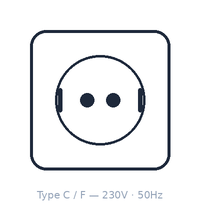
The Netherlands uses Type C and Type F plugs (standard European two-pin round). Voltage is 230V at 50Hz. UK and US travelers will need an adapter.
Mobile coverage is excellent — the Netherlands is small and densely populated, so coverage gaps are virtually nonexistent. EU/EEA travelers benefit from roaming at home rates. Non-EU visitors should consider an eSIM or local SIM — carriers include KPN, Vodafone, and T-Mobile, with prepaid options available at Schiphol, phone shops, and convenience stores. Free Wi-Fi is available at most cafés, hotels, and train stations.
📱 Need mobile data? An eSIM is the easiest way to stay connected in Europe — no SIM swapping, activate before you land. Compare the best eSIM providers for Europe →
Health and Safety
The Netherlands has a high-quality healthcare system. EU/EEA citizens can use their European Health Insurance Card (EHIC) or Global Health Insurance Card (GHIC) for treatment at public facilities. Non-EU visitors should carry travel insurance with medical coverage — a hospital visit without insurance can be very expensive. Pharmacies (apotheek, marked with a green cross) are well-stocked, and pharmacists can advise on minor ailments.
The Netherlands is very safe for visitors. Violent crime against tourists is rare. The main risks are petty theft — pickpocketing in Amsterdam’s tourist areas (Dam Square, Centraal Station, the Red Light District, crowded trams) and bicycle theft, which is a national epidemic. Lock your rental bike properly with the built-in ring lock and a secondary chain lock. Outside Amsterdam, crime rates are very low.
Food and Dining Culture
Dutch cuisine has historically had a reputation for being utilitarian rather than inspiring — but the food scene has transformed over the past decade, particularly in Amsterdam, Rotterdam, and Utrecht. The country’s colonial history, diverse immigrant population, and proximity to France, Belgium, and Germany have created a food culture that’s far more interesting than its stereotypes suggest.
Traditional Dutch foods to try include stroopwafels (thin waffle cookies filled with caramel syrup — best eaten warm, fresh from a street vendor or market stall), bitterballen (deep-fried crunchy ragout balls, the essential bar snack paired with mustard), kibbeling (battered and fried cod, served with garlic sauce — find it at fish stalls in every market), haring (raw herring, traditionally eaten by holding the fish by the tail and tipping your head back), erwtensoep (thick split pea soup with smoked sausage — a winter staple), and stamppot (mashed potatoes mixed with vegetables like kale, sauerkraut, or endive, served with a smoked sausage).
The Indonesian influence on Dutch food is enormous — a legacy of colonial history. Rijsttafel (rice table, a feast of 15–30 small Indonesian dishes) is a uniquely Dutch-Indonesian invention. Indonesian restaurants are found nationwide, and Indonesian snacks like loempia (spring rolls), satay, and nasi goreng have become part of everyday Dutch food culture. Surinamese food (roti, pom, sandwiches) is another colonial legacy, particularly in Amsterdam.
Dutch cheese is world-famous — Gouda (which the Dutch pronounce more like “HOW-da”) and Edam are the most recognized internationally, but the variety runs deep. Visit a cheese shop (kaaswinkel) and taste aged versions — “oud” (old) Gouda, aged 18+ months, is an entirely different product from the mild, rubbery export version.
Dining follows a northern European pattern. Lunch is typically a quick affair — sandwiches, soup, or broodjes (small bread rolls with toppings). Dinner is served from around 6:00 to 9:00 PM, earlier than southern Europe. Restaurants often stop kitchen service by 9:30 or 10:00 PM. Tipping is appreciated but not obligatory — rounding up or leaving 5–10% is standard.
The Netherlands: Economy and Context
The Netherlands has a nominal GDP of approximately $1.16 trillion (2024), making it the 18th largest economy in the world — a remarkable figure for a country of under 18 million people. GDP per capita is among the world’s highest at over $67,000. The economy is driven by trade and logistics (Rotterdam is Europe’s largest port), technology, agriculture (the Netherlands is the world’s second-largest agricultural exporter by value, after the US), and financial services.
Tourism contributes roughly 5.4% of GDP directly, a smaller share than in southern European countries but significant in absolute terms. The Netherlands received 21.3 million international tourists in 2024, with Germany, Belgium, the United States, the United Kingdom, and France as the top source markets. Amsterdam draws the overwhelming majority of international visitors, creating a concentration that the government has actively tried to redistribute through its “Holland. The Original Cool” campaign promoting lesser-known destinations.
The country is a founding member of the EU, NATO, and the Schengen Area, and hosts several major international institutions including the International Court of Justice, the International Criminal Court, and Europol — all in The Hague. The Netherlands is consistently ranked among the world’s happiest countries, with high scores for quality of life, education, and civil liberties. The minimum wage stands at €14.71 per hour as of January 2026, among the highest in Europe.
Frequently Asked Questions
Do I need a visa to visit the Netherlands?
Citizens of 59 countries, including the US, UK, Canada, and Australia, can visit the Netherlands without a visa for up to 90 days within any 180-day period. This is the standard Schengen 90/180-day rule. Other nationalities need a Schengen visa. Use the Europe Travel Planner at schengentraveler.com to find out if your nationality requires a visa.
Is the Netherlands expensive?
Yes — it’s one of Western Europe’s more expensive countries, especially Amsterdam. Accommodation costs are high, particularly since the 2026 VAT increase on overnight stays from 9% to 21%. Outside Amsterdam, prices are more moderate. Budget travelers can manage on €80–€120 per day in Amsterdam, less elsewhere.
What’s the best time to visit the Netherlands?
Late April through May is peak tulip season and arguably the most beautiful time to visit. June through September offers the warmest and driest weather. King’s Day (April 27) is the country’s biggest celebration. Winter is cold and grey but brings cozy café culture and Christmas markets. Avoid early November — it’s often wet and dark with little to compensate.
How do I get from Amsterdam to Rotterdam?
The Intercity Direct train takes 41 minutes and costs roughly €15–€22 plus a €3.20 supplement (€1.92 off-peak). Regular Intercity trains take about 1 hour 10 minutes with no supplement. Trains run every 10–15 minutes throughout the day. There’s no reason to fly or drive.
Do I need an International Driving Permit to drive in the Netherlands?
The Netherlands is more relaxed about IDPs than most European countries — foreign licenses are generally accepted for short visits. However, it’s always a good idea to carry one for extra assurance, especially at rental agencies. EU/EEA license holders need no additional documentation. See our IDP guide for details.
Is the Netherlands the same as Holland?
Technically, no. Holland refers to just two provinces — North Holland (Amsterdam) and South Holland (Rotterdam, The Hague). The country’s official name is the Netherlands. The Dutch government officially stopped promoting the country as “Holland” in 2020 to encourage tourism beyond Amsterdam. That said, “Holland” is still widely used colloquially, and the Dutch themselves aren’t typically offended by it.
How does the OVpay system work?
OVpay is the Netherlands’ new contactless public transport payment system. Just tap your bank card (Visa, Mastercard, or Maestro) or phone at the check-in and check-out gates when boarding and leaving trains, trams, buses, and metros. The system calculates the best fare automatically. It’s replacing the OV-chipkaart, though both systems still work. Always remember to check out — forgetting costs €33.30 on trains (refundable, but annoying).
Can I use credit cards everywhere?
Not quite. The Netherlands is very cashless, but the preferred payment method is debit card (especially Maestro). Visa and Mastercard credit cards are accepted at larger stores, restaurants, and hotels, but many smaller establishments, market stalls, and some Dutch chains only accept Maestro, V PAY, or cash. Having a debit card with Maestro or carrying some cash is recommended.
🌍 Plan Your Trip to the Netherlands
Entry requirements, visa status, and a full travel briefing — personalized for your nationality.
Use the Europe Travel Planner →📚 Related Articles
- Schengen 90/180-Day Rule — How the visa-free stay limit works across Europe
- ETIAS: Europe’s New Travel Authorization — What you’ll need starting late 2026
- Entry/Exit System (EES) — How the new biometric borders work
- International Driving Permit in Europe — Country-by-country IDP requirements
- Best Travel Insurance for Europe — Protect your trip
- Travel to Germany: Complete Guide
- All Europe Country Guides
This article is for informational purposes only and does not constitute legal or travel advice. Entry requirements can change — always verify with official government sources before traveling. Last updated: February 2026.