
Last Updated: February 2026
Lithuania is the largest and southernmost of the three Baltic states — a country of baroque old towns, dense forests, shifting sand dunes, and a fierce sense of independence forged by centuries of turbulent history. From the vibrant streets of Vilnius to the haunting beauty of the Curonian Spit, Lithuania offers authentic European experiences, rich culture, and remarkable value for money. Here’s everything a visitor needs to know to plan a trip to Lithuania in 2026.
🇱🇹 Lithuania at a Glance
| Capital | Vilnius |
| Population | ~2.9 million (2026) |
| Currency | Euro (€) |
| Language | Lithuanian |
| Time Zone | EET (UTC+2) · EEST in summer (UTC+3) |
| Plug Type | Type C and F · 230V / 50Hz |
| Driving Side | Right |
| International Driving Permit (IDP) | Recommended — see IDP guide |
| Schengen Member | Yes — since 2007 |
| Emergency Number | 112 (EU-wide) |
Entry Requirements for Lithuania
Lithuania is part of the Schengen Area, meaning it follows the same entry rules as the other 28 Schengen member countries. What you need to enter Lithuania depends on your nationality.
Visa-Exempt Visitors (US, UK, Canada, Australia, and Others)
Citizens of 59 visa-exempt countries — including the United States, United Kingdom, Canada, Australia, New Zealand, Japan, and most Latin American nations — can enter Lithuania without a visa for short stays of up to 90 days within any 180-day period. This is the standard Schengen 90/180-day rule, and it applies across all 29 Schengen countries combined, not just Lithuania.
To enter Lithuania as a visa-exempt visitor, your passport must meet two requirements. It must have been issued within the last 10 years at the time of entry, and it must remain valid for at least three months after your planned departure date from the Schengen area.
At the border, Lithuanian officials may ask for proof of accommodation, proof of sufficient funds, and evidence of onward or return travel. These documents aren’t always requested, but having them available avoids potential complications.
Visitors Who Need a Visa
If your country is not on the visa-exempt list, you’ll need to apply for a Schengen short-stay visa (Type C) through the Lithuanian consulate in your home country before traveling. This visa allows stays of up to 90 days within a 180-day period and typically costs €80 for adults.
For longer stays — work, study, or family reunification — you’ll need a Lithuanian national long-stay visa (Type D), which must be applied for separately from a Schengen visa. Use our Europe Travel Planner to find out exactly what your nationality requires.
What’s Changing at Lithuania’s Borders in 2026
Two major systems are transforming how non-EU visitors enter Lithuania and the rest of the Schengen area. Both are rolling out in 2026, and travelers need to be aware of the timeline.
Entry/Exit System (EES)
The Entry/Exit System began its phased rollout on October 12, 2025, and is expected to be fully operational at all Schengen border crossings by April 10, 2026. EES replaces the old passport-stamping process with a digital system that records biometric data — fingerprints and facial images — along with your passport details and entry/exit dates.
The first time you enter the Schengen area under EES, border officials will collect your fingerprints and take a facial photograph. This is done either at a self-service kiosk (if you have a biometric passport) or by a border guard. Once you’re registered, the data stays valid for three years, and subsequent entries only require identity verification rather than a full re-registration.
Lithuania’s main points of entry — Vilnius Airport, Kaunas Airport, Palanga Airport, and the land border crossings with Belarus and Russia’s Kaliningrad exclave — are all being equipped with EES infrastructure. The Belarusian and Kaliningrad border crossings may experience longer wait times during the transition period.
ETIAS — Europe’s New Travel Authorization
The European Travel Information and Authorization System (ETIAS) is expected to launch in late 2026, likely in October or November. Once operational, all visa-exempt travelers — including Americans, Britons, Canadians, and Australians — will need to apply for ETIAS authorization before boarding a flight to Lithuania or any other Schengen country.
The ETIAS application is completed online and takes roughly 10 minutes. It asks for personal details, passport information, and security-related questions. The fee is €20 for travelers aged 18 to 70 (free for those younger or older). Once approved, ETIAS is valid for three years or until your passport expires, whichever comes first. It covers all 29 Schengen countries, so you don’t need a separate authorization for each destination.
Getting to Lithuania
Lithuania is well-connected by air to the rest of Europe and reachable by bus and car from its Baltic neighbors and Poland. Rail connections are improving but still limited for international travel.
By Air
Vilnius Airport (VNO) is the main international gateway, with direct flights from most major European cities. Wizz Air and Ryanair are the dominant budget carriers, offering extensive route networks across Europe. airBaltic, Lufthansa, LOT Polish Airlines, SAS, Turkish Airlines, and others connect Vilnius to their respective hubs. Kaunas Airport (KUN) is a secondary hub served primarily by Ryanair. Palanga Airport (PLQ) near the coast has seasonal connections.
There are no direct transatlantic flights to Lithuania. Travelers from the US, Canada, or Australia typically connect through a European hub — Warsaw, Helsinki, Frankfurt, Amsterdam, or Istanbul are the most common routing options.
By Bus
International buses are a popular and affordable way to reach Lithuania from neighboring countries. Lux Express and FlixBus run frequent services from Riga (3.5–4 hours, from €10–15), Warsaw (approximately 8 hours), and Tallinn (approximately 9 hours via Riga). Ecolines serves additional Eastern European destinations. The Vilnius Bus Station is centrally located near the Old Town and the train station.
By Train
Lithuania’s international rail connections are limited but improving. A direct train runs from Vilnius to Kaunas (approximately 1 hour) and onward to the Polish border, with connections to Warsaw. The Rail Baltica high-speed project — connecting Vilnius, Riga, and Tallinn with eventual extension to Warsaw and Berlin — is under construction with a projected completion in the late 2020s. For now, buses remain faster and more practical for most cross-border travel.
By Car
Lithuania shares land borders with Latvia to the north, Belarus to the east and south, Poland to the southwest, and Russia’s Kaliningrad exclave to the west. As a Schengen member, there are no border controls between Lithuania, Latvia, and Poland. The Belarusian and Kaliningrad border crossings involve passport and customs checks — wait times can be significant, and crossing restrictions should be checked before travel given the current geopolitical situation.
Getting Around Lithuania
Lithuania is a compact country — the drive from Vilnius to any corner takes roughly 3–4 hours. Transport centers heavily on Vilnius and Kaunas, with connections between secondary destinations often requiring transfers.
Buses
Buses are Lithuania’s most practical intercity transport option. Multiple operators serve domestic routes, with schedules searchable at autobusubilietai.lt. Modern coaches with Wi-Fi and power outlets serve major routes.
| Route | Duration | Approximate Cost |
|---|---|---|
| Vilnius → Kaunas | ~1.5 hours | €6–10 |
| Vilnius → Klaipėda | ~4 hours | €15–20 |
| Vilnius → Palanga | ~4.5 hours | €16–22 |
| Kaunas → Klaipėda | ~3 hours | €12–16 |
| Vilnius → Druskininkai | ~2 hours | €8–12 |
Trains
Lithuanian Railways (LTG Link) operates domestic services. The Vilnius–Kaunas route is the most frequent and useful (approximately 1 hour, modern trains, from €5–8). Trains also connect Vilnius to Klaipėda (approximately 4.5 hours) and several regional destinations. The Vilnius–Kaunas route is being upgraded for higher speeds as part of broader infrastructure improvements. Tickets are available at ltglink.lt.
Driving
A rental car is the best way to explore Lithuania beyond the main cities — the Curonian Spit, Aukštaitija National Park, the countryside manors, and many smaller towns are difficult to reach by public transit. Major rental companies operate at Vilnius and Kaunas airports and in the city centers.
Lithuania drives on the right. Speed limits are 130 km/h on motorways (110 km/h in winter), 90 km/h on rural roads, and 50 km/h in urban areas. Main roads are in good condition, particularly the A1 motorway between Vilnius and Klaipėda. Secondary and rural roads vary. Headlights must be on at all times while driving.
Winter driving: Winter tires are mandatory from November 10 to April 1. Lithuanian winters bring snow, ice, and limited daylight. The A1 motorway is well-maintained in winter, but secondary roads may not be cleared promptly.
International Driving Permit: An IDP is recommended for non-EU drivers. See our International Driving Permit guide for how to get one in your country.
Vilnius Public Transit
Vilnius has an extensive bus and trolleybus network. A single ticket costs €1 (purchased via the Trafi app or contactless at the validator on board). The Old Town is compact and best explored on foot. Electric scooters and bike-sharing services are widely available from spring through autumn. Kaunas has a similar bus network and is also building a tram system.
Where to Go in Lithuania
Lithuania packs historical depth, natural beauty, and cultural vibrancy into a small footprint. The country rewards travelers who venture beyond the capital.
Vilnius
Lithuania’s capital has one of Europe’s largest and best-preserved baroque old towns — a UNESCO World Heritage Site with over 40 churches, winding cobblestone streets, and hidden courtyards. The Gate of Dawn, Vilnius Cathedral and its bell tower, St. Anne’s Church (a Gothic masterpiece), and the Gediminas Tower overlooking the city are the headline sights. The Užupis neighborhood, a former run-down district that declared itself an independent “republic” (complete with its own constitution and president), is now a bohemian enclave of galleries, cafes, and street art. Vilnius has a rapidly growing restaurant and nightlife scene that consistently surprises first-time visitors.
Kaunas
Lithuania’s second city served as the country’s temporary capital during the interwar period (1920–1940), leaving behind a remarkable concentration of Art Deco and modernist architecture — now a UNESCO-recognized feature. The Old Town sits at the confluence of the Nemunas and Neris rivers, anchored by Kaunas Castle and the lively Town Hall Square. Laisvės alėja (Liberty Avenue), one of the longest pedestrian streets in Europe, stretches through the center. Kaunas was European Capital of Culture in 2022, and the cultural infrastructure has been permanently elevated. The Ninth Fort, on the outskirts, is a sobering memorial to the Holocaust in Lithuania — over 50,000 people, mostly Jews, were murdered here during the Nazi occupation.
Curonian Spit (Kuršių Nerija)
The Curonian Spit is Lithuania’s most extraordinary natural feature — a 98 km sand dune peninsula separating the Curonian Lagoon from the Baltic Sea, shared with Russia’s Kaliningrad region. The Lithuanian half is a UNESCO World Heritage Site and one of the most hauntingly beautiful landscapes in Northern Europe. The village of Nida is the main base, with colorful fishermen’s cottages, the Parnidis Dune (52 meters high, with panoramic views), and Thomas Mann’s former summer house. The Dead Dunes and vast pine forests feel otherworldly. Access is by ferry from Klaipėda — cars and passengers both.
Klaipėda
Lithuania’s third-largest city and only seaport, Klaipėda has a distinctly Germanic old town reflecting its centuries as the Prussian city of Memel. The cobblestone streets, half-timbered buildings, and Theater Square (where Hitler proclaimed the annexation of the Memelland in 1939) give the city a different architectural character than Vilnius or Kaunas. Klaipėda is the gateway to the Curonian Spit and the Palanga beach resort, and hosts the Sea Festival (Jūros šventė) every July — Lithuania’s largest annual event.
Trakai
The medieval island castle of Trakai — a red-brick fortress rising from the waters of Lake Galvė — is one of the most photographed sights in the Baltic region. Just 28 km from Vilnius, it’s an easy half-day trip. The castle houses a history museum, and the surrounding lakeland offers kayaking, sailing, and waterside restaurants. Trakai is also home to Lithuania’s Karaim community, a Turkic minority group settled here in the 14th century — their traditional dish, kibinai (stuffed pastries), is the town’s signature food and worth trying at every opportunity.
Hill of Crosses (Kryžių Kalnas)
Near the northern city of Šiauliai, the Hill of Crosses is one of Lithuania’s most powerful and unusual sights — a small hill covered with over 200,000 crosses, crucifixes, statues, and rosaries placed by pilgrims over centuries. It’s a symbol of Lithuanian identity, Catholic devotion, and resistance — Soviet authorities bulldozed the hill multiple times, and each time the crosses reappeared. The site is free to visit and deeply atmospheric, particularly at dawn or dusk. Allow 1–2 hours, including the drive from Šiauliai.
Aukštaitija National Park
Lithuania’s oldest national park protects a landscape of pine forests, over 100 lakes, and traditional wooden villages in the country’s northeast. The park offers excellent kayaking and canoeing routes, forest hiking trails, and a slow pace of life that feels untouched by modern development. The Ladakalnis viewpoint provides panoramic views across the lake-studded forest. The park is best explored by car or with a local guide.
Druskininkai
This southern spa town near the Belarusian border has been a health resort since the 19th century, known for its mineral springs and therapeutic traditions. Today it combines traditional spa culture with modern wellness facilities and two notable attractions — the Grūtas Park sculpture garden (a collection of Soviet-era statues removed from Lithuanian cities, displayed in a forest setting that’s equal parts educational and darkly humorous) and the Snow Arena, an indoor ski slope that operates year-round.
Practical Information for Visitors
Money and Costs
Lithuania uses the euro (€), adopted in 2015. Credit and debit cards are widely accepted in cities and tourist areas. Contactless payment is standard in most businesses. Cash is more commonly needed at rural markets, smaller restaurants, and some bus services. ATMs are plentiful in cities and towns.
Lithuania is one of Europe’s best-value destinations. Budget travelers can manage on €30–50 per day with hostel accommodation, local food, and public transit. Mid-range travel — comfortable hotels, restaurant meals, and activities — runs €60–110 per day. Vilnius is the most expensive area, though still significantly cheaper than Western European capitals. A two-week trip for two people typically costs €1,500–3,500 total.
Tipping in Lithuania is not obligatory but increasingly common. Leaving 10% at restaurants for good service is appreciated. At cafes, rounding up is typical. Tipping is not customary in taxis.
Language
Lithuanian is the official language — one of the oldest living Indo-European languages, closely related only to Latvian and considered a treasure by historical linguists. It uses the Latin alphabet with several unique diacritical marks (ą, č, ę, ė, į, š, ų, ū, ž).
English is widely spoken in Vilnius, Kaunas, and tourist areas, particularly by younger Lithuanians. Outside the main cities, English proficiency drops off. Russian is understood by older generations but is a sensitive subject given the historical context — younger Lithuanians generally prefer English. Polish is spoken in some areas around Vilnius, reflecting the significant Polish minority. Learning a few Lithuanian words — “labas” (hello), “ačiū” (thank you), “prašau” (please/you’re welcome) — is warmly appreciated.
Power and Connectivity
Lithuania uses Type C and Type F power plugs at 230V/50Hz. If you’re traveling from the US, Canada, UK, or Australia, you’ll need a plug adapter.
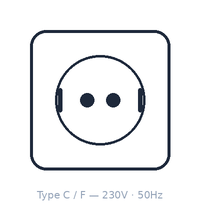
Most modern electronics (phones, laptops, cameras) handle the voltage difference automatically — check the label on your charger for “INPUT: 100-240V” to confirm. Hair dryers and straighteners from North America may need a voltage converter, or it’s easier to buy or borrow one locally.
Lithuania has excellent mobile coverage and widespread Wi-Fi. The country has some of the fastest and cheapest mobile internet in Europe. EU residents benefit from “roam like at home” regulations. For visitors from outside the EU, local SIM cards and eSIMs are available from Telia, Tele2, and Bite at airports, shops, and kiosks. Free Wi-Fi is available in most cafes, hotels, and public spaces.
📱 Need mobile data? An eSIM is the easiest way to stay connected in Europe — no SIM swapping, activate before you land. Compare the best eSIM providers for Europe →
Health and Safety
Lithuania’s healthcare system is adequate in cities, with private clinics in Vilnius and Kaunas offering a good standard of care. EU citizens can use the European Health Insurance Card (EHIC) or Global Health Insurance Card (GHIC) for necessary medical treatment. Non-EU visitors should carry comprehensive travel insurance.
In a medical emergency, call 112 (EU-wide emergency number). Pharmacies (vaistinė) are well-stocked, and pharmacists can provide advice for minor ailments. Major pharmacy chains include Eurovaistinė and Camelia.
Lithuania is generally safe for visitors. Petty theft can occur in Vilnius Old Town and at busy tourist sites, but is uncommon. The main safety considerations are traffic-related — Lithuanian driving culture can be aggressive, and pedestrians should exercise caution at crossings. As in the other Baltic states, tick-borne diseases (Lyme disease and tick-borne encephalitis) are a concern in forested areas from spring through autumn.
Food and Dining Culture
Lithuanian cuisine is hearty, rooted in the land, and shaped by cold winters and a strong farming tradition. Cepelinai (zeppelin-shaped potato dumplings stuffed with meat, curd, or mushrooms) are the undisputed national dish — heavy, filling, and found on virtually every traditional restaurant menu. Šaltibarščiai (cold beet soup, a vivid pink served with hot potatoes) is the quintessential summer dish. Other staples include kugelis (potato pudding), skilandis (smoked meat sausage), dark rye bread, and a wide variety of dairy products including fresh curd cheese.
Vilnius and Kaunas have vibrant modern dining scenes that go well beyond traditional fare. New Lithuanian restaurants reinterpret local ingredients with contemporary techniques, and the cities’ cafe cultures rival those of much larger European capitals. The Hales Market in Vilnius and the Old Market in Kaunas are excellent for sampling local produce and street food.
Lithuania has a growing craft beer scene — Vilnius alone has dozens of craft beer bars and breweries. Traditional Lithuanian beer (alus) has a long heritage, with regional styles and small-town breweries producing distinctive ales. Mead (midus) and various herbal spirits, including Trejos Devynerios (a 27-herb bitter), round out the traditional drinks.
A meal at a mid-range restaurant in Vilnius costs €10–18 per person. Lunch specials (dienos pietūs) are widely available at €5–8 for a full meal. Outside the main cities, prices are even lower.
Lithuania: Economy and Context
Lithuania has transformed from a Soviet republic into a dynamic, open economy since regaining independence in 1990. The country was the first Soviet republic to declare independence, an act of courage that set the stage for the dissolution of the USSR. Lithuania joined the EU and NATO in 2004, the Schengen Area in 2007, and adopted the euro in 2015.
The economy is driven by services, manufacturing, IT, food processing, and logistics — Klaipėda’s port is a critical Baltic shipping hub. Lithuania has developed a thriving fintech sector, with Vilnius emerging as one of Europe’s leading fintech licensing hubs. The country’s laser technology sector is globally recognized, producing components used in research institutions worldwide.
Tourism has grown steadily, with Vilnius as the primary draw. The country attracted over 3 million international visitors annually before the pandemic and has since recovered strongly. Lithuania is increasingly promoted as a destination for cultural tourism, nature travel, and gastronomy. The combination of affordability, cultural richness, and compact geography makes it an excellent destination for both short breaks and longer explorations.
Frequently Asked Questions
Do I need a visa to visit Lithuania?
Citizens of 59 countries, including the US, UK, Canada, and Australia, can visit Lithuania without a visa for up to 90 days within any 180-day period. This is the Schengen 90/180-day rule, which applies across all Schengen countries combined. Use our Europe Travel Planner to find out if your nationality requires a visa.
Will I need ETIAS to visit Lithuania in 2026?
ETIAS is expected to launch in late 2026, likely October or November. Once operational, visa-exempt visitors will need to apply online before traveling. The EU will confirm the exact date at least six months in advance. Until ETIAS launches, you only need your valid passport. See our ETIAS guide for the latest timeline.
What is the best time to visit Lithuania?
June through August offers the warmest weather, the longest days, and the liveliest festival calendar — including the Klaipėda Sea Festival and numerous midsummer celebrations. May and September are pleasant with fewer visitors. Winter (November through March) is cold and dark but offers Christmas markets, cozy restaurants, and snowy landscapes. The shoulder seasons provide the best balance of weather and value.
Do people speak English in Lithuania?
English is widely spoken in Vilnius, Kaunas, and tourist areas, particularly by younger Lithuanians. Outside the main cities, English proficiency drops off. Learning a few Lithuanian words is warmly appreciated. Russian is understood by older generations but is a sensitive subject due to historical context.
How much does a trip to Lithuania cost?
Lithuania is one of Europe’s best-value destinations. Budget travelers can manage on €30–50 per day. Mid-range travel runs €60–110 per day. Vilnius is the most expensive area but still significantly cheaper than Western European capitals. A two-week trip for two people typically costs €1,500–3,500 total.
Is Lithuania safe for tourists?
Lithuania is generally safe. Petty theft is uncommon but possible in Vilnius Old Town. Lithuanian driving culture can be aggressive — exercise caution as a pedestrian. Tick-borne diseases are a health concern in forested areas from spring through autumn. Violent crime against tourists is rare.
How do I get to the Curonian Spit?
The Curonian Spit is accessed by a short ferry crossing from Klaipėda to Smiltynė (about 5 minutes, frequent departures). Cars and passengers are both carried. An entrance fee of €5 per car applies. In summer, book ferry slots in advance as queues can build up, especially on weekends.
Can I combine Lithuania with Latvia and Estonia?
Absolutely — the three Baltic states are compact, well-connected, and share Schengen membership. Lux Express buses connect Vilnius, Riga, and Tallinn with frequent, affordable services. A week to ten days is enough for highlights of all three capitals and surrounding areas. All three use the euro and share the same Schengen 90/180-day limit.
🌍 Plan Your Trip to Lithuania
Entry requirements, visa status, and a full travel briefing — personalized for your nationality.
Use the Europe Travel Planner →📚 Related Articles
- Schengen 90/180-Day Rule — How the visa-free stay limit works across Europe
- ETIAS: Europe’s New Travel Authorization — What you’ll need starting late 2026
- Entry/Exit System (EES) — How the new biometric borders work
- International Driving Permit in Europe — Country-by-country IDP requirements
- Best Travel Insurance for Europe — Protect your trip
- Travel to Latvia: Complete Guide
- Travel to Poland: Complete Guide
- All Europe Country Guides
This article is for informational purposes only and does not constitute legal or travel advice. Entry requirements can change — always verify with official government sources before traveling. Last updated: February 2026.