
Last Updated: February 2026
Kosovo is Europe’s youngest country and one of its most surprising. Declared independence in 2008, it’s a place where Ottoman mosques and medieval Serbian monasteries coexist, where the capital Pristina buzzes with café culture and youthful energy, and where the mountains of the Accursed Alps offer some of the Balkans’ best hiking with almost no other tourists in sight. It’s also one of the most welcoming countries you’ll visit — Kosovars are famously hospitable, particularly toward Americans, whose country played a decisive role in Kosovo’s path to independence. Kosovo is not part of the Schengen Area, the EU, or even the United Nations — which means it has its own entry rules and your time here doesn’t count toward your Schengen 90 days. Here’s everything you need to know to plan your trip to Kosovo in 2026.
🇽🇰 Kosovo at a Glance
| Official Name | Republic of Kosovo (Republika e Kosovës) |
| Capital | Pristina (Prishtina) |
| Population | ~1.8 million (2026) |
| Currency | Euro (€) — adopted unilaterally, not in the eurozone |
| Language | Albanian · Serbian (both official) · English widely spoken among youth |
| Time Zone | CET (UTC+1) · CEST in summer (UTC+2) |
| Plug Type | Type C & F · 230V / 50Hz |
| Driving Side | Right |
| International Driving Permit (IDP) | Required for non-EU license holders — see IDP guide |
| Schengen Member | No — Kosovo is not a member of the EU, Schengen, or the United Nations. It has its own immigration system. Time spent here does not count toward your Schengen 90 days. |
| Emergency Number | 112 (universal) |
Entry Requirements for Kosovo
Kosovo is not a member of the European Union, the Schengen Area, or the United Nations — though it is recognized as an independent state by over 100 countries, including the United States, the UK, and most EU members. Serbia does not recognize Kosovo’s independence. This political complexity doesn’t affect most tourists, but it’s important context for understanding border crossings and travel logistics.
🇺🇸 US Citizens: Visa-Free for 90 Days
US citizens can visit Kosovo without a visa for up to 90 days within a 180-day period. No pre-travel authorization, no online application, no fee — just arrive with a valid passport. Your passport must be valid for at least three months beyond your planned departure date.
Entry is quick and friendly — border officials are accustomed to international visitors. You may be asked for proof of accommodation and a return or onward ticket, though this is rare for US passport holders. Americans are particularly warmly received in Kosovo, where the US is viewed very favorably for its role in Kosovo’s independence.
⚠️ Kosovo is not Schengen, not EU, and not UN. A Schengen visa does not allow entry to Kosovo. ETIAS will not apply here. Kosovo’s visa policy is entirely independent. Some countries (including Serbia, Russia, and China) do not recognize Kosovo — if you hold a passport from a non-recognizing country, check entry requirements carefully.
EU/EEA Citizens
Citizens of most EU and EEA countries can enter Kosovo without a visa for up to 90 days using a valid passport or national ID card. Since Kosovo is not in the EU, there is no automatic right to live or work.
Other Nationalities
Citizens of many countries — including Canada, Australia, New Zealand, Japan, the UK, and others — can visit Kosovo visa-free for up to 90 days. Some nationalities require a visa, which must be obtained at a Kosovo embassy before traveling. Use our Europe Travel Planner to check your specific requirements.
The Serbia–Kosovo Border Issue
This is the most important logistical consideration for travelers in the region. Serbia does not recognize Kosovo as an independent country and considers Kosovo’s border crossings as “administrative boundary lines.” The practical implications:
Entering Kosovo from Serbia: Serbia does not stamp your passport when you exit toward Kosovo (since Serbia doesn’t consider it leaving the country). Kosovo will stamp your passport on entry. This is fine.
Entering Serbia from Kosovo: This can be problematic. If you entered Kosovo from a country other than Serbia (for example, from North Macedonia or Albania), Serbia may refuse you entry because it considers you to be entering Serbia without having exited at a Serbian border post. The workaround: if you plan to visit both Kosovo and Serbia, enter Kosovo from Serbia first, then return to Serbia the same way.
Combining with Schengen Travel
Kosovo’s non-Schengen status makes it part of the Western Balkans circuit where your Schengen clock stays paused.
Your Schengen Clock Stops in Kosovo
Time spent in Kosovo does not count toward your Schengen 90-day limit. Kosovo fits naturally into Balkans itineraries alongside North Macedonia, Albania, Serbia, Montenegro, and Bosnia — none of which are in Schengen. You can spend weeks or months in the Western Balkans without touching your Schengen allowance.
✅ Planning a long Europe trip? Use our Schengen Calculator to track your 90/180-day count. Kosovo and the rest of the Western Balkans are all non-Schengen — your clock stays paused for the entire Balkan leg.
Separate Documents for Each
Kosovo visa-free entry does not grant access to Schengen countries, and a Schengen visa does not cover Kosovo. If your trip includes both, you need separate documentation for each leg. ETIAS will not apply to Kosovo.
Getting to Kosovo
Kosovo is accessible by air, bus, and car. As a small, landlocked country, flight options are limited but improving.
By Air
Pristina International Airport Adem Jashari (PRN) is Kosovo’s only commercial airport, located about 18 km southwest of the capital. Direct flights connect Pristina with cities across Europe including Istanbul, Vienna, Zürich, Basel, Munich, London (Luton), Malmö, Geneva, and many more. Wizz Air is the dominant carrier, with an extensive network from Pristina. Turkish Airlines, Swiss, Austrian, and others also serve the airport. There are no direct flights from North America — common routings connect through Istanbul, Vienna, or a Wizz Air hub.
By Bus
International buses connect Kosovo with all neighboring countries and beyond. Major routes include Skopje (North Macedonia) to Pristina (2 hours), Tirana (Albania) to Pristina (4–5 hours), and Belgrade (Serbia) to Pristina (5–6 hours, though check current service status given the political situation). Buses are cheap and frequent on the main corridors.
By Car
Driving into Kosovo is straightforward from North Macedonia, Albania, and Montenegro. The main highway from Skopje is in good condition. The road from Albania via Prizren is also well-traveled. Entering from Serbia requires attention to the border issues described above. Kosovo does not require a motorway vignette.
Getting Around Kosovo
Kosovo is tiny — about 150 km from north to south — so getting around is quick. Pristina to any major destination is under 2 hours.
Driving
A rental car provides convenience but isn’t essential given Kosovo’s small size and decent bus connections. The main highway from Pristina to Prizren is modern. Other roads vary from good to rough, particularly in rural and mountainous areas. Kosovo drives on the right. Speed limits are 50 km/h in towns, 80 km/h on open roads, and 110 km/h on the highway. An International Driving Permit (IDP) is required. See our IDP guide. Fuel is affordable — approximately €1.30–1.50 per liter.
Buses
Buses are the main form of public transport and connect all major towns. Services are frequent and cheap. The main bus station in Pristina has regular departures to Prizren (1.5 hours, €3–5), Peja/Peć (1.5 hours, €3–5), and Gjakova (1.5 hours, €3–4).
| Route | Typical Duration | Approximate Fare |
|---|---|---|
| Pristina to Prizren | 1 hr 30 min | €3–5 |
| Pristina to Peja/Peć | 1 hr 30 min | €3–5 |
| Pristina to Gjakova | 1 hr 30 min | €3–4 |
| Pristina to Skopje (N. Macedonia) | 2 hrs | €5–8 |
| Prizren to Tirana (Albania) | 3–4 hrs | €8–12 |
Taxis
Taxis are inexpensive. A ride across Pristina costs €2–5. Always confirm the fare before starting or ensure the meter is on. Ride-hailing apps have limited presence, but local taxi companies are reliable.
Where to Go in Kosovo
Kosovo is small but packs in a mix of Ottoman heritage, Serbian medieval monasteries, a vibrant capital, and genuinely wild mountain landscapes.
🏙️ Pristina
Kosovo’s capital is raw, energetic, and full of surprises. It’s not a classically beautiful city — the architecture is a patchwork of Ottoman remnants, Yugoslav-era concrete, and new construction — but the atmosphere is magnetic. The café culture is intense (Kosovars are serious coffee drinkers), the nightlife punches above its weight, and the young population gives the city a forward-looking energy. Key sites include the Newborn Monument (repainted annually as a symbol of independence), the National Library (one of Europe’s most unusual buildings — love it or hate it), the Imperial Mosque and Sultan Mehmet Fatih Mosque in the old quarter, and the Ethnographic Museum. Bill Clinton Boulevard and a statue of the former president reflect Kosovo’s deep appreciation for American support. The Pristina Bazaar area, while smaller than Skopje’s, is worth exploring.
🕌 Prizren
Prizren is Kosovo’s most beautiful city and its cultural capital — a perfectly preserved Ottoman town nestled in a river valley beneath a hilltop fortress. The Sinan Pasha Mosque, the Stone Bridge, the Kalaja Fortress (climb it for sunset views over the entire city), and the winding cobblestone lanes of the old town make this arguably the most atmospheric small city in the Western Balkans. Prizren hosts the annual DokuFest documentary film festival (August), which transforms the old town into an open-air cinema. The city has excellent restaurants and a thriving traditional craft scene.
⛰️ The Accursed Alps (Bjeshkët e Nemuna / Prokletije)
The Albanian Alps extend into western Kosovo, and the scenery is spectacular — jagged peaks, alpine meadows, glacial valleys, and virtually no tourism infrastructure compared to the Alps proper. The Peaks of the Balkans Trail, a long-distance hiking route through Kosovo, Albania, and Montenegro, passes through this region and is gaining international attention as one of Europe’s great wilderness trails. The town of Peja/Peć is the gateway, with the Rugova Gorge (one of Europe’s longest and deepest canyons) starting just outside the city. The Patriarchate of Peć, a UNESCO-listed medieval Serbian Orthodox monastery complex at the entrance to the gorge, is one of Kosovo’s most important cultural sites.
🏛️ Medieval Monasteries (UNESCO)
Kosovo is home to four UNESCO-listed medieval Serbian Orthodox monasteries, collectively inscribed as “Medieval Monuments in Kosovo.” These include the Patriarchate of Peć, Gračanica Monastery (near Pristina, with extraordinary 14th-century frescoes), Visoki Dečani Monastery (in western Kosovo, still an active monastery protected by KFOR soldiers), and the Church of the Virgin of Ljeviša in Prizren. These are among the finest examples of Byzantine-Romanesque architecture in the Balkans. Regardless of the political context, they are cultural treasures worth visiting with respect and sensitivity.
🍷 Rahovec/Orahovac Wine Region
Kosovo has an ancient winemaking tradition, and the Rahovec/Orahovac area is the center of production. Stone Castle (Kalaja) Winery is one of the largest wine producers in the Balkans and offers tours and tastings. Kosovo wines — particularly reds from Vranac and Cabernet Sauvignon — are improving rapidly and remain extremely affordable.
How Much Does Kosovo Cost?
Kosovo is one of the cheapest destinations in Europe. Your money goes further here than almost anywhere on the continent.
| Expense | Budget | Mid-Range | Comfortable |
|---|---|---|---|
| Accommodation (per night) | €10–25 (hostel/guesthouse) | €35–70 (hotel/apartment) | €80–150+ (boutique hotel) |
| Meals (per day) | €5–12 | €15–30 | €35–60+ |
| Transport (per day) | €3–8 (buses) | €20–35 (rental car + fuel) | €35–60 |
| Activities (per day) | €0–5 | €5–15 | €15–40+ |
Daily budget estimates: Budget travelers can manage on €20–45 per day. Mid-range travelers should expect €50–120 per day. Pristina is the most expensive city but even there, a quality restaurant meal with drinks rarely exceeds €15–20 per person. Prizren and smaller towns are even cheaper.
Currency note: Kosovo uses the euro (€), adopted unilaterally — it is not in the eurozone and does not mint its own coins. This makes things simple for travelers coming from Schengen countries — no currency exchange needed. ATMs are widely available in cities and towns. Credit cards are accepted at hotels and larger restaurants but many smaller establishments are cash-only.
Tipping: Tipping is appreciated but not expected. Rounding up the bill or leaving 5–10% at restaurants is generous. Café tipping is not customary.
Practical Information
Money
Kosovo uses the euro (€). ATMs are available in all cities and most towns. Visa and Mastercard are accepted at hotels and larger establishments, but carry cash for smaller shops, cafés, markets, and rural areas. No currency exchange is needed if you’re coming from a eurozone country.
Power and Connectivity
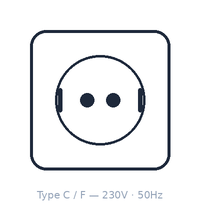
Kosovo uses Type C and F power plugs at 230V/50Hz — the same as most of continental Europe. If you already have a standard European adapter, it will work here. US visitors will need a US-to-European adapter.
Mobile coverage is good in cities and along main roads. Rural and mountainous areas can have gaps. Major operators are IPKO and Vala (a subsidiary of Telekom). Prepaid SIM cards are available at phone shops and are cheap — bring your passport. Kosovo is not in the EU, so EU roaming regulations do not apply. Wi-Fi is widely available in accommodations and cafés in cities.
📱 Need mobile data? An eSIM is the easiest way to stay connected in Europe — no SIM swapping, activate before you land. Compare the best eSIM providers for Europe →
Power reliability: Kosovo occasionally experiences power outages, particularly in winter. These are usually brief in cities but can be longer in rural areas. Most hotels have backup generators.
Health and Safety
Kosovo has adequate healthcare in Pristina but facilities are limited elsewhere. Travel insurance is strongly recommended. Pharmacies (barnatore) are available in towns.
In an emergency, call 112.
Kosovo is generally safe for tourists. Violent crime against visitors is extremely rare, and Kosovars are exceptionally hospitable. Petty theft is uncommon but take standard precautions in busy areas. The political situation between Kosovo and Serbia can produce occasional tensions — particularly in the Serb-majority northern municipalities near Mitrovica — but this rarely affects tourists. Avoid political demonstrations and stay informed about current conditions if visiting the north.
Language
Albanian is the primary language, spoken by the majority of the population. Serbian is the second official language and is spoken in Serb-majority areas, particularly in the north and around monastery sites. English is widely spoken among younger people, especially in Pristina and Prizren — Kosovo has one of the youngest populations in Europe. You’ll find English menus and English-speaking staff in most tourist-oriented businesses. Learning a few Albanian phrases is warmly appreciated.
Food and Dining Culture
Kosovar cuisine is hearty Balkan fare with strong Turkish influence. Flija is Kosovo’s signature dish — a layered pancake-like creation baked over coals, served with cream and cheese. It’s traditionally a celebration food and takes hours to prepare. Other essentials: ćevapi and qebapa (grilled minced meat, served in somun with onion and ajvar), burek (flaky pastry with meat or cheese), tavë kosi (baked lamb with yogurt, shared with Albanian cuisine), pite (savory pie), and sarma (cabbage rolls stuffed with meat and rice).
Coffee culture is central to Kosovar social life — the capital has an astonishing density of cafés. Macchiatos are the drink of choice (not traditional Turkish coffee, though that exists too). Dining is affordable and generous. A full meal at a traditional restaurant costs €5–10. Kosovo also has a growing contemporary food scene in Pristina, with restaurants that would hold their own in any European capital.
Weather
Kosovo has a continental climate with warm summers and cold winters. Summer temperatures in Pristina reach 30–35°C, with occasional heat waves above 38°C. Winters are cold — temperatures regularly drop below 0°C from December to February, with snowfall common. The mountains are cooler in summer and significantly colder in winter.
The best time to visit is May–June and September–October, when temperatures are pleasant and the mountains are accessible. July and August are hot in the lowlands. Winter is suitable for those interested in mountain activities or experiencing Kosovar city life without other tourists.
Kosovo: Economy and Context
Kosovo declared independence from Serbia in 2008, following years of conflict, a NATO intervention in 1999, and nearly a decade of UN administration. It is recognized by over 100 countries — including the US, UK, France, Germany, and most EU members — but not by Serbia, Russia, China, Spain, or Greece, among others. This partial recognition affects Kosovo’s international standing (it is not a UN member) but has limited practical impact on tourism.
The economy is one of Europe’s smallest, with high unemployment (particularly among youth) and significant dependence on remittances from the large Kosovar diaspora, mainly in Germany and Switzerland. Despite these challenges, Kosovo has a youthful energy — about half the population is under 30, and the startup and café culture in Pristina reflects an ambitious, outward-looking generation.
Tourism is small but growing. Kosovo is still genuinely undiscovered by most travelers, which is part of its appeal. The Peaks of the Balkans trail, Prizren’s Ottoman beauty, and Pristina’s café scene are attracting increasing attention. Infrastructure is improving — the highway from Pristina to Albania is modern and well-built — though rural tourism facilities remain basic.
Travelers should approach Kosovo with an open mind and awareness of the political sensitivities — particularly around the Serbia–Kosovo relationship. Kosovars are proud of their independence and deeply grateful for international support. Visiting with respect and curiosity will be rewarded with extraordinary hospitality.
Frequently Asked Questions
Do Americans need a visa for Kosovo?
No. US citizens can visit Kosovo without a visa for up to 90 days within a 180-day period. No advance application or fee is required — just a valid passport with at least three months’ validity beyond your departure date.
Is Kosovo in the Schengen Area?
No. Kosovo is not a member of the Schengen Area, the European Union, or the United Nations. It has its own independent immigration system. A Schengen visa does not allow entry, and ETIAS will not apply here.
Does time in Kosovo count toward my Schengen 90 days?
No. Time spent in Kosovo does not count toward your Schengen 90/180-day limit. Use our Schengen Calculator to track your days.
Can I travel between Kosovo and Serbia?
Yes, but with conditions. If you plan to visit both, enter Kosovo from Serbia first, then exit back to Serbia. If you enter Kosovo from another country (Albania, North Macedonia), Serbia may refuse you entry afterward. Check current conditions before traveling.
What is the best time to visit Kosovo?
May–June and September–October offer the best weather. Summers are hot in the lowlands, winters are cold. The mountains are best from June through September for hiking.
Is Kosovo safe?
Yes. Kosovo is generally very safe for tourists. Violent crime against visitors is extremely rare. Kosovars are exceptionally hospitable, particularly toward Americans. Exercise normal caution in the Serb-majority northern municipalities near Mitrovica.
Do I need a different plug adapter for Kosovo than for other European countries?
No. Kosovo uses the same Type C and F plugs as most of continental Europe at 230V/50Hz. A standard European adapter works here.
Can I combine Kosovo with other Balkan countries?
Absolutely. Skopje (North Macedonia) is 2 hours from Pristina. Tirana (Albania) is 3–4 hours. Montenegro and Bosnia are also reachable. None of the Western Balkan countries are in Schengen. Just be aware of the Serbia border issue described above.
🌍 Plan Your Trip to Kosovo
Entry requirements, visa status, and a full travel briefing — personalized for your nationality.
Use the Europe Travel Planner →📚 Related Articles
- Schengen 90/180-Day Rule — How the visa-free stay limit works (Kosovo time doesn’t count)
- Non-Schengen Countries in Europe — Where your 90 days don’t count
- How to Split Time Between Schengen and Non-Schengen Countries
- ETIAS: Europe’s New Travel Authorization — Does not apply to Kosovo
- International Driving Permit in Europe — Required for driving in Kosovo
- Best Travel Insurance for Europe
- Travel to North Macedonia — 2 hours from Pristina
- Travel to Albania — Neighboring non-Schengen destination
- Travel to Serbia — Important border info above
- Travel to Montenegro
- All Europe Country Guides
This article is for informational purposes only and does not constitute legal or travel advice. Entry requirements can change — always verify with official government sources before traveling. Last updated: February 2026.