
Last Updated: February 2026
Finland is a country of extremes — midnight sun in summer, polar darkness in winter, nearly 200,000 lakes, vast boreal forests, and some of the happiest people on Earth. From the design-forward capital of Helsinki to the Northern Lights above Lapland, Finland rewards travelers who come looking for nature, silence, and a culture that takes saunas, coffee, and personal space very seriously. Here’s everything a visitor needs to know to plan a trip to Finland in 2026.
🇫🇮 Finland at a Glance
| Capital | Helsinki |
| Population | ~5.6 million (2026) |
| Currency | Euro (€) |
| Language | Finnish · Swedish (both official) |
| Time Zone | EET (UTC+2) · EEST in summer (UTC+3) |
| Plug Type | Type C and F · 230V / 50Hz |
| Driving Side | Right |
| International Driving Permit (IDP) | Recommended — see IDP guide |
| Schengen Member | Yes — since March 2001 |
| Emergency Number | 112 (EU-wide) |
Entry Requirements for Finland
Finland is part of the Schengen Area, meaning it follows the same entry rules as the other 28 Schengen member countries. What you need to enter Finland depends on your nationality.
Visa-Exempt Visitors (US, UK, Canada, Australia, and Others)
Citizens of 59 visa-exempt countries — including the United States, United Kingdom, Canada, Australia, New Zealand, Japan, and most Latin American nations — can enter Finland without a visa for short stays of up to 90 days within any 180-day period. This is the standard Schengen 90/180-day rule, and it applies across all 29 Schengen countries combined, not just Finland.
To enter Finland as a visa-exempt visitor, your passport must meet two requirements. It must have been issued within the last 10 years at the time of entry, and it must remain valid for at least three months after your planned departure date from the Schengen area.
At the border, Finnish officials may ask for proof of accommodation, proof of sufficient funds (€50 per day minimum — higher than most Schengen countries), and evidence of onward or return travel. These documents aren’t always requested, but having them available avoids potential complications.
Visitors Who Need a Visa
If your country is not on the visa-exempt list, you’ll need to apply for a Schengen short-stay visa (Type C) through the Finnish embassy or consulate in your home country before traveling. This visa allows stays of up to 90 days within a 180-day period and typically costs €80 for adults.
For longer stays — work, study, or family reunification — you’ll need a Finnish national residence permit, which must be applied for separately from a Schengen visa. Use our Europe Travel Planner to find out exactly what your nationality requires.
What’s Changing at Finland’s Borders in 2026
Two major systems are transforming how non-EU visitors enter Finland and the rest of the Schengen area. Both are rolling out in 2026, and travelers need to be aware of the timeline.
Entry/Exit System (EES)
The Entry/Exit System began its phased rollout on October 12, 2025, and is expected to be fully operational at all Schengen border crossings by April 10, 2026. EES replaces the old passport-stamping process with a digital system that records biometric data — fingerprints and facial images — along with your passport details and entry/exit dates.
The first time you enter the Schengen area under EES, border officials will collect your fingerprints and take a facial photograph. This is done either at a self-service kiosk (if you have a biometric passport) or by a border guard. Once you’re registered, the data stays valid for three years, and subsequent entries only require identity verification rather than a full re-registration.
At Helsinki Airport, the rollout is being integrated into existing border control infrastructure. Expect longer wait times through early 2026 as the system is fully implemented. Note that Finland has closed all land border crossings with Russia indefinitely, so EES processing at Finland’s eastern border is not currently relevant for most travelers.
ETIAS — Europe’s New Travel Authorization
The European Travel Information and Authorization System (ETIAS) is expected to launch in late 2026, likely in October or November. Once operational, all visa-exempt travelers — including Americans, Britons, Canadians, and Australians — will need to apply for ETIAS authorization before boarding a flight or train to Finland or any other Schengen country.
The ETIAS application is completed online and takes roughly 10 minutes. It asks for personal details, passport information, and security-related questions. The fee is €20 for travelers aged 18 to 70 (free for those younger or older). Once approved, ETIAS is valid for three years or until your passport expires, whichever comes first. It covers all 29 Schengen countries, so you don’t need a separate authorization for each destination.
Getting to Finland
Finland’s location in Northern Europe makes it slightly less connected than central European hubs, but Helsinki serves as an efficient gateway — particularly for flights routing between Europe and Asia.
By Air
Helsinki Airport (HEL), located in the neighboring city of Vantaa, is Finland’s primary international hub and handles the vast majority of international traffic. Finnair, Finland’s flag carrier, operates extensive routes across Europe and is known for its efficient connections between Europe and Asia via the short northern routing. Direct flights from the US (New York, Miami, Chicago, Dallas, Los Angeles — seasonal) are available via Finnair and select American carriers.
Budget carriers including Norwegian, Ryanair, and Wizz Air offer affordable connections from major European cities. Beyond Helsinki, smaller international airports at Turku, Tampere, Oulu, and Rovaniemi (Lapland’s gateway) receive flights from select European destinations, particularly during the winter tourism season.
By Ferry
Finland’s ferry connections are among the best in Northern Europe and a major way people arrive. Viking Line, Tallink Silja, and Eckerö Line operate daily services between Helsinki and Tallinn (Estonia) — a crossing of roughly 2 to 2.5 hours that carried over 7 million passengers in 2023. Overnight ferries between Helsinki and Stockholm (Sweden) take approximately 16 hours and are an experience in themselves, with restaurants, entertainment, and cabin accommodation aboard large cruise ferries. Turku also has ferry connections to Stockholm via the scenic Åland Islands archipelago.
By Train
Finland’s rail network uses a wider track gauge (1,524 mm) than most of Europe, which limits direct international train connections. Train service between Helsinki and St. Petersburg (Russia) has been suspended since March 2022 due to Russia’s war in Ukraine and remains indefinitely suspended. There is no direct rail connection to Sweden, though bus connections link northern Finland with northern Sweden and Norway.
Getting Around Finland
Finland is a large, sparsely populated country — roughly the size of Germany but with only 5.6 million people. Distances between cities are significant, and the best way to travel depends on whether you’re exploring Helsinki, moving between major cities, or venturing into the countryside and Lapland.
Trains
Finland’s rail network is operated by VR (the national railway company) and connects most major cities and towns across the country. Trains are modern, comfortable, and run on time.
| Train Type | What It Is | Key Details |
|---|---|---|
| Pendolino | High-speed tilting trains on major routes | Up to 220 km/h · Helsinki to Tampere ~1.5 hrs, Helsinki to Turku ~2 hrs, Helsinki to Oulu ~5.5 hrs · Reservation required |
| InterCity | Long-distance double-decker trains | Comfortable · Wider carriages than most European trains · Restaurant car available · Reservation recommended |
| Night Trains | Overnight service to Lapland | Helsinki to Rovaniemi ~12 hrs · Sleeper cabins, berths, and seated options · Car transport available (drive your car onto the train) · Known as the “Santa Claus Express” |
| Commuter (HSL) | Regional trains around Helsinki | Frequent service · No reservation needed · Covers Helsinki, Espoo, Vantaa, and surrounding area |
Rail passes: The Eurail Finland Pass (for non-Europeans) covers VR’s long-distance trains including Pendolino, InterCity, and night trains. Reservations on long-distance trains cost an additional fee. For one or two journeys, booking individual advance tickets through the VR app or website is often cheaper — VR offers early-bird discounts that can save up to 50% off standard fares.
Helsinki Public Transit
Helsinki has an efficient, modern public transit system managed by HSL (Helsinki Regional Transport). The network covers buses, trams, a metro line, commuter trains, the Suomenlinna ferry, and city bikes (seasonal, April–October).
The HSL area is divided into four zones (A, B, C, D) spreading outward from central Helsinki. Most visitor activity stays within zones A and B. A single AB ticket costs approximately €3.30 via the HSL app (2026 prices) and is valid for 80 minutes across all modes of transport. Day tickets (1–13 days) offer unlimited travel and are the best value for multi-day visits. Helsinki Airport is in zone C — an ABC single ticket costs approximately €4.20 and the Ring Rail Line train (lines I and P) reaches the city center in about 30 minutes.
The HSL app is the easiest way to buy tickets. Contactless bank card payment is also accepted directly on buses and at metro/train stations.
Buses
Long-distance buses complement the rail network and reach areas trains don’t cover. Onnibus is the main budget operator, offering fares from as low as €5 on some routes. Matkahuolto coordinates the broader national bus network. Buses are the primary way to reach many smaller towns and Lapland destinations not served by rail.
Driving
A car is the best way to explore rural Finland — the Lake District, coastal archipelagos, and especially Lapland are difficult to fully experience without one. Major rental companies are available at airports and city centers throughout the country.
Finland drives on the right. Speed limits are 120 km/h on motorways in summer (reduced to 100 km/h in winter on many stretches), 80–100 km/h on rural roads, and 50 km/h in urban areas. Speed enforcement is strict — Finland uses both fixed and mobile cameras, and fines are calculated based on your income, meaning they can be extremely high for well-paid drivers.
Tolls: Finland has no toll roads for passenger vehicles, which is a welcome contrast to most of Western Europe.
Low emission zones: As of 2026, Finland has no low-emission zones affecting passenger cars. No stickers or registrations are required.
International Driving Permit: US and Canadian license holders can legally drive in Finland with their domestic license for short visits. However, if your license is not in Finnish, Swedish, or English, you’ll need an IDP or an official translation. Most rental companies recommend an IDP regardless. Getting one before you travel avoids any issues at the rental counter. See our International Driving Permit guide for how to get one in your country.
Other driving rules: Headlights must be on at all times, even in daylight — this is Finnish law. The blood alcohol limit is 0.5 g/L (0.05%), lower than the US and UK. Handheld phone use while driving is prohibited. There is no right turn on red. Trams always have priority. Give way to vehicles from the right at uncontrolled intersections.
Where to Go in Finland
Finland offers a remarkable range of experiences across four distinct regions, each with its own character and seasonal appeal.
Helsinki and the South Coast
The capital is a compact, walkable city known for its bold architecture (from neoclassical Senate Square to Alvar Aalto’s modernist masterpieces), world-class design scene, and thriving food culture. Key highlights include the Suomenlinna sea fortress (a UNESCO World Heritage Site reached by a 15-minute ferry from the Market Square), the Oodi Central Library (a stunning example of Finnish public architecture), Helsinki Cathedral, the Amos Rex art museum, and the Design District’s galleries and shops. The surrounding south coast includes the charming old town of Porvoo — one of Finland’s most photographed destinations — just an hour east of Helsinki.
The Lake District
Central and eastern Finland contain the Finnish Lakeland — a vast landscape of nearly 200,000 lakes interconnected by rivers, canals, and forested islands. This is quintessential Finland: summer cottages, saunas on the lake shore, swimming, fishing, canoeing, and the long twilight of the midnight sun. Tampere (Finland’s second-largest city, officially the “Sauna Capital of the World”), Jyväskylä, Savonlinna (home to the medieval Olavinlinna Castle and its famous summer opera festival), and Kuopio are the main gateway cities. The Lake District is best experienced in summer (June–August), though autumn colors in September are spectacular.
The West Coast and Archipelago
Turku, Finland’s oldest city and former capital, anchors the southwest coast. The city has a thriving cultural scene, a medieval castle, a lively riverfront, and serves as the gateway to the Turku Archipelago — over 20,000 islands stretching toward Sweden. The Archipelago Trail is a popular summer driving and cycling route connecting islands via bridges and free ferries. Further north, the Åland Islands form an autonomous, Swedish-speaking archipelago with their own distinct character, reachable by ferry from Turku or Helsinki.
Lapland
Finnish Lapland is the country’s marquee attraction for international visitors, drawing travelers year-round with dramatically different seasonal experiences. In winter (November–March), Lapland offers Northern Lights viewing, husky and reindeer safaris, snowmobiling, cross-country and downhill skiing (Levi, Saariselkä, Ylläs), ice fishing, and Santa Claus Village in Rovaniemi. In summer, the midnight sun (the sun doesn’t set for weeks in June and July above the Arctic Circle) creates endless days for hiking in national parks like Urho Kekkonen and Pallas-Yllästunturi. Rovaniemi is the main gateway, reachable by flight (1.5 hours from Helsinki) or overnight train.
Practical Information for Visitors
Money and Costs
Finland uses the euro (€). Cards are accepted virtually everywhere — Finland is one of the most cashless societies in Europe. Contactless payment is standard even in small shops, market stalls, and public transit. ATMs are available but increasingly unnecessary for daily transactions.
Finland is expensive. It’s comparable to other Nordic countries and noticeably pricier than Southern or Central Europe. Budget roughly €150–250 per day for mid-range travel in Helsinki including accommodation, meals, transport, and activities. Outside Helsinki, costs are somewhat lower, but Finland doesn’t have the same dramatic urban-rural price gap that France or Italy do — groceries, fuel, and accommodation remain relatively high throughout the country.
Tipping is not expected in Finland. Service charges are included in restaurant bills, and tipping culture is minimal. Rounding up a restaurant bill or leaving a few euros for exceptional service is appreciated but entirely optional. Taxi drivers, hotel staff, and bartenders do not expect tips.
Language
Finland has two official languages: Finnish and Swedish. Finnish is spoken by about 87% of the population and Swedish by about 5%, primarily along the west and south coasts and on the Åland Islands. In Lapland, the indigenous Sámi people speak several Sámi languages.
English is widely spoken throughout Finland, particularly among anyone under 50 and in all tourist-facing contexts. Finland consistently ranks among the top countries in the world for English proficiency. You can comfortably get by with English everywhere, including smaller towns and rural areas. That said, learning a few Finnish words goes a long way — “kiitos” (thank you), “hei” (hello), and “anteeksi” (excuse me) are always appreciated.
Power and Connectivity
Finland uses Type C and Type F power plugs at 230V/50Hz. If you’re traveling from the US, Canada, UK, or Australia, you’ll need a plug adapter.
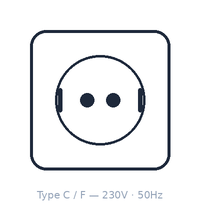
ℹ️ A standard European Type C adapter works throughout continental Europe, including Finland, Germany, France, Spain, and most other Schengen countries. You don’t need a different adapter for each destination.
Most modern electronics (phones, laptops, cameras) handle the voltage difference automatically — check the label on your charger for “INPUT: 100-240V” to confirm. Hair dryers and straighteners from North America may need a voltage converter, or it’s easier to buy or borrow one locally.
Finland has excellent mobile coverage and widespread Wi-Fi, including in many rural areas and even some national parks. EU residents benefit from “roam like at home” regulations with no extra charges. For visitors from outside the EU, prepaid SIM cards and eSIMs are readily available — DNA, Elisa, and Telia are the main Finnish mobile operators, all offering tourist-friendly prepaid data plans.
📱 Need mobile data? An eSIM is the easiest way to stay connected in Europe — no SIM swapping, activate before you land. Compare the best eSIM providers for Europe →
Health and Safety
Finland has a high-quality healthcare system. EU citizens can use the European Health Insurance Card (EHIC) or its replacement, the Global Health Insurance Card (GHIC), for necessary medical treatment. Non-EU visitors should carry comprehensive travel insurance — healthcare costs for uninsured visitors can be substantial.
In any emergency, call 112. This single number covers medical, police, and fire services throughout Finland. Pharmacies (apteekit) are well-stocked and pharmacists can provide advice for minor ailments.
Finland is one of the safest countries in the world for visitors. Violent crime is rare, petty theft is uncommon even in Helsinki, and the general level of trust in public spaces is noticeably high. The main safety concerns are environmental: winter driving conditions, extreme cold in Lapland (temperatures can drop below -30°C), and wildlife encounters (moose on roads, ticks in summer forests). Take the cold seriously — dress in layers and be prepared if venturing into nature during winter.
Sauna Culture
Sauna is central to Finnish life in a way that’s hard to overstate. There are roughly 3 million saunas in a country of 5.6 million people — nearly one for every two residents. Saunas are found in homes, apartments, offices, hotels, public swimming halls, lakeshores, and even on ferries. Finnish sauna culture was inscribed on UNESCO’s Intangible Cultural Heritage list in 2020.
For visitors, public saunas in Helsinki are the easiest way to experience this tradition. Löyly (a waterfront sauna with a striking wooden architecture), Allas Sea Pool (a floating pool and sauna complex by the harbor), and Kotiharjun Sauna (a traditional wood-fired neighborhood sauna) are popular options. Outside Helsinki, the quintessential experience is a lakeside sauna followed by a swim in the lake — available at countless holiday cottages and resorts throughout the Lake District and Lapland. Nudity is the norm in same-gender saunas, though many tourist-oriented saunas allow swimsuits.
Food and Dining Culture
Finnish food culture emphasizes fresh, seasonal ingredients and simple preparation. The cuisine is shaped by the country’s geography — forests provide berries and game, lakes provide fish, and the long winters historically demanded preserved and hearty foods. Signature dishes include karjalanpiirakka (Karelian pasties — rice-filled rye pastry), kalakukko (fish baked inside bread), lohikeitto (creamy salmon soup), poronkäristys (sautéed reindeer, a Lapland staple), and korvapuusti (cinnamon buns, a daily institution).
Finland is one of the world’s top coffee-consuming countries per capita. Coffee breaks are deeply embedded in daily life, and café culture is thriving, especially in Helsinki. Finnish tap water is exceptionally clean and drinkable everywhere — there’s no need to buy bottled water.
Restaurant hours are generally similar to other Northern European countries. Lunch is typically served from 11:00 AM to 2:00 PM, often as an affordable “lounas” (lunch buffet) at many restaurants. Dinner service usually starts around 5:00–6:00 PM. Alcohol is expensive due to high taxes, and sales of strong alcohol are restricted to state-run Alko stores.
Finland: Economy and Context
Finland has a GDP of approximately €295 billion, making it one of the smaller but wealthiest economies in the European Union on a per-capita basis. The country is a member of the EU, the Eurozone, and the Schengen Area, and it joined NATO in 2023 following Russia’s invasion of Ukraine.
Tourism contributes approximately 2.5% of Finland’s GDP and employs around 147,000 people. While those numbers are modest compared to Mediterranean destinations, tourism is growing steadily — particularly in Lapland, which has become a globally recognized winter destination. Helsinki welcomed over 2.4 million foreign visitors in 2023, with Americans, Germans, Swedes, and Britons among the largest visitor groups. Finland’s tourism strategy for 2025–2028 aims to increase total tourism demand to €20 billion by focusing on sustainable tourism, digital services, and year-round appeal beyond the winter season.
Finland consistently ranks at or near the top of global indices for quality of life, education, safety, press freedom, and happiness — the World Happiness Report has named Finland the world’s happiest country for seven consecutive years. This combination of safety, natural beauty, unique cultural traditions like sauna, and the appeal of Lapland’s Arctic experiences is driving Finland’s emergence as a distinctive European travel destination.
Frequently Asked Questions
Do I need a visa to visit Finland?
Citizens of 59 countries, including the US, UK, Canada, and Australia, can visit Finland without a visa for up to 90 days within any 180-day period. This is the Schengen 90/180-day rule, which applies across all Schengen countries combined. Use the Europe Travel Planner at schengentraveler.com to find out if your nationality requires a visa.
Will I need ETIAS to visit Finland in 2026?
ETIAS is expected to launch in late 2026, likely October or November. Once operational, visa-exempt visitors will need to apply online before traveling. The EU will confirm the exact date at least six months in advance. Until ETIAS launches, you only need your valid passport. See our ETIAS guide for the latest timeline.
What is the best time to visit Finland?
It depends on what you’re after. Summer (June–August) offers the midnight sun, warm weather (15–25°C), and the best conditions for hiking, cycling, lake activities, and island hopping. Winter (December–March) is ideal for Northern Lights, snow sports, and Lapland’s Arctic experiences, but temperatures can drop well below -20°C. Autumn (September–October) brings stunning “ruska” fall colors, especially in Lapland. Spring (April–May) is a quieter shoulder season as snow melts and days rapidly lengthen.
Do people speak English in Finland?
Yes — Finland has among the highest English proficiency rates in the world. You can comfortably navigate the entire country in English, including outside major cities. Almost all signs, menus, and services in tourist areas are available in English.
How much does a trip to Finland cost?
Budget roughly €150–250 per day for mid-range travel in Helsinki (including hotel, meals, transport, and activities). Outside Helsinki, costs are somewhat lower but Finland remains one of Europe’s more expensive destinations. A two-week trip for two people typically costs €4,000–8,000 total, depending on season, accommodation choices, and how many Lapland activities you include.
Is Finland safe for tourists?
Extremely. Finland consistently ranks among the safest countries in the world. Violent crime is rare, petty theft is uncommon, and public spaces feel secure at all hours. The main risks are environmental — winter driving conditions, extreme cold, and moose on roads.
Can I see the Northern Lights in Finland?
Yes — Finnish Lapland is one of the best places in the world to see the aurora borealis. The prime viewing season runs from September through March, with the best chances in Lapland (above the Arctic Circle) during dark, clear nights. Rovaniemi, Inari, Saariselkä, and Levi are popular viewing locations. The Northern Lights are a natural phenomenon and sightings are never guaranteed, but Lapland offers roughly 200 auroral displays per year.
Do I need winter tires to drive in Finland?
Yes — winter tires are mandatory from November 1 to March 31 when conditions require them. If you’re renting a car during this period, the rental company will automatically provide winter tires. Studded tires are legal and commonly used. Do not attempt to drive in Finnish winter conditions without proper winter tires.
🌍 Plan Your Trip to Finland
Entry requirements, visa status, and a full travel briefing — personalized for your nationality.
Use the Europe Travel Planner →📚 Related Articles
- Schengen 90/180-Day Rule — How the visa-free stay limit works across Europe
- ETIAS: Europe’s New Travel Authorization — What you’ll need starting late 2026
- Entry/Exit System (EES) — How the new biometric borders work
- International Driving Permit in Europe — Country-by-country IDP requirements
- Best Travel Insurance for Europe — Protect your trip
- Travel to France: Complete Guide
- Travel to Germany: Complete Guide
- All Europe Country Guides
This article is for informational purposes only and does not constitute legal or travel advice. Entry requirements can change — always verify with official government sources before traveling. Last updated: February 2026.