
Last Updated: February 2026
Bulgaria is one of Europe’s most underrated destinations — and one of its most affordable. From the golden beaches of the Black Sea coast to the ancient ruins of Plovdiv, the ski slopes of Bansko to the wild beauty of the Rhodope Mountains, Bulgaria offers a remarkable range of experiences at a fraction of what you’d pay in Western Europe. Here’s everything a visitor needs to know to plan a trip to Bulgaria in 2026.
🇧🇬 Bulgaria at a Glance
| Capital | Sofia |
| Population | ~6.5 million (2026) |
| Currency | Bulgarian Lev (BGN) |
| Language | Bulgarian |
| Time Zone | EET (UTC+2) · EEST in summer (UTC+3) |
| Plug Type | Type C and F · 230V / 50Hz |
| Driving Side | Right |
| International Driving Permit (IDP) | Recommended — see IDP guide |
| Schengen Member | Yes — joined 2024 (air/sea), full member 2025 |
| Emergency Number | 112 (EU-wide) |
Entry Requirements for Bulgaria
Bulgaria is now a full member of the Schengen Area, meaning it follows the same entry rules as the other 28 Schengen member countries. What you need to enter Bulgaria depends on your nationality.
Visa-Exempt Visitors (US, UK, Canada, Australia, and Others)
Citizens of 59 visa-exempt countries — including the United States, United Kingdom, Canada, Australia, New Zealand, Japan, and most Latin American nations — can enter Bulgaria without a visa for short stays of up to 90 days within any 180-day period. This is the standard Schengen 90/180-day rule, and it applies across all 29 Schengen countries combined, not just Bulgaria.
To enter Bulgaria as a visa-exempt visitor, your passport must meet two requirements. It must have been issued within the last 10 years at the time of entry, and it must remain valid for at least three months after your planned departure date from the Schengen area.
At the border, Bulgarian officials may ask for proof of accommodation, proof of sufficient funds, and evidence of onward or return travel. These documents aren’t always requested, but having them available avoids potential complications.
Visitors Who Need a Visa
If your country is not on the visa-exempt list, you’ll need to apply for a Schengen short-stay visa (Type C) through the Bulgarian consulate in your home country before traveling. This visa allows stays of up to 90 days within a 180-day period and typically costs €80 for adults.
For longer stays — work, study, or family reunification — you’ll need a Bulgarian national long-stay visa (Type D), which must be applied for separately from a Schengen visa. Use our Europe Travel Planner to find out exactly what your nationality requires.
What’s Changing at Bulgaria’s Borders in 2026
Two major systems are transforming how non-EU visitors enter Bulgaria and the rest of the Schengen area. Both are rolling out in 2026, and travelers need to be aware of the timeline.
Entry/Exit System (EES)
The Entry/Exit System began its phased rollout on October 12, 2025, and is expected to be fully operational at all Schengen border crossings by April 10, 2026. EES replaces the old passport-stamping process with a digital system that records biometric data — fingerprints and facial images — along with your passport details and entry/exit dates.
The first time you enter the Schengen area under EES, border officials will collect your fingerprints and take a facial photograph. This is done either at a self-service kiosk (if you have a biometric passport) or by a border guard. Once you’re registered, the data stays valid for three years, and subsequent entries only require identity verification rather than a full re-registration.
Bulgaria’s main points of entry — Sofia Airport, Burgas Airport, Varna Airport, and the land border crossings with Turkey, Serbia, and North Macedonia — are all being equipped with EES infrastructure. Expect longer wait times at these crossings through early 2026 as the system is fully integrated.
ETIAS — Europe’s New Travel Authorization
The European Travel Information and Authorization System (ETIAS) is expected to launch in late 2026, likely in October or November. Once operational, all visa-exempt travelers — including Americans, Britons, Canadians, and Australians — will need to apply for ETIAS authorization before boarding a flight or train to Bulgaria or any other Schengen country.
The ETIAS application is completed online and takes roughly 10 minutes. It asks for personal details, passport information, and security-related questions. The fee is €20 for travelers aged 18 to 70 (free for those younger or older). Once approved, ETIAS is valid for three years or until your passport expires, whichever comes first. It covers all 29 Schengen countries, so you don’t need a separate authorization for each destination.
Getting to Bulgaria
Bulgaria’s location in southeastern Europe puts it slightly off the main Western European travel circuit, but direct connections from major hubs are solid and improving steadily.
By Air
Sofia Airport (SOF) is the main international gateway, with direct flights from most major European cities. Wizz Air, Ryanair, and easyJet offer budget routes from across Europe. Bulgaria Air, the national carrier, operates routes to London, Paris, Berlin, and other European destinations. During summer, Burgas (BOJ) and Varna (VAR) airports on the Black Sea coast receive a surge of seasonal charter and budget flights from across Europe, particularly from the UK, Germany, and Scandinavia.
There are no direct transatlantic flights to Bulgaria. Travelers from the US, Canada, or Australia typically connect through a major European hub — Istanbul, Frankfurt, Munich, Vienna, or London are the most common routing options.
By Train
Bulgaria’s international rail connections are limited but functional. Direct trains run from Sofia to Belgrade (Serbia), Thessaloniki (Greece), and Bucharest (Romania), though journey times are long and schedules are infrequent. The Sofia–Istanbul route, once a classic Balkan rail journey, currently requires a bus connection for part of the route. Domestic trains handled by BDZ (Bulgarian State Railways) connect major cities, though speeds are slow by Western European standards.
By Bus
International buses are a popular and affordable way to reach Bulgaria from neighboring countries. FlixBus and regional operators run frequent services from Istanbul, Thessaloniki, Bucharest, Belgrade, and Skopje. The Sofia Central Bus Station is the main hub. Journey times can be long, but prices are hard to beat — Sofia to Istanbul runs roughly 8–10 hours and costs as little as €15–20.
By Car
Bulgaria shares land borders with Romania, Serbia, North Macedonia, Greece, and Turkey. As a Schengen member, there are no border controls between Bulgaria and Romania. Crossings into Serbia, North Macedonia, Greece, and Turkey involve passport checks — the Turkey and Serbia borders can experience significant wait times during peak summer season and holidays. A vignette (road toll sticker) is required for all Bulgarian motorways and can be purchased electronically at bgtoll.bg.
Getting Around Bulgaria
Bulgaria is a compact country, and most destinations are reachable within a few hours of Sofia. The transport network is functional but less polished than Western Europe — expect lower speeds, older equipment, and fewer English-language signs outside major tourist areas.
Trains
BDZ (Bulgarian State Railways) operates the national rail network. Trains are affordable but slow — the Sofia to Plovdiv route (150 km) takes about 2.5 hours, and Sofia to Varna (475 km) takes 7–8 hours. First-class carriages are reasonably comfortable and rarely full. Tickets are very cheap by European standards.
| Route | Duration | Approximate Cost |
|---|---|---|
| Sofia → Plovdiv | ~2.5 hours | €6–8 |
| Sofia → Varna | ~7–8 hours | €12–15 |
| Sofia → Burgas | ~6–7 hours | €12–15 |
| Plovdiv → Burgas | ~4–5 hours | €8–10 |
Driving
A rental car is the best way to explore rural Bulgaria — the Rhodope Mountains, Thracian Valley, and many monasteries and villages are difficult or impossible to reach by public transit. Major rental companies operate at Sofia, Burgas, and Varna airports.
Bulgaria drives on the right. Speed limits are 140 km/h on motorways, 90 km/h on rural roads, and 50 km/h in urban areas. Road quality varies significantly — motorways (particularly the Trakia and Struma) are modern, while rural and mountain roads can be rough and poorly lit. Winter driving in mountain areas requires snow tires (mandatory from November 15 to March 1) and caution on winding roads.
Vignette: All vehicles on Bulgarian motorways and major national roads must display a valid electronic vignette. Weekend vignettes (€8), weekly (€15), monthly (€30), and annual (€50) options are available. Purchase online at bgtoll.bg or at border crossings and gas stations. Driving without one carries a fine of approximately €150.
International Driving Permit: An IDP is recommended for non-EU drivers. While not always checked by rental companies, it’s technically required for license holders whose documents aren’t in the Latin alphabet. See our International Driving Permit guide for how to get one in your country.
Sofia Public Transit
Sofia has a modern and expanding metro system (4 lines as of 2026), plus an extensive network of buses, trams, and trolleybuses. A single ticket costs 1.60 BGN (about €0.80), and rechargeable cards offer discounts. The metro is clean, efficient, and covers many key areas including the airport (Line 1). Navigation is straightforward with English signage throughout the metro system.
Where to Go in Bulgaria
Bulgaria packs a surprising variety of landscapes and experiences into a relatively small country. Most visitors focus on a few key regions, but the country rewards exploration off the beaten path.
Sofia
Bulgaria’s capital is a city of contrasts — Roman ruins sit beneath modern shopping malls, Ottoman mosques neighbor Orthodox churches, and Soviet-era apartment blocks frame views of Vitosha Mountain. The Alexander Nevsky Cathedral is the city’s most iconic landmark. The free walking tours are excellent. Sofia’s restaurant and nightlife scene has grown enormously, with craft beer bars, modern Bulgarian cuisine, and a cafe culture that rivals any European capital — all at remarkably low prices.
Plovdiv
Bulgaria’s second city and a European Capital of Culture (2019), Plovdiv makes a strong case as the country’s most charming destination. The Old Town perches on three hills with beautifully restored Revival-era houses, a Roman amphitheater still used for performances, and a creative arts district in the Kapana neighborhood. Plovdiv is an easy 1.5-hour drive or 2.5-hour train ride from Sofia, and many visitors prefer its atmosphere to the capital.
Veliko Tarnovo
The medieval capital of the Second Bulgarian Empire, Veliko Tarnovo is dramatically set along the winding Yantra River gorge. The Tsarevets Fortress crowns a hill above the city with panoramic views. The old town’s cobblestone streets, artisan workshops, and lively cafe scene make it one of Bulgaria’s most atmospheric destinations. It’s also the gateway to the nearby village of Arbanasi, known for its richly decorated churches and monastery.
Black Sea Coast
Bulgaria’s Black Sea coastline stretches roughly 380 km from the Romanian border to Turkey. The northern coast around Varna and Golden Sands offers wide sandy beaches and resort-style tourism. The southern coast around Burgas, Sozopol, and Nessebar is generally more characterful — Nessebar’s old town, a UNESCO World Heritage Site, sits on a tiny peninsula packed with medieval churches. Sozopol combines beach life with a picturesque old town. For something wilder, the Sinemorets and Irakli beaches near the Turkish border are among the least developed stretches of coastline in southeastern Europe.
Rila Monastery and the Rila Mountains
The Rila Monastery, a UNESCO World Heritage Site, is Bulgaria’s most famous landmark — a fortress-like complex of striped arches, vivid frescoes, and a 1,000-year history nestled in the forested Rila Mountains. The Seven Rila Lakes, a group of glacial lakes accessible by chairlift and hiking trails, are among the country’s most spectacular natural attractions. The town of Bansko, at the foot of the Pirin Mountains nearby, is Bulgaria’s premier ski resort and increasingly popular as a digital nomad base.
Rhodope Mountains
The Rhodope range in southern Bulgaria is one of Europe’s last wild frontiers — dense forests, deep gorges, remote villages, and some of the continent’s most pristine hiking. The Trigrad Gorge, Devil’s Throat Cave, and the Wonderful Bridges rock formations are highlights. The region is also home to a significant Bulgarian Muslim (Pomak) population, giving it a distinct cultural character. Accommodation is mostly in family-run guesthouses, and tourism infrastructure is minimal — which is exactly the appeal.
Valley of the Roses
The Kazanlak region, between the Balkan Mountains and the Sredna Gora range, produces most of the world’s rose oil — an essential ingredient in high-end perfumes. The annual Rose Festival in early June draws visitors from around the world. The valley is also rich in Thracian heritage, with ancient tombs and archaeological sites, including the UNESCO-listed Thracian Tomb of Kazanlak.
Practical Information for Visitors
Money and Costs
Bulgaria uses the Bulgarian Lev (BGN), pegged to the euro at a fixed rate of approximately 1.96 BGN = €1. Bulgaria is expected to adopt the euro in the coming years, but as of 2026, the lev remains the official currency. Credit and debit cards are widely accepted in cities and tourist areas. Cash is more commonly needed in rural areas, smaller restaurants, and markets. ATMs are plentiful in cities and towns.
Bulgaria is one of the cheapest countries in the European Union. Budget travelers can manage on €30–50 per day with hostel accommodation, local food, and public transit. Mid-range travel — comfortable hotels, restaurant meals, car rental, and activities — runs €60–100 per day. Even in Sofia and the Black Sea resorts, prices are roughly one-third to one-half of what you’d pay in Western Europe.
Tipping in Bulgaria is customary but not obligatory. Rounding up the bill or leaving 10% at restaurants is standard practice. At cafes, leaving small change is common. Tipping is not expected in taxis, though rounding up is appreciated.
Language
Bulgarian is the official language and uses the Cyrillic alphabet — the same script used in Russian, Serbian, and several other languages. This can make navigation challenging for visitors who don’t read Cyrillic, though major road signs and tourist areas typically include Latin-script transliterations.
English is spoken by younger people in Sofia, Plovdiv, and tourist areas, but proficiency drops off quickly in smaller towns and among older generations. In tourist hotspots on the Black Sea coast, German and Russian are also widely spoken. Learning a few Bulgarian phrases and familiarizing yourself with Cyrillic basics (even just recognizing key words like ВХОД/entrance, ИЗХОД/exit, РЕСТОРАНТ/restaurant) will make your trip significantly smoother.
Power and Connectivity
Bulgaria uses Type C and Type F power plugs at 230V/50Hz. If you’re traveling from the US, Canada, UK, or Australia, you’ll need a plug adapter.
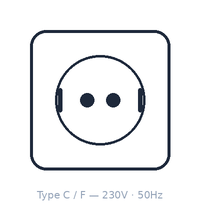
Most modern electronics (phones, laptops, cameras) handle the voltage difference automatically — check the label on your charger for “INPUT: 100-240V” to confirm. Hair dryers and straighteners from North America may need a voltage converter, or it’s easier to buy or borrow one locally.
Bulgaria has good mobile coverage in cities and along the coast, with patchier service in mountain areas. EU residents benefit from “roam like at home” regulations with no extra charges. For visitors from outside the EU, purchasing a local SIM card or eSIM is straightforward — A1, Yettel (formerly Telenor), and Vivacom all offer prepaid tourist options available at airports, shops, and kiosks.
📱 Need mobile data? An eSIM is the easiest way to stay connected in Europe — no SIM swapping, activate before you land. Compare the best eSIM providers for Europe →
Health and Safety
Bulgaria’s healthcare system is adequate in cities but limited in rural areas. EU citizens can use the European Health Insurance Card (EHIC) or Global Health Insurance Card (GHIC) for necessary medical treatment. Non-EU visitors should carry comprehensive travel insurance — private clinics in Sofia offer a much higher standard of care than public hospitals, and insurance ensures access to them.
In a medical emergency, call 112 (EU-wide emergency number) or 150 (ambulance). Pharmacies (аптека/apteka) are abundant and pharmacists can provide advice and sell many medications that require prescriptions in other countries.
Bulgaria is generally safe for visitors. Petty theft can occur in tourist areas, on public transit in Sofia, and at Black Sea resorts during summer. Stray dogs are present in some cities and rural areas — they’re generally not aggressive but best avoided. Scams targeting tourists are rare but can occur in Sofia’s nightlife district; avoid accepting drinks or entering clubs promoted by touts on the street.
Food and Dining Culture
Bulgarian cuisine is hearty, flavorful, and heavily influenced by its Balkan and Ottoman heritage. Shopska salad (tomatoes, cucumbers, peppers, and grated white cheese) is the national dish and an essential starter. Banitsa (flaky cheese pastry) is a breakfast staple. Kebapche and kyufte (grilled spiced meat), kavarma (slow-cooked meat stew), and bob chorba (bean soup) are staples of the traditional menu. Yogurt holds a special place in Bulgarian culture — the lactobacillus strain used to make it (Lactobacillus bulgaricus) is named after the country.
Bulgaria is also a significant wine-producing country with a growing reputation. The Thracian Valley is the main wine region, producing excellent reds (Mavrud is the signature indigenous grape), while the Struma Valley in the southwest and the Danube Plain in the north also produce noteworthy wines. Local wine is remarkably good value — a quality bottle at a restaurant rarely exceeds €8–10.
Dining is typically affordable even in the most popular restaurants. A full meal with drinks at a mid-range restaurant in Sofia or Plovdiv rarely exceeds €15–20 per person. Outside the cities, prices drop further. Lunch is often the main meal, and many restaurants offer multi-course lunch menus at significant discounts.
Bulgaria: Economy and Context
Bulgaria is the European Union’s poorest member state by GDP per capita, but its economy has been growing steadily, driven by IT and outsourcing, tourism, agriculture, and manufacturing. The country joined the EU in 2007 and completed its long-awaited accession to the Schengen Area in 2024–2025, with air and sea border checks removed in March 2024 and land borders opening in January 2025.
Tourism is an increasingly important sector, with the country attracting over 10 million international visitors annually — primarily drawn by Black Sea beach holidays, ski resorts, and increasingly by cultural tourism in Sofia, Plovdiv, and the countryside. Bulgaria’s combination of EU membership, Schengen access, low costs, and improving infrastructure makes it an increasingly attractive destination for both tourists and digital nomads.
The country is actively working toward euro adoption, though the target date has been pushed back multiple times. Visitors should plan for the lev as the currency for the foreseeable future, though euros are sometimes accepted in tourist areas at unfavorable exchange rates — always pay in lev for the best deal.
Frequently Asked Questions
Do I need a visa to visit Bulgaria?
Citizens of 59 countries, including the US, UK, Canada, and Australia, can visit Bulgaria without a visa for up to 90 days within any 180-day period. This is the Schengen 90/180-day rule, which applies across all Schengen countries combined. Use our Europe Travel Planner to find out if your nationality requires a visa.
Will I need ETIAS to visit Bulgaria in 2026?
ETIAS is expected to launch in late 2026, likely October or November. Once operational, visa-exempt visitors will need to apply online before traveling. The EU will confirm the exact date at least six months in advance. Until ETIAS launches, you only need your valid passport. See our ETIAS guide for the latest timeline.
What is the best time to visit Bulgaria?
May through September is ideal for general sightseeing, with warm weather and long days. July and August are peak season for Black Sea beaches but also the hottest and most crowded. The ski season runs December through March, with Bansko, Borovets, and Pamporovo as the main resorts. Spring (April–May) and autumn (September–October) offer pleasant temperatures, fewer crowds, and lower prices — particularly good for hiking and cultural travel.
Do people speak English in Bulgaria?
English is spoken by younger people in Sofia, Plovdiv, and tourist areas, but much less so in smaller towns and among older generations. Bulgarian uses the Cyrillic alphabet, which can make navigation challenging. Learning a few key words and familiarizing yourself with basic Cyrillic characters will significantly improve your experience.
How much does a trip to Bulgaria cost?
Bulgaria is one of Europe’s cheapest destinations. Budget travelers can get by on €30–50 per day. Mid-range travel with comfortable hotels and restaurant meals runs €60–100 per day. Even in Sofia and at Black Sea resorts, prices are roughly one-third to one-half of Western European levels. A two-week trip for two people typically costs €1,500–3,000 total.
Is Bulgaria safe for tourists?
Bulgaria is generally safe. Petty theft can occur in tourist areas and on public transit, particularly in Sofia and at Black Sea resorts in summer. Stray dogs are present in some areas. Avoid nightclub touts in Sofia. Violent crime against tourists is rare.
Is Bulgaria in the Schengen Area?
Yes. Bulgaria completed its Schengen accession in two phases — air and sea borders opened in March 2024, and land borders opened in January 2025. Bulgaria is now a full Schengen member, and your time in Bulgaria counts toward the 90/180-day Schengen limit along with all other Schengen countries.
Can I pay with euros in Bulgaria?
Bulgaria’s official currency is the Bulgarian Lev (BGN). Some tourist-oriented businesses accept euros, but at unfavorable exchange rates. Always pay in lev for the best value. ATMs and exchange offices are widely available — avoid exchange bureaus at the airport or in heavy tourist areas, which often charge poor rates.
🌍 Plan Your Trip to Bulgaria
Entry requirements, visa status, and a full travel briefing — personalized for your nationality.
Use the Europe Travel Planner →📚 Related Articles
- Schengen 90/180-Day Rule — How the visa-free stay limit works across Europe
- ETIAS: Europe’s New Travel Authorization — What you’ll need starting late 2026
- Entry/Exit System (EES) — How the new biometric borders work
- International Driving Permit in Europe — Country-by-country IDP requirements
- Best Travel Insurance for Europe — Protect your trip
- Travel to Romania: Complete Guide
- Travel to Greece: Complete Guide
- All Europe Country Guides
This article is for informational purposes only and does not constitute legal or travel advice. Entry requirements can change — always verify with official government sources before traveling. Last updated: February 2026.