
Last Updated: February 2026
Austria punches far above its weight. A country of just 9 million people draws over 46 million visitors a year — and it’s easy to see why. The imperial grandeur of Vienna, the baroque beauty of Salzburg, the Alpine drama of Tyrol, and the vineyard-draped valleys of the Wachau combine to make Austria one of Europe’s most rewarding destinations. Here’s everything a visitor needs to know to plan a trip to Austria in 2026.
🇦🇹 Austria at a Glance
| Capital | Vienna |
| Population | ~9.2 million (2026) |
| Currency | Euro (€) |
| Language | German (Austrian German) |
| Time Zone | CET (UTC+1) · CEST in summer (UTC+2) |
| Plug Type | Type C and F · 230V / 50Hz |
| Driving Side | Right |
| International Driving Permit (IDP) | Recommended — see IDP guide |
| Schengen Member | Yes — since 2007 |
| Emergency Number | 112 (EU-wide) · 144 (ambulance) · 133 (police) · 122 (fire) |
Entry Requirements for Austria
Austria is part of the Schengen Area, meaning it follows the same entry rules as the other 28 Schengen member countries. What you need to enter Austria depends on your nationality.
Visa-Exempt Visitors (US, UK, Canada, Australia, and Others)
Citizens of 59 visa-exempt countries — including the United States, United Kingdom, Canada, Australia, New Zealand, Japan, and most Latin American nations — can enter Austria without a visa for short stays of up to 90 days within any 180-day period. This is the standard Schengen 90/180-day rule, and it applies across all 29 Schengen countries combined, not just Austria.
To enter Austria as a visa-exempt visitor, your passport must meet two requirements. It must have been issued within the last 10 years at the time of entry, and it must remain valid for at least three months after your planned departure date from the Schengen area.
At the border, Austrian officials may ask for proof of accommodation, proof of sufficient funds (approximately €120 per day), and evidence of onward or return travel. These documents aren’t always requested, but having them available avoids potential complications.
Visitors Who Need a Visa
If your country is not on the visa-exempt list, you’ll need to apply for a Schengen short-stay visa (Type C) through the Austrian consulate or embassy in your home country before traveling. This visa allows stays of up to 90 days within a 180-day period and typically costs €80 for adults.
For longer stays — work, study, or family reunification — you’ll need an Austrian national long-stay visa (Type D), which must be applied for separately from a Schengen visa. Use our Europe Travel Planner to find out exactly what your nationality requires.
What’s Changing at Austria’s Borders in 2026
Two major systems are transforming how non-EU visitors enter Austria and the rest of the Schengen area. Both are rolling out in 2026, and travelers need to be aware of the timeline.
Entry/Exit System (EES)
The Entry/Exit System began its phased rollout on October 12, 2025, and is expected to be fully operational at all Schengen border crossings by April 10, 2026. EES replaces the old passport-stamping process with a digital system that records biometric data — fingerprints and facial images — along with your passport details and entry/exit dates.
The first time you enter the Schengen area under EES, border officials will collect your fingerprints and take a facial photograph. This is done either at a self-service kiosk (if you have a biometric passport) or by a border guard. Once you’re registered, the data stays valid for three years, and subsequent entries only require identity verification rather than a full re-registration.
Vienna International Airport was among the first airports in Austria to implement EES checks starting October 12, 2025. Salzburg and Innsbruck airports have followed, with all Austrian airports expected to be fully operational by April 2026. Expect longer wait times during the transition period, particularly at Vienna’s international terminals.
ETIAS — Europe’s New Travel Authorization
The European Travel Information and Authorization System (ETIAS) is expected to launch in late 2026, likely in October or November. Once operational, all visa-exempt travelers — including Americans, Britons, Canadians, and Australians — will need to apply for ETIAS authorization before boarding a flight or train to Austria or any other Schengen country.
The ETIAS application is completed online and takes roughly 10 minutes. It asks for personal details, passport information, and security-related questions. The fee is €20 for travelers aged 18 to 70 (free for those younger or older). Once approved, ETIAS is valid for three years or until your passport expires, whichever comes first. It covers all 29 Schengen countries, so you don’t need a separate authorization for each destination.
Getting to Austria
Austria’s central European location makes it exceptionally well connected by air, rail, and road from virtually every direction.
By Air
Vienna International Airport (VIE) is Austria’s main gateway, handling the vast majority of international traffic. It’s a hub for Austrian Airlines (part of the Lufthansa Group) and serves nonstop routes from major cities across Europe, North America, Asia, and the Middle East. Salzburg (SZG) and Innsbruck (INN) airports handle primarily European and seasonal flights — Innsbruck sees a surge of traffic during ski season, with charter flights from across Europe.
Budget carriers including Ryanair, easyJet, Wizz Air, and Eurowings connect Austrian airports with destinations across Europe at competitive prices. From North America, Austrian Airlines, United, and Delta offer nonstop service to Vienna.
By Train
Austria is a European rail crossroads, with outstanding connections in every direction. ÖBB (Austrian Federal Railways) operates high-speed Railjet services linking Vienna with Munich (4 hours), Zurich (8 hours), Budapest (2 hours 30 minutes), and Prague (4 hours). Deutsche Bahn ICE trains connect Vienna directly with Frankfurt, Stuttgart, and other German cities. Trenitalia runs direct services from Vienna and Innsbruck to Italian destinations including Venice, Bologna, and Rome.
ÖBB’s Nightjet sleeper train network is one of Europe’s best, with overnight routes connecting Vienna with cities including Rome, Milan, Venice, Amsterdam, Brussels, Hamburg, Berlin, and Paris. New Nightjet routes continue to be added — it’s a comfortable and time-efficient way to reach Austria while saving on a night’s accommodation.
By Car
Austria shares land borders with Germany, Czech Republic, Slovakia, Hungary, Slovenia, Italy, Switzerland, and Liechtenstein. As a Schengen member, there are normally no border controls between Austria and its Schengen neighbors, though Austria has maintained temporary border checks at several crossings for security reasons. Carry your passport even when crossing from another Schengen country.
Getting Around Austria
Austria has a well-integrated transport network that makes getting around efficient, though the mountainous terrain means some journeys take longer than the straight-line distance might suggest.
Trains
The Austrian rail network, operated primarily by ÖBB, is clean, punctual, and covers the country thoroughly. Understanding the different train types helps you plan and save money.
| Mode | Best For | Cost Range | Notes |
|---|---|---|---|
| Railjet (RJ/RJX) | Long-distance city connections | From €19.90 (Sparschiene) | Up to 230 km/h · Free Wi-Fi · Restaurant car · Vienna–Salzburg ~2h 22min · Vienna–Innsbruck ~4h 15min · Vienna–Graz ~2h 35min |
| Westbahn | Vienna–Salzburg alternative | From €15.99 | Private operator · Double-deck trains · Vienna Westbahnhof–Salzburg ~2h 28min · Often cheaper than ÖBB |
| Intercity (IC) | Regional city connections | From €19.90 | Comfortable long-distance service · More stops than Railjet · No reservation required |
| Regional (REX/R/S-Bahn) | Short distances, local travel | €3–15 | No reservation needed · Hop on with your ticket · Perfect for day trips and valley exploration |
| Nightjet | Overnight international travel | From €29.90 (seat) | Sleeper cars, couchettes, or seats · Routes to Italy, Germany, Netherlands, Belgium, France |
Sparschiene tickets: ÖBB’s advance-purchase discount fares — called Sparschiene — offer significant savings when booked early through the ÖBB app or website. Vienna to Salzburg from €19.90 versus the standard fare of around €55. Tickets are released up to six months in advance, and the cheapest fares sell out quickly. Sparschiene tickets are train-specific and non-refundable.
Vienna Public Transit
Vienna has one of Europe’s best urban transit systems. Five U-Bahn (metro) lines, 29 tram routes, and over 100 bus routes cover the city comprehensively. A single ticket costs €2.40, a 24-hour pass is €5.80, and the annual pass (Jahreskarte) costs €467 as of 2026 — one of the most affordable annual transit passes in any major European city. Night buses (NightLine) run on weekends and before public holidays, taking over when the U-Bahn stops around midnight.
Driving
A car opens up Austria’s Alpine valleys, lake districts, and mountain passes in ways that public transit can’t match — particularly in Tyrol, Carinthia, and the Salzkammergut region. Major international rental companies are available at airports and city stations throughout the country.
Austria drives on the right. Speed limits are 130 km/h on motorways, 100 km/h on rural roads, and 50 km/h in urban areas. Speed cameras and section control (average speed checks over longer stretches) are widespread, and fines are steep.
Alpine toll roads: Several major Alpine passes and tunnels require a separate toll in addition to the vignette. The Brenner motorway (A13), Tauern motorway (A10), Arlberg tunnel (S16), Karawanken tunnel (A11), and Pyhrn motorway (A9) each charge €9–19 per crossing, payable at toll gates or in advance online.
Winter equipment: From November 1 to April 15, Austrian law requires winter tires on all vehicles. Snow chains must be carried in mountainous areas and are mandatory on roads marked with the chain symbol. Rental cars in Austria during winter are typically equipped with winter tires, but confirm when booking.
International Driving Permit: Austria doesn’t strictly require an IDP for short-term visitors holding licenses from the US, Canada, or other countries with Roman-script licenses. However, rental companies may request one, and having it avoids any risk of confusion with police or rental staff. See our International Driving Permit guide for how to get one in your country.
Where to Go in Austria
Austria’s compact size — roughly the area of South Carolina — belies its extraordinary range of landscapes and experiences. From imperial cities to Alpine villages, here are the regions and highlights most visitors focus on.
Vienna
Austria’s capital and by far its largest city, Vienna is an imperial and cultural powerhouse that consistently ranks among the world’s most livable cities. The Hofburg and Schönbrunn palaces, St. Stephen’s Cathedral, the Kunsthistorisches Museum, the Belvedere (home to Klimt’s “The Kiss”), and the Vienna State Opera are just the headline attractions. The city’s legendary coffeehouse culture — a UNESCO Intangible Cultural Heritage — is reason enough to visit, and the wine taverns (Heuriger) in the hillside districts of Grinzing and Neustift am Walde offer an atmosphere found nowhere else. Vienna received over 18 million overnight stays in 2024, making it Austria’s single biggest tourism draw.
Salzburg and the Salzkammergut
Mozart’s birthplace and the setting of The Sound of Music, Salzburg’s baroque old town is a UNESCO World Heritage Site nestled between mountain and river. The Hohensalzburg Fortress, perched dramatically above the city, is one of Europe’s largest medieval castles. Beyond the city, the Salzkammergut lake district — a collection of crystalline alpine lakes including Wolfgangsee, Mondsee, and Hallstättersee — offers some of Austria’s most stunning scenery. Hallstatt, the lakeside village that draws roughly a million visitors per year, has become a symbol of Austria’s Alpine beauty.
Tyrol and Innsbruck
Tyrol is Austria’s Alpine heartland. Innsbruck, the regional capital, is a compact city set in a dramatic mountain valley that has hosted the Winter Olympics twice (1964 and 1976). The Nordkette cable car takes you from the city center to 2,300 meters altitude in about 20 minutes. Beyond Innsbruck, Tyrol is home to world-class ski resorts — St. Anton am Arlberg, Kitzbühel, Ischgl, Sölden, and the Stubai Valley — and equally spectacular summer hiking. The Arlberg region and Ötztal Valley are among Europe’s finest outdoor destinations in any season.
Carinthia and Southern Austria
Carinthia, Austria’s sunniest province, centers on warm-water lakes including Wörthersee, Millstätter See, and Ossiacher See — all of which reach swimmable temperatures in summer. The opening of the Koralm Railway in December 2025 dramatically improved rail connections, cutting the Graz–Klagenfurt journey to just 41 minutes and opening up southern Austria to faster travel from Vienna. The Grossglockner High Alpine Road, Austria’s most spectacular scenic drive, climbs to 2,504 meters and offers views of Austria’s highest peak.
Styria
Graz, Austria’s second-largest city and a UNESCO City of Design, blends a medieval old town (also UNESCO-listed) with striking modern architecture like the Kunsthaus Graz “friendly alien” art museum. Southern Styria’s wine country — rolling hills covered in vineyards, dotted with traditional wine taverns (Buschenschänken) — is often compared to Tuscany and remains refreshingly free of mass tourism. The Styrian thermal spa region offers year-round relaxation.
The Wachau Valley and Lower Austria
The Wachau Valley, a 36-kilometer stretch of the Danube between Melk and Krems, is a UNESCO World Heritage landscape of terraced vineyards, medieval castles, and baroque abbeys. Melk Abbey is one of Europe’s most magnificent Baroque monasteries. The valley is Austria’s premier wine region, particularly known for Grüner Veltliner and Riesling. Cycling along the Danube bike path through the Wachau is one of Austria’s most popular outdoor experiences.
Vorarlberg and Western Austria
Austria’s westernmost province borders Switzerland and Lake Constance. Bregenz, the capital, hosts the annual Bregenz Festival, famous for its floating stage on the lake. The Bregenzerwald region offers outstanding hiking and traditional wooden architecture, while Lech and Zürs provide some of Austria’s most exclusive skiing.
Practical Information for Visitors
Money and Costs
Austria uses the euro (€). Credit and debit cards are widely accepted at hotels, restaurants, and shops, though Austria remains more cash-oriented than some Western European countries — smaller establishments, market stalls, and some traditional Gasthäuser may prefer or require cash. ATMs (Bankomaten) are abundant in cities and towns. Contactless payment is increasingly standard.
Austria is moderately expensive by Western European standards — cheaper than Switzerland and Scandinavia, comparable to Germany, and more expensive than Eastern European neighbors like the Czech Republic and Hungary. Vienna and popular ski resorts are the priciest areas. Provincial cities and rural regions offer considerably better value.
A coffee in a traditional Viennese café costs €4–6, a half-liter of Austrian beer in a restaurant runs €4–6, and a main course at a mid-range restaurant typically costs €15–22. Budget around €130–200 per day for mid-range travel in Vienna (hotel, meals, transport, and sightseeing). In smaller cities and the countryside, €100–150 per day is realistic. Ski holidays carry a premium — lift passes alone cost €50–70 per day at major resorts.
Tipping in Austria is customary but not obligatory. Rounding up or adding 5–10% at restaurants is standard. The phrase is “Stimmt so” (keep the change) or simply state the total you’d like to pay when handing over your payment.
Language
German is the official language, but Austrian German (Österreichisches Deutsch) differs noticeably from the German spoken in Germany — in vocabulary, pronunciation, and expressions. English is widely spoken in Vienna, Salzburg, and tourist areas, but proficiency drops in rural regions and smaller towns. Basic German phrases — “Grüß Gott” (hello, the standard Austrian greeting), “Bitte” (please), “Danke” (thank you) — are appreciated everywhere and signal respect for local culture.
Regional dialects across Austria can be quite strong, particularly in Tyrol, Vorarlberg, and Carinthia. Even Germans sometimes struggle with thick Austrian dialect — don’t worry if you can’t follow every conversation.
Power and Connectivity
Austria uses Type C and Type F power plugs at 230V/50Hz. If you’re traveling from the US, Canada, UK, or Australia, you’ll need a plug adapter.
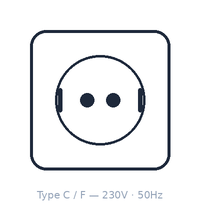
Most modern electronics (phones, laptops, cameras) handle the voltage difference automatically — check the label on your charger for “INPUT: 100-240V” to confirm. Hair dryers and straighteners from North America may need a voltage converter, or it’s easier to buy or borrow one locally.
Austria has excellent mobile coverage, including in most Alpine areas, and widespread Wi-Fi. EU and EEA residents benefit from “roam like at home” regulations with no extra charges. For visitors from outside the EU, purchasing a local SIM card or eSIM is straightforward — A1, Magenta (T-Mobile Austria), and Drei (Three) all offer prepaid options with good coverage.
📱 Need mobile data? An eSIM is the easiest way to stay connected in Europe — no SIM swapping, activate before you land. Compare the best eSIM providers for Europe →
Health and Safety
Austria has an excellent healthcare system. EU citizens can use the European Health Insurance Card (EHIC) or Global Health Insurance Card (GHIC) for necessary medical treatment. Non-EU visitors should carry comprehensive travel insurance — healthcare costs for uninsured visitors can be substantial, and mountain rescue in the Alps is particularly expensive (€5,000+ for a helicopter extraction).
In a medical emergency, call 144 (ambulance) or 112 (EU-wide emergency number). For police, call 133. For fire, call 122. Pharmacies (Apotheken, marked with a red “A” sign) are well-stocked and pharmacists can provide advice for minor ailments. An after-hours pharmacy rotation system ensures one is always open in each area.
Austria is one of the safest countries in Europe. Violent crime is extremely rare. The most common issue for tourists is petty theft — pickpocketing can occur in crowded tourist areas in Vienna (particularly around Stephansplatz, Naschmarkt, and on public transit) and at major ski resorts. Mountain safety deserves attention: always check weather conditions before hiking or skiing, stay on marked trails, and carry appropriate equipment. Austrian Alpine Club (Alpenverein) membership at €64/year includes mountain rescue insurance and is worth considering for serious hikers.
Food and Dining Culture
Austrian cuisine is hearty, flavorful, and central to the culture. The country’s culinary traditions reflect centuries of Habsburg imperial influence, blending Germanic, Hungarian, Czech, and Italian elements into something distinctly Austrian.
Wiener Schnitzel (breaded and fried veal, traditionally served with potato salad and lingonberry jam), Tafelspitz (boiled beef with root vegetables and horseradish), Kasnocken (cheese dumplings), and Tiroler Gröstl (pan-fried potatoes with meat and egg) are among the national staples. Austrian pastry is legendary — Sachertorte, Apfelstrudel, Kaiserschmarrn (torn-up fluffy pancake with powdered sugar), and the endless variety of Torten and Mehlspeisen available in every bakery and café.
Vienna’s coffeehouse culture is an institution. A Melange (roughly equivalent to a cappuccino) is the standard coffee order, and sitting for hours with a single coffee, a glass of water, and a newspaper is not only accepted but encouraged. Café Central, Café Sperl, and Café Hawelka are among the most famous, but nearly every neighborhood has its own beloved Stammcafé. Traditional Heuriger wine taverns on Vienna’s outskirts — marked by a pine branch above the door — serve young wine and cold buffets in a convivial atmosphere unique to Austria.
Austria: Economy and Context
Austria has a GDP of approximately €500 billion, making it one of the wealthiest countries in Europe on a per-capita basis. Its economy is diversified across services, industry, and a strong tourism sector that contributes nearly 9% of GDP — one of the highest ratios in Western Europe — and employs roughly 10% of the population directly or indirectly.
Austria recorded over 46.7 million visitor arrivals and 154 million overnight stays in 2024, both record figures. International tourism revenue reached approximately €35 billion, with Germany the dominant source market followed by the Netherlands, the UK, and a rapidly growing number of American visitors. Austria is a founding member of the European Union’s Eurozone, a Schengen member since 2007, and serves as the host of several major international organizations including OPEC and parts of the United Nations.
The country’s infrastructure is outstanding, with a modern rail network, well-maintained Alpine roads, and efficient airports. The December 2025 opening of the Koralm Railway between Graz and Klagenfurt marked Austria’s first entirely new rail line in decades, improving connectivity across the country’s south. This combination of world-class transport, imperial history, musical heritage, and Alpine landscapes makes Austria a uniquely complete European destination.
Frequently Asked Questions
Do I need a visa to visit Austria?
Citizens of 59 countries, including the US, UK, Canada, and Australia, can visit Austria without a visa for up to 90 days within any 180-day period. This is the Schengen 90/180-day rule, which applies across all Schengen countries combined. Use the Europe Travel Planner at schengentraveler.com to find out if your nationality requires a visa.
Will I need ETIAS to visit Austria in 2026?
ETIAS is expected to launch in late 2026, likely October or November. Once operational, visa-exempt visitors will need to apply online before traveling. The EU will confirm the exact date at least six months in advance. Until ETIAS launches, you only need your valid passport. See our ETIAS guide for the latest timeline.
What is the best time to visit Austria?
It depends on what you’re after. Summer (June–September) is best for hiking, lakes, and city sightseeing, with warm weather and long days. Winter (December–March) is ideal for skiing and Christmas markets — Vienna’s and Salzburg’s are among Europe’s best. Spring and autumn offer pleasant weather, fewer crowds, and lower prices. The Wachau Valley is particularly beautiful during the wine harvest in September and October.
Do people speak English in Austria?
English is widely spoken in Vienna, Salzburg, and tourist areas, and most younger Austrians speak it well. In rural areas and smaller towns, English proficiency drops off. Learning basic German phrases — especially the Austrian greeting “Grüß Gott” — will noticeably improve your interactions.
How much does a trip to Austria cost?
Budget roughly €130–200 per day for mid-range travel in Vienna (including hotel, meals, transport, and activities). Smaller cities and rural areas run €100–150 per day. Ski resorts are more expensive, with lift passes alone costing €50–70 per day. A two-week trip for two people typically costs €3,000–7,000 depending on where you stay and what you do.
Do I need a vignette to drive in Austria?
Yes, if you’re using motorways or expressways. A 10-day digital or sticker vignette costs €12.80 for cars. You can buy it online at shop.asfinag.at, at gas stations, or at border crossings. Driving without one carries a €120 on-the-spot penalty. Note that several Alpine tunnels and passes require an additional toll on top of the vignette.
Can I use my US driver’s license in Austria?
A US license is technically valid for short-term visitors, but an International Driving Permit (IDP) is recommended. Some rental companies require one, and it provides a German translation that can be helpful during police checks. An IDP costs $20 from AAA — get one before you travel.
Is Austria safe?
Austria is one of the safest countries in Europe. Violent crime is extremely rare, and most visitors experience no safety issues at all. The main risks are petty pickpocketing in Vienna’s tourist areas and mountain-related hazards for hikers and skiers. Standard precautions are all that’s needed.
🌍 Plan Your Trip to Austria
Entry requirements, visa status, and a full travel briefing — personalized for your nationality.
Use the Europe Travel Planner →📚 Related Articles
- Schengen 90/180-Day Rule — How the visa-free stay limit works across Europe
- ETIAS: Europe’s New Travel Authorization — What you’ll need starting late 2026
- Entry/Exit System (EES) — How the new biometric borders work
- International Driving Permit in Europe — Country-by-country IDP requirements
- Best Travel Insurance for Europe — Protect your trip
- Travel to Germany: Complete Guide
- Travel to Italy: Complete Guide
- Travel to Switzerland: Complete Guide
- All Europe Country Guides
This article is for informational purposes only and does not constitute legal or travel advice. Entry requirements can change — always verify with official government sources before traveling. Last updated: February 2026.