
Last Updated: February 2026
Andorra is a tiny, mountainous principality wedged between France and Spain in the heart of the Pyrenees — a duty-free shopping haven in winter, a ski destination that punches above its weight, and a hiking paradise in summer that most travelers drive right past on their way between Barcelona and Toulouse. At just 468 km², it’s one of Europe’s smallest countries, but the Pyrenean scenery is spectacular, the prices on electronics and luxury goods are some of the lowest in Europe, and the combination of Catalan culture, Romanesque churches, and mountain villages gives it more character than its reputation as a tax-free shopping stop might suggest. Andorra is not part of the European Union or the Schengen Area, but it has no border controls with France or Spain in practice. Here’s everything you need to know to plan your trip to Andorra in 2026.
🇦🇩 Andorra at a Glance
| Official Name | Principality of Andorra (Principat d’Andorra) |
| Capital | Andorra la Vella |
| Population | ~80,000 (2026) |
| Currency | Euro (€) — adopted by convention, not in the eurozone |
| Language | Catalan (official) · Spanish · French · Portuguese widely spoken |
| Time Zone | CET (UTC+1) · CEST in summer (UTC+2) |
| Plug Type | Type C, E & F · 230V / 50Hz |
| Driving Side | Right |
| International Driving Permit (IDP) | Recommended — see IDP guide |
| Schengen Member | No — Andorra is not a member of the EU or Schengen. However, you must pass through France or Spain (both Schengen) to reach Andorra. There are occasional border checks entering Andorra, and customs checks when leaving (due to duty-free status). Time spent in Andorra does not technically count toward your Schengen 90 days, but see the important note below. |
| Emergency Number | 112 (universal) · 110 (police) · 118 (fire) · 116 (ambulance) |
Entry Requirements for Andorra
Andorra is an independent co-principality — uniquely, its heads of state are the President of France and the Bishop of Urgell (Spain). It is not a member of the European Union or the Schengen Area. However, Andorra is landlocked between France and Spain, both Schengen members, so the only way to reach Andorra is through Schengen territory.
What This Means for Travelers
Andorra has no airport and no international train station. You must enter by road from France or Spain. This means you need to be legally present in the Schengen Area to reach Andorra. In practice:
If you can enter France or Spain, you can reach Andorra. There are no passport checks entering Andorra from either direction in most cases, though French and Spanish border police occasionally conduct checks, and customs inspections occur when leaving Andorra (to enforce duty-free allowances).
🇺🇸 US Citizens
US citizens can visit Andorra without a visa. Since you must transit through France or Spain, the standard Schengen visa-free allowance (90 days in 180) applies to your overall trip. Andorra allows stays of up to 90 days. No separate documentation is required.
EU/EEA Citizens
EU and EEA citizens can enter Andorra freely with a valid passport or national ID card.
Other Nationalities
Whatever entry requirements apply to you for France or Spain apply in practice, since you must transit through one of them. If you need a Schengen visa, make sure it’s a multiple-entry visa — entering Andorra means exiting Schengen, and returning means re-entering. Use our Europe Travel Planner to check your specific requirements.
⚠️ Multiple-entry visa requirement. If you hold a single-entry Schengen visa, entering Andorra technically uses your single entry. Returning to France or Spain would require a second entry — which a single-entry visa doesn’t allow. If you need a Schengen visa and plan to visit Andorra, get a multiple-entry visa.
Getting to Andorra
Andorra has no airport, no train station, and no seaport. The only way in is by road — from France or Spain.
From Spain (Most Common)
From Barcelona: The most popular route. The drive from Barcelona to Andorra la Vella takes approximately 2.5–3 hours via the C-16 and N-260 through the Pyrenean foothills. Direct bus services operate from Barcelona Airport (BCN) and Barcelona city center — companies include Andbus and ALSA. Buses run multiple times daily (approximately 3–3.5 hours, €30–40 each way). This is the most practical route for most international visitors.
From La Seu d’Urgell: The nearest Spanish town, just 10 km from the Andorran border. Useful if you’re driving through the Spanish Pyrenees.
From France
From Toulouse: The drive from Toulouse to Andorra la Vella takes approximately 2.5–3 hours via the N20 through the Ariège valley and the Pas de la Casa border crossing. Bus services operate but are less frequent than from Barcelona. The French approach involves a dramatic mountain pass — the Envalira Pass is the highest paved road in the Pyrenees (2,408 m), though a tunnel bypasses the summit.
Nearest Airports
Barcelona El Prat (BCN) — 200 km south, the most common gateway. Direct buses to Andorra.
Toulouse-Blagnac (TLS) — 180 km north. Less frequent bus connections but convenient if coming from France.
Andorra–La Seu d’Urgell Airport (LEU) — A tiny airport 12 km from Andorra with very limited commercial service (primarily seasonal flights from Madrid). Not a practical gateway for most travelers.
Getting Around Andorra
Andorra is small — about 30 km from north to south — and essentially follows one main valley with tributaries branching off into the mountains.
Driving
A car is the most convenient way to explore Andorra, especially for accessing ski resorts, mountain trailheads, and the more remote valleys. The main CG-1 road runs through the country from the Spanish border to the French border via Andorra la Vella. Roads are well-maintained but mountain driving applies — curves, gradients, and winter conditions (snow chains or winter tires required November–April). Parking can be tight in Andorra la Vella. Fuel is significantly cheaper than in France or Spain due to duty-free pricing.
Buses
A public bus network operated by Andbus covers the main valley and branches to ski resorts and villages. Routes are frequent along the main corridor (Andorra la Vella to Escaldes-Engordany, Encamp, Canillo, etc.). Fares are cheap (€2–5 per ride). Ski buses run to the major resorts in winter. For most visitors staying in or near Andorra la Vella, buses plus walking are sufficient.
Walking
Andorra la Vella is compact and walkable. Escaldes-Engordany is adjacent and connected by a continuous urban strip. The main shopping areas are along Avinguda Meritxell.
Where to Go in Andorra
Andorra’s main draws are skiing, hiking, shopping, and Pyrenean scenery. It’s a small country with a focused but rewarding set of experiences.
🏙️ Andorra la Vella
Europe’s highest capital (1,023 m) is a compact city built along a river valley. The main attraction for many visitors is duty-free shopping — Avinguda Meritxell and surrounding streets are lined with shops selling electronics, perfume, alcohol, tobacco, clothing, and luxury goods at prices significantly below France and Spain. Beyond the shopping, the Barri Antic (old quarter) has narrow stone streets, the Casa de la Vall (a 16th-century house that served as parliament until 2011), and the Sant Esteve church. It’s not the prettiest capital in Europe, but the mountain backdrop makes up for the commercial strip.
♨️ Caldea
Caldea in Escaldes-Engordany (adjacent to Andorra la Vella) is Southern Europe’s largest thermal spa complex — a striking glass-and-steel structure fed by natural hot springs. The main lagoon, saunas, steam rooms, and hydrotherapy circuits make it one of Andorra’s most popular attractions, especially after a day of skiing or hiking. Entry starts from approximately €35–50.
⛷️ Ski Resorts
Skiing is Andorra’s biggest tourism draw. The principality has two major ski areas:
Grandvalira — the largest ski area in the Pyrenees and one of the largest in Southern Europe, covering 210 km of pistes across six sectors (Soldeu, El Tarter, Pas de la Casa, Grau Roig, Canillo, Encamp). It suits all levels and has reliable snow from December through April. Lift passes are significantly cheaper than comparable Alpine resorts — approximately €50–60 per day.
Vallnord – Pal Arinsal and Ordino Arcalís — smaller, quieter, and family-friendly. Ordino Arcalís is known for its off-piste terrain and dramatic mountain scenery. Pal Arinsal is the closest resort to Andorra la Vella.
Andorra’s ski pricing is one of its biggest selling points — lift passes, equipment rental, and accommodation are typically 30–50% cheaper than the French or Swiss Alps for comparable quality.
🥾 Hiking and Mountain Activities
In summer, the ski resorts transform into hiking territory. Andorra has over 60 mountain lakes, peaks above 2,900 m, and a network of marked trails ranging from easy valley walks to serious alpine routes. The Madriu-Perafita-Claror Valley (UNESCO World Heritage Site) is a glacial valley with no roads — accessible only on foot, it’s one of the most pristine landscapes in the Pyrenees. The Coma Pedrosa (2,942 m) is Andorra’s highest peak and a popular summit hike. Mountain biking, via ferrata, and canyoning are all available in summer.
⛪ Romanesque Churches
Andorra has an unexpectedly rich collection of Romanesque churches dating from the 11th–13th centuries, scattered throughout the valleys. The Sant Joan de Caselles (in Canillo), Sant Climent de Pal, and Sant Martí de la Cortinada are among the best-preserved, with original frescoes and stone carvings. These modest stone churches, set against dramatic mountain backdrops, are Andorra’s most distinctive cultural heritage.
🏔️ Ordino
The Ordino Valley in the northwest is the quietest and most traditionally Andorran part of the country — stone villages, mountain meadows, and a pace of life far removed from the shopping strip. The Ordino Nature Center, the iron route (Ruta del Ferro) exploring Andorra’s historic iron industry, and the trails into Sorteny Valley Nature Park make this the best area for nature-focused visitors.
How Much Does Andorra Cost?
Andorra is mid-range by European standards — cheaper than the French or Swiss Alps for skiing, and the duty-free status makes goods notably cheaper than neighboring France and Spain. Accommodation is affordable by mountain resort standards.
| Expense | Budget | Mid-Range | Comfortable |
|---|---|---|---|
| Accommodation (per night) | €30–60 (hostel/guesthouse) | €70–140 (hotel/apartment) | €160–350+ (4-star hotel/spa) |
| Meals (per day) | €15–30 | €30–60 | €70–150+ |
| Ski lift pass (per day) | — | €50–60 (Grandvalira) | €50–60 |
| Transport (per day) | €4–10 (buses) | €15–30 (rental car + fuel) | €30–50 |
Daily budget estimates: Budget travelers can manage on €50–90 per day (non-ski season). Ski trips add €50–60 per day for lift passes plus equipment rental (€25–40). Mid-range travelers should expect €100–200 per day. The duty-free savings on shopping (electronics, perfume, alcohol, tobacco) can be significant — prices are typically 10–30% below French and Spanish retail.
Currency note: Andorra uses the euro (€) by convention (it’s not a eurozone member and doesn’t mint its own coins). ATMs are widely available. Credit cards are accepted at most hotels, restaurants, and shops.
Tipping: Tipping is not expected in Andorra. Rounding up or leaving 5–10% at restaurants is appreciated but not standard.
Practical Information
Money
The euro (€) is the currency. ATMs are available throughout Andorra la Vella and at ski resorts. Credit and debit cards are widely accepted. Cash is useful for smaller shops and rural areas.
Power and Connectivity
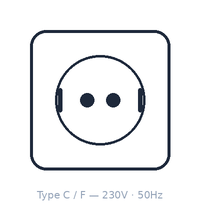
Andorra uses the same power system as France and Spain — Type C, E, and F plugs at 230V/50Hz. If you have a standard European adapter, it works in Andorra. US visitors will need a US-to-European adapter.
Mobile coverage is good in the valleys and towns. Andorra has its own operator, Andorra Telecom. French and Spanish operators may not roam automatically — check with your provider. EU roaming regulations do not apply in Andorra (it’s not in the EU), so using an EU SIM card may incur roaming charges. Prepaid Andorran SIM cards are available. Wi-Fi is widely available in accommodations and ski resorts.
📱 Need mobile data? An eSIM is the easiest way to stay connected in Europe — no SIM swapping, activate before you land. Compare the best eSIM providers for Europe →
Health and Safety
Andorra has a modern hospital in Escaldes-Engordany (Hospital Nostra Senyora de Meritxell) and medical facilities throughout the country. Andorra is not in the EU, so the EHIC card is not valid here — travel insurance is recommended for all visitors.
In an emergency, call 112 (universal), 110 (police), 118 (fire), or 116 (ambulance).
Andorra is extremely safe. Crime rates are among the lowest in Europe. The main safety considerations are mountain-related: winter driving conditions (snow, ice, mountain roads), ski safety, and hiking preparedness in summer. Carry chains or winter tires if driving November–April.
Language
Catalan is the official language — Andorra is the only country in the world where Catalan is the sole official language. Spanish is widely spoken (many residents are Spanish nationals). French is spoken particularly in the north and by those working in the tourism sector. Portuguese is common due to a large Portuguese immigrant community. English is spoken in hotels, ski resorts, and major tourist businesses but is less widespread than in larger European destinations.
Food and Dining Culture
Andorran cuisine is mountain food — hearty, warming, and influenced by both Catalan and French traditions. Escudella is the national dish — a thick stew of meat, vegetables, pasta, and chickpeas, traditionally eaten in winter. Trinxat (cabbage and potato cake with bacon) is another Andorran essential. Embotits (cured meats and sausages), mountain cheeses, and wild mushrooms feature prominently on menus. Coca (a Catalan-style flatbread with sweet or savory toppings) is common in bakeries.
Restaurant prices are reasonable — cheaper than French mountain resorts, comparable to Spanish Catalonia. Ski resort restaurants are predictably more expensive but not extreme. Andorra la Vella has a good range of restaurants from traditional Catalan to international cuisine.
Duty-Free Shopping
Andorra’s biggest draw for many visitors is duty-free shopping. The principality has no VAT (though a low 4.5% general indirect tax applies), making goods significantly cheaper than in France or Spain. The best deals are on electronics, perfume, cosmetics, alcohol, tobacco, sunglasses, and luxury goods. Avinguda Meritxell in Andorra la Vella is the main shopping strip — it’s wall-to-wall shops. When leaving Andorra, customs officers may check your purchases against the duty-free allowances — exceeding the limits means paying tax on the excess. Allowances for entering France or Spain are limited (e.g., 300 euros worth of goods for land crossings into the EU).
Weather
Andorra has a mountain climate. Winters are cold with heavy snowfall at altitude — temperatures in Andorra la Vella (1,023 m) range from -2°C to 8°C in January. Higher ski areas see reliable snow from December through April. Summers are pleasant and mild — 20–28°C in the valleys, cooler at altitude. Spring and autumn are transitional with unpredictable weather. Expect significant temperature differences between valley floors and mountain peaks.
The best time to visit depends on your interests: December–April for skiing, June–September for hiking. July and August are peak hiking season. January–March is peak ski season.
Andorra: Economy and Context
Andorra’s economy is built on tourism (skiing and shopping), banking, and its tax-haven status. Tourism accounts for roughly 80% of GDP — the principality receives approximately 8 million visitors annually, most of them day-trippers from Spain and France drawn by duty-free shopping and skiing. The resident population of 80,000 is heavily international — less than half are Andorran nationals, with large Spanish, Portuguese, and French communities.
Andorra has historically had no income tax (introduced at a low rate in 2015), no capital gains tax, and low corporate taxes, making it attractive to wealthy residents. The banking sector has undergone reforms to comply with international transparency standards. The country’s co-princeship — shared between the French President and the Bishop of Urgell — is one of the most unusual governance structures in the world, dating to a medieval charter of 1278.
Despite its small size, Andorra has invested heavily in tourism infrastructure — modern ski lifts, the Caldea spa complex, and well-maintained mountain trails. The country’s transition from a shopping-and-skiing monoculture toward year-round mountain tourism is ongoing, with summer hiking and cultural tourism growing.
Frequently Asked Questions
Do I need a visa for Andorra?
No separate visa exists for Andorra. Since you must enter through France or Spain (both Schengen), Schengen entry requirements apply. If you need a Schengen visa, make sure it’s multiple-entry — entering Andorra technically means exiting Schengen.
Is Andorra in the Schengen Area?
No. Andorra is not a member of the EU or Schengen. However, it’s entirely surrounded by Schengen countries and has no systematic border controls on entry. Customs checks occur when leaving Andorra.
Does time in Andorra count toward my Schengen 90 days?
Technically no, but practically you should assume it does. There are no entry/exit stamps for Andorra, so you’ll have no proof of time spent outside Schengen. Use our Schengen Calculator and count Andorra time as Schengen time.
How do I get to Andorra?
By road only — Andorra has no airport or train station. The most common route is by bus from Barcelona (3 hours, €30–40). You can also drive from Toulouse, France (2.5–3 hours).
Is Andorra good for skiing?
Yes. Grandvalira is the largest ski area in the Pyrenees with 210 km of pistes. Lift passes and accommodation are 30–50% cheaper than comparable French or Swiss Alpine resorts. The season runs December through April.
Is the duty-free shopping worth it?
For electronics, perfume, alcohol, and tobacco — yes, savings of 10–30% compared to France and Spain are common. Check your EU duty-free allowance before shopping (€300 for land crossings). Customs may inspect your purchases when you leave.
Do I need a different plug adapter for Andorra?
No. Andorra uses the same power system as France and Spain — Type C, E, and F plugs at 230V/50Hz. A standard European adapter works here.
What language is spoken in Andorra?
Catalan is the only official language — Andorra is the only country where this is the case. Spanish, French, and Portuguese are all widely spoken. English is spoken in tourist areas.
🌍 Plan Your Trip to Andorra
Entry requirements, visa status, and a full travel briefing — personalized for your nationality.
Use the Europe Travel Planner →📚 Related Articles
- Schengen 90/180-Day Rule — Andorra time doesn’t technically count, but assume it does
- Non-Schengen Countries in Europe
- How to Split Time Between Schengen and Non-Schengen Countries
- ETIAS: Europe’s New Travel Authorization — Required for reaching Andorra via France or Spain
- International Driving Permit in Europe
- Best Travel Insurance for Europe
- Travel to France
- Travel to Spain
- Travel to Monaco — Another non-EU microstate surrounded by Schengen
- All Europe Country Guides
This article is for informational purposes only and does not constitute legal or travel advice. Entry requirements can change — always verify with official government sources before traveling. Last updated: February 2026.