

Home › Country Guides › Travel to Vatican City
Last Updated: August 2026
Vatican City is the smallest country in the world — just 0.44 km², entirely enclosed within the city of Rome. It’s also the spiritual and administrative center of the Roman Catholic Church, home to the Pope, and the custodian of some of the most important art and architecture in human history. The Sistine Chapel, St. Peter’s Basilica, and the Vatican Museums draw millions of visitors every year, making this tiny city-state one of the most visited places on Earth per square meter. Vatican City is technically an independent sovereign state, not part of the European Union or the Schengen Area — but you won’t notice. There are no border controls, no passport checks, and no immigration formalities. You simply walk in from Rome. Here’s what you need to know to plan your visit in 2026.
🇻🇦 Vatican City at a Glance
| Official Name | Vatican City State (Status Civitatis Vaticanae) |
| Capital | Vatican City (the entire state is the capital) |
| Population | ~800 (residents — mostly clergy and Swiss Guard) |
| Currency | Euro (€) — mints its own euro coins |
| Language | Italian (working language) · Latin (official liturgical language) |
| Time Zone | CET (UTC+1) · CEST in summer (UTC+2) |
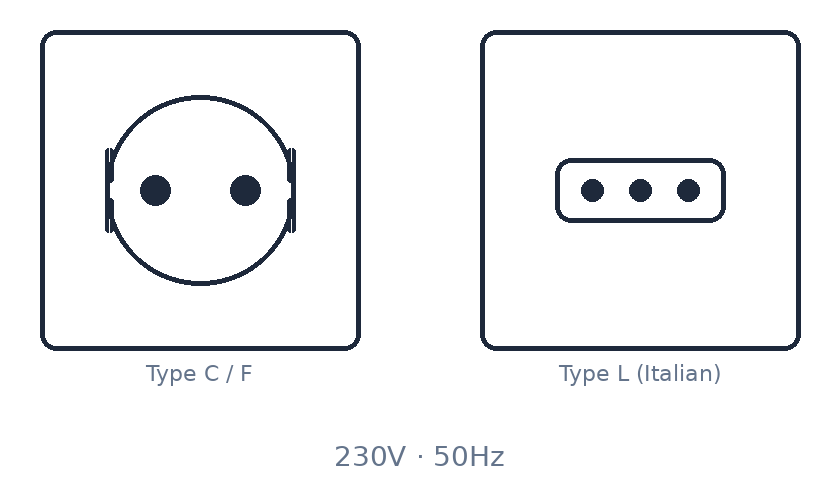
| Plug Type | Type C, F & L · 230V / 50Hz (same as Italy) |
| Schengen Member | No — Vatican City is not a member of the EU or Schengen, but it has no border controls with Italy. Time spent here effectively counts toward your Schengen 90 days in practice. |
| Emergency Number | 112 (via Italian networks) · Vatican Gendarmerie: +39 06 6982 |
Entry Requirements for Vatican City
Vatican City is an independent sovereign state — the smallest in the world by both area and population. It is not a member of the European Union or the Schengen Area. However, Vatican City is entirely enclosed within Rome, Italy, and has no border controls whatsoever. You walk across St. Peter’s Square and you’re in Vatican City. Walk back and you’re in Italy. There is no checkpoint, no stamp, no immigration procedure.
What This Means for Travelers
Entry requirements for Vatican City are the same as for Italy and the Schengen Area. If you can enter Italy, you can enter Vatican City. There is nothing additional required — no separate visa, no registration, no documentation beyond what you need for Italy.
🇺🇸 US Citizens
US citizens can visit Vatican City without a visa — the same visa-free access that applies to Italy and the Schengen Area. No separate documentation is needed beyond a valid passport.
EU/EEA Citizens
EU and EEA citizens can enter Vatican City freely, same as Italy.
Other Nationalities
Whatever entry requirements apply to you for Italy and the Schengen Area apply to Vatican City. Use our Europe Travel Planner to check your specific requirements.
Security Screening
While there’s no immigration control, there are security checks. To enter St. Peter’s Basilica, you pass through airport-style metal detectors and bag screening. The Vatican Museums have their own security screening at the entrance. These are security measures, not border controls — similar to entering any major public building.
Dress Code
Vatican City enforces a dress code for entry to St. Peter’s Basilica, the Vatican Museums, and other religious sites. Shoulders must be covered, and shorts or skirts must reach at least the knee. This applies to all visitors regardless of gender. Guards will turn you away if you don’t comply. Bring a scarf or shawl to cover shoulders if wearing a sleeveless top — vendors near the entrance sell cheap cover-ups, but it’s better to plan ahead.
🛂 Need a Schengen visa to reach Vatican City?
Vatican City has no visa system of its own — you enter through Italy. If your nationality needs a Schengen visa for Italy, iVisa handles the application end to end.
Start your application on iVisa →Affiliate partner — we may earn a commission at no extra cost to you.
Getting to Vatican City
Vatican City is in Rome. Getting there means getting to Rome, then crossing the city to the Vatican area on the west bank of the Tiber.
By Metro
Ottaviano station (Line A) is the closest metro stop to both the Vatican Museums and St. Peter’s Basilica — about a 5–10 minute walk to either. Cipro station (also Line A) is slightly closer to the Vatican Museums entrance. From Roma Termini (Rome’s main train station), take Line A directly — about 20 minutes.
By Bus
Several Rome bus routes stop near Vatican City. Bus 64 from Termini to St. Peter’s is the most famous (and most pickpocket-prone — watch your belongings). Bus 40 is an express alternative on the same route. Bus 49 stops near the Vatican Museums entrance.
On Foot
Walking to Vatican City from central Rome is pleasant. From Piazza Navona, it’s about 15–20 minutes across the Tiber via Castel Sant’Angelo. From Trastevere, it’s about 20–25 minutes. The approach along Via della Conciliazione, the grand boulevard leading to St. Peter’s Square, is one of Rome’s most dramatic walks.
By Taxi
A taxi from Termini station to Vatican City costs approximately €15–20. From Fiumicino Airport (FCO), expect €50–60 (fixed fare to central Rome). Use only licensed white taxis or the FreeNow/Uber apps.
What to See in Vatican City
Vatican City has three main attractions — each is world-class and justifies a visit on its own. Seeing all three in one day is possible but tiring. Two separate days (museums one day, basilica and square another) is more comfortable.
🎨 Vatican Museums and the Sistine Chapel
The Vatican Museums are one of the world’s greatest art collections — over 70,000 works spanning millennia, housed in a labyrinth of galleries, halls, and courtyards that would take days to see comprehensively. The highlight for most visitors is the Sistine Chapel, Michelangelo’s ceiling frescoes (painted 1508–1512) and the Last Judgment on the altar wall (completed 1541). These are among the most important works of art in Western civilization, and seeing them in person is genuinely moving regardless of your religious background.
Other museum highlights include the Raphael Rooms (Stanze di Raffaello), particularly the School of Athens; the Gallery of Maps (a 120-meter corridor of 16th-century topographic maps of Italy); the Laocoön and His Sons sculpture; and the Pinacoteca (painting gallery) with works by Caravaggio, Raphael, and Leonardo.
Practical information:
Tickets: Book online in advance — walk-up lines can exceed 3–4 hours in peak season. Standard entry is approximately €17, with an additional €4 for online booking. Free entry on the last Sunday of each month (expect extreme crowds).
Hours: Generally Monday–Saturday, 8:00 AM–6:00 PM (last entry 4:00 PM). Extended Friday evening hours are sometimes available. Closed Sundays except the last Sunday of the month.
Time needed: A focused visit covering the main highlights takes 2–3 hours. Art enthusiasts could spend an entire day. The route through the museums to the Sistine Chapel is long — wear comfortable shoes.
✅ Book tickets online. This is non-negotiable during peak season (March–October). The Vatican Museums website sells timed-entry tickets. Guided tours and early-access options are also available at premium prices. Showing up without tickets in summer means hours in line or not getting in at all.
⛪ St. Peter’s Basilica
St. Peter’s Basilica (Basilica Papale di San Pietro) is the world’s largest church and one of the holiest sites in Christianity, built over the traditional burial site of Saint Peter. The current building dates from the 16th–17th centuries, designed by a succession of architects including Bramante, Michelangelo, and Maderno. The scale is overwhelming — the interior is 187 meters long and the dome rises 136 meters. Highlights include Michelangelo’s Pietà (behind glass near the entrance), Bernini’s Baldachin (the massive bronze canopy over the papal altar), and the Throne of St. Peter (Cathedra Petri) in the apse.
The Dome: Climbing to the top of St. Peter’s dome is one of the best experiences in Rome. You can take an elevator partway (€8) or walk the entire way (€6) — 551 steps total. The final ascent through the narrowing interior of the dome is claustrophobic but the panoramic view of Rome from the top is unmatched.
Practical information:
Entry: Free (no ticket required). Security screening at the entrance. Lines can be long but move relatively quickly — 20–40 minutes in peak season.
Hours: Generally 7:00 AM–6:30 PM (October–March) or 7:00 AM–7:00 PM (April–September). Dome access closes earlier.
Dress code: Strictly enforced — covered shoulders and knees required.
🏛️ St. Peter’s Square
St. Peter’s Square (Piazza San Pietro), designed by Bernini in the 17th century, is one of the world’s most recognizable public spaces — an elliptical colonnade of 284 columns enclosing a vast space that can hold 300,000 people. The Egyptian obelisk at the center dates to the 1st century BC. The square is where papal audiences and major Catholic ceremonies take place. It’s open 24/7, free to enter, and stunning at any hour — particularly at dawn before the crowds arrive.
🪦 Vatican Grottoes and Necropolis
Beneath St. Peter’s Basilica, the Vatican Grottoes contain the tombs of numerous popes, including John Paul II’s original tomb. Access is free (enter through the basilica). The Scavi (Vatican Necropolis), deeper below, contains a Roman cemetery and what is believed to be St. Peter’s tomb. Scavi tours must be booked well in advance through the Vatican’s Excavations Office — limited to small groups, approximately €13, and genuinely fascinating.
🌿 Vatican Gardens
The Vatican Gardens cover about half of Vatican City’s territory — beautifully maintained Renaissance and Baroque gardens that are only accessible via guided tour or a combined museums + gardens ticket. Tours must be booked in advance (approximately €33 including museum entry). The gardens are peaceful, uncrowded, and offer a completely different perspective on the Vatican.
📮 Vatican Post Office
The Vatican operates its own postal service, widely considered more reliable than Italy’s. Sending a postcard with a Vatican stamp from the Vatican post office (located in St. Peter’s Square) is a popular and affordable souvenir. Vatican stamps are only valid when posted from within Vatican City.
How Much Does Vatican City Cost?
Vatican City is a day visit — nobody stays overnight (there are no hotels). Your costs are entry fees, food, and transport within Rome.
| Expense | Cost |
|---|---|
| Vatican Museums + Sistine Chapel | ~€17 (standard) · ~€21 with online booking fee |
| St. Peter’s Basilica | Free |
| Dome climb | €6 (stairs) · €8 (elevator + stairs) |
| Vatican Gardens tour | ~€33 (includes museum entry) |
| Scavi tour | ~€13 |
| Lunch near Vatican | €12–25 |
| Metro to/from Vatican | €1.50 each way |
| Postcard + Vatican stamp | €2–3 |
Total day cost: A typical Vatican visit costs €30–60 per person including museum entry, dome climb, lunch, and transport. It’s one of the best value cultural experiences in Europe for what you see.
Saving money: St. Peter’s Basilica and St. Peter’s Square are free. The last Sunday of each month, the Vatican Museums are free (arrive very early — lines are enormous). The Grottoes beneath the basilica are free.
Currency: Vatican City uses the euro (€) and mints its own coins (collectible). In practice, you’ll use the same money as in Rome. The Vatican has ATMs (reportedly in Latin, though they also offer Italian and other languages) and the gift shops accept credit cards.
Practical Information
Money
Euro (€). Vatican-minted coins are legal tender throughout the eurozone but are collector’s items — if you get one in change, keep it. The Vatican gift shops, museums, and post office accept credit cards. There are ATMs near the museums and post office.
Power and Connectivity
Vatican City uses the same power system as Italy — Type C, F, and L plugs at 230V/50Hz. This is irrelevant for most visitors (you’re not staying overnight), but if you need to charge a phone, the museum café areas usually have accessible outlets.
Mobile coverage in Vatican City comes from Italian networks — your phone won’t know you’ve left Italy. Wi-Fi is available in the Vatican Museums (limited) and in nearby Roman cafés and restaurants.
📱 Need mobile data? An eSIM is the easiest way to stay connected in Europe — no SIM swapping, activate before you land. Compare the best eSIM providers for Europe →
Health and Safety
Vatican City has a small medical clinic but for any serious issue, Roman hospitals are minutes away. You’re effectively in Rome for all practical purposes. Vatican City is not in the EU, so EHIC/GHIC cards don’t apply there (or in Italy for non-EU visitors) — comprehensive travel insurance for Europe covers you across Vatican City, Italy, and the wider Schengen area in a single plan.
🏥 Cover Rome + your whole Italy trip with one policy
SafetyWing Nomad Insurance covers Vatican City, Rome, and every other stop on your route — emergency medical, evacuation, travel delay, and lost luggage in one plan. Rome’s heat, crowded museum queues, and cobblestone streets all carry real risk. Perfect if you’re doing a Rome + Vatican day, a broader Italy loop, or Vatican as one stop on a wider European trip. Buy it before you leave or even mid-trip.
Get a quote from SafetyWing →Affiliate partner — we may earn a commission at no extra cost to you.
In an emergency, call 112 (works on Italian networks throughout Vatican City).
The Vatican is very safe. The main concerns are pickpocketing (bus 64, crowded museum queues, and St. Peter’s Square are hotspots), heat exhaustion in summer (the museum route is long and can be hot), and the sheer volume of people during peak season. Keep valuables secure, stay hydrated, and wear comfortable shoes.
Audiences and Papal Events
If the Pope is in Rome, the Papal Audience takes place on Wednesday mornings in St. Peter’s Square (or the Paul VI Audience Hall in bad weather/winter). Tickets are free but must be requested in advance through the Prefecture of the Papal Household. The Angelus prayer on Sunday at noon, when the Pope appears at his window overlooking St. Peter’s Square, requires no ticket — just show up. These events draw large crowds but are unique cultural experiences regardless of your faith.
Language
Italian is the working language of Vatican City and what you’ll hear and see on signage. Latin is the official language for Holy See documents and liturgy. The Swiss Guard speak German, French, and Italian. Museum staff and guides speak multiple languages, and English-language audio guides and tours are widely available. You’ll have no communication issues in English.
Food
There’s a cafeteria inside the Vatican Museums (mediocre, overpriced — but useful for a quick break during a long visit). For actual meals, exit Vatican City and eat in the surrounding Roman neighborhood of Prati, which has good restaurants at reasonable prices — head away from the immediate vicinity of St. Peter’s where tourist traps cluster. Via Cola di Rienzo and the streets between the Vatican walls and Castel Sant’Angelo have the best options nearby.
Vatican City: Context
Vatican City became an independent state in 1929 through the Lateran Treaty between the Holy See and Italy, resolving the “Roman Question” that had existed since the unification of Italy annexed the Papal States in 1870. The Pope is both the head of the Catholic Church and the sovereign of Vatican City State — making it the world’s only elective, non-hereditary monarchy.
Despite its tiny size, Vatican City has enormous global influence as the headquarters of a religion with 1.3 billion adherents worldwide. It has its own postal service, radio station (Vatican Radio), newspaper (L’Osservatore Romano), and a small railway station connected to the Italian rail network (used for freight and occasional special services). The Vatican Library holds one of the most important collections of manuscripts in the world.
For visitors, the Vatican’s significance is primarily cultural and artistic. The collections in the museums represent centuries of papal patronage of the arts — the result of the Catholic Church’s position as the most powerful institution in Western civilization for over a millennium. Whether you’re religious or not, the Sistine Chapel ceiling, Raphael’s frescoes, and St. Peter’s Basilica are among the most important artistic achievements in human history. Seeing them in person is worth the crowds.
Frequently Asked Questions
Do I need a visa for Vatican City?
No. Vatican City has no border controls — you walk in from Rome. Whatever entry requirements apply to Italy apply to Vatican City. No separate documentation is needed.
Is Vatican City in the Schengen Area?
Technically no. In practice, yes — there are no border controls and you’re physically within Rome. Time spent in Vatican City effectively counts toward your Schengen 90/180-day limit.
Will I need ETIAS to visit Vatican City?
Not for Vatican City itself — but yes for Italy to reach it. Since Vatican City can only be accessed through Italian territory, visa-exempt travelers will need ETIAS to enter Italy (2027 is now the most likely ETIAS launch year after the EU removed the Q4 2026 target in July 2026). Get the €20 ETIAS for the Schengen leg; nothing extra is needed to cross into Vatican City.
Do I need tickets for the Vatican Museums?
Technically no — you can buy tickets at the door. In practice, buying online in advance is essential during peak season (March–October) unless you want to wait 3–4 hours in line. Standard online tickets cost approximately €21.
Is St. Peter’s Basilica free?
Yes. Entry to St. Peter’s Basilica is free. The dome climb costs €6–8. The Grottoes beneath the basilica are also free.
What is the dress code?
Shoulders must be covered and shorts or skirts must reach the knee. This applies to St. Peter’s Basilica, the Vatican Museums, and all religious sites. Guards will refuse entry if you don’t comply.
Do I need travel insurance for Vatican City?
Yes — non-EU visitors face full private rates for medical care in both Vatican City and Italy. Coverage matters especially in summer heat and crowded conditions. See our Europe travel insurance guide for policies that cover Vatican City alongside Italy and the Schengen area in a single plan.
How long should I spend at the Vatican?
Allow 2–3 hours for the Vatican Museums and Sistine Chapel, 1–2 hours for St. Peter’s Basilica (add 30–45 minutes for the dome climb), and 30 minutes for St. Peter’s Square. A full Vatican day is 4–6 hours. Splitting across two days is more comfortable.
When is the best time to visit?
Early morning (arrive when the museums open at 8:00 AM) or late afternoon (after 2:00 PM when tour groups thin out). Weekdays are less crowded than Saturdays. The last Sunday of the month is free but extremely crowded. November–February is the quietest season overall.
Can I see the Pope?
The Wednesday Papal Audience (free tickets, book in advance) and Sunday Angelus prayer (no ticket needed) are your best options when the Pope is in Rome. Check the Vatican’s schedule — the Pope travels frequently.
🌍 Plan Your Trip to Vatican City
Entry requirements, visa status, and a full travel briefing — personalized for your nationality.
Use the Europe Travel Planner →📚 Related Articles
- Schengen 90/180-Day Rule — Vatican time effectively counts toward your 90 days
- Non-Schengen Countries in Europe
- ETIAS: Europe’s New Travel Authorization — Effectively applies via Italy
- Best Travel Insurance for Europe
- Travel to Italy — Vatican City’s surrounding country
- Travel to San Marino — Another microstate within Italy
- Travel to Monaco — European microstate on the French Riviera
- All Europe Country Guides
This article is for informational purposes only and does not constitute legal or travel advice. Entry requirements can change — always verify with official government sources before traveling. Last updated: August 2026.