
Last Updated: February 2026
Monaco is a contradiction packed into two square kilometers — the world’s second-smallest country, yet home to more millionaires per capita than anywhere on Earth. A sovereign city-state wedged between the French Riviera and the Mediterranean Sea, it’s a place where a Formula 1 circuit runs through public streets, the casino that inspired James Bond still operates, and the royal family traces its rule back to 1297. Despite its tiny size, Monaco draws millions of visitors every year — and most of them don’t realize it’s technically a separate country from France. Monaco is not part of the European Union or the Schengen Area, but it has no border controls with France and functions as part of the Schengen zone in practice. Here’s everything you need to know to plan your visit to Monaco in 2026.
🇲🇨 Monaco at a Glance
| Official Name | Principality of Monaco (Principauté de Monaco) |
| Capital | Monaco (city-state — the entire country is the capital) |
| Population | ~39,000 (2026) |
| Currency | Euro (€) |
| Language | French (official) · Monégasque · Italian · English widely spoken |
| Time Zone | CET (UTC+1) · CEST in summer (UTC+2) |
| Plug Type | Type C, E & F · 230V / 50Hz |
| Driving Side | Right |
| International Driving Permit (IDP) | Not required for short visits — a valid US license is accepted. See IDP guide |
| Schengen Member | No — Monaco is not a member of the EU or the Schengen Area, but it has no border controls with France and is treated as part of the Schengen zone for practical purposes. Entry requirements are effectively the same as France. Time spent in Monaco counts toward your Schengen 90 days in practice. |
| Emergency Number | 112 (universal) · 17 (police) · 18 (fire) · 15 (ambulance) |
Entry Requirements for Monaco
Monaco is an independent sovereign state — a constitutional monarchy ruled by the Grimaldi family since 1297. It is not a member of the European Union or the Schengen Area. However, Monaco has an open border with France and no independent border controls. In practice, entering Monaco is the same as entering France — you won’t see a border crossing, passport check, or any indication that you’ve crossed into a different country unless you notice the change in license plates and flags.
What This Means for Travelers
Because Monaco has no border controls and is entirely surrounded by France (and the Mediterranean), the entry requirements for Monaco are effectively the same as for France and the Schengen Area:
If you can enter France, you can enter Monaco. If you need a Schengen visa to visit France, that same visa covers Monaco. When ETIAS launches for Schengen countries, it will effectively apply to Monaco as well — you’ll pass through French (Schengen) territory to get there.
🇺🇸 US Citizens
US citizens can visit Monaco without a visa — the same visa-free access that applies to France and the Schengen Area covers Monaco. You can stay for up to 90 days within any 180-day period. No separate application or documentation is needed beyond a valid passport.
EU/EEA Citizens
EU and EEA citizens can enter Monaco freely with a valid passport or national ID card, the same as entering France.
Other Nationalities
Whatever entry requirements apply to you for France and the Schengen Area apply to Monaco. If you need a Schengen visa, it covers Monaco. Use our Europe Travel Planner to check your specific requirements.
Getting to Monaco
Monaco has no airport, no major train station of its own, and is only 2 km² — getting there means arriving through France.
By Air (via Nice)
Nice Côte d’Azur Airport (NCE) is the gateway to Monaco, located about 30 km west along the coast. Nice has direct flights from across Europe, North America (seasonal), and the Middle East. From Nice Airport to Monaco, you have several options:
Helicopter: The most Monaco way to arrive. Monacair operates a 7-minute helicopter shuttle between Nice Airport and Monaco’s heliport. It costs approximately €140–170 each way. Frequent departures throughout the day.
Bus: Bus 110 runs directly from Nice Airport to Monaco (approximately 45 minutes, €22). The most practical option for most visitors.
Train: Take the airport shuttle or bus to Nice-Ville station, then the TER regional train along the coast to Monaco-Monte Carlo station (approximately 20 minutes, €4–6). The coastal railway ride is beautiful.
Taxi: A taxi from Nice Airport to Monaco costs approximately €80–100 (fixed fare) and takes 30–45 minutes depending on traffic.
By Train
Monaco-Monte Carlo station is on the main TER Provence-Alpes-Côte d’Azur regional line. Trains run frequently along the coast from Nice (20 minutes, €4–6), Cannes (1 hour, €10–12), and other Riviera towns. The station is built into the rock beneath the city — you emerge from the station via escalators and elevators into the heart of Monaco. TGV high-speed trains from Paris (5.5 hours) stop at Nice, where you transfer to a regional train.
By Car
Monaco is accessible via the A8 motorway from Nice (about 20 minutes without traffic) or the scenic coastal roads — the Grande Corniche (upper road), Moyenne Corniche (middle road), and Basse Corniche (lower coast road) are among the most famous driving roads in Europe. Parking in Monaco is limited and expensive — the city has several public underground car parks. Traffic during events like the Grand Prix or yacht shows is extreme.
By Sea
Port Hercules is Monaco’s harbor, accommodating cruise ships and private yachts. Several Mediterranean cruise lines include Monaco as a port of call. Water taxis operate between Monaco and nearby coastal towns.
Getting Around Monaco
Monaco is tiny — just 2 km² — but it’s built on steep terrain rising from the harbor to the hillside. Despite the small size, you won’t walk everywhere comfortably due to the hills and elevation changes.
Walking
The most practical way to see Monaco. Everything is technically within walking distance, but the hills are steep. Monaco has an extensive network of public escalators, elevators, and moving walkways (travelators) that connect different levels of the city — look for them throughout the principality. They’re free and save enormous effort on the steep gradients.
Public Buses
The Compagnie des Autobus de Monaco (CAM) operates six bus routes covering the entire principality. A single ride costs €2, a day pass is €5.50. Buses are clean, efficient, and run frequently. Route 1 and Route 2 cover most tourist areas.
Bateau Bus
A solar-powered water shuttle crosses Port Hercules between the Monaco-Ville side and the Monte Carlo side. It runs every 20 minutes and costs €2. It’s both practical transport and a mini harbor cruise.
Driving
Driving in Monaco is not recommended for visitors. The streets are narrow, steep, and confusing, parking is scarce and expensive, and every destination is reachable on foot or by bus. If you have a rental car, park it in one of the underground car parks and explore on foot.
Where to Go in Monaco
Monaco packs a lot into a very small space. You can see the main highlights in a full day, though the atmosphere — particularly around the casino and harbor — rewards a longer stay.
🎰 Monte Carlo and the Casino
The Casino de Monte-Carlo is Monaco’s most famous landmark — an ornate Belle Époque building designed by Charles Garnier (who also designed the Paris Opera). The casino opened in 1863 and has been the setting for countless films, including two James Bond movies. You can enter the atrium for free; access to the gaming rooms requires a €17 entry fee, smart dress code (no shorts, no sportswear), and your passport. Even if you don’t gamble, the building and the Place du Casino in front of it — with its immaculate gardens, luxury cars, and the Hôtel de Paris — are worth seeing.
The surrounding Carré d’Or (Golden Square) district is Monaco’s luxury shopping zone — Chanel, Dior, Louis Vuitton, and every other name you’d expect.
👑 Monaco-Ville (The Rock)
Monaco-Ville, known as “The Rock” (Le Rocher), is the old town perched on a rocky headland above the harbor. This is where you’ll find the Prince’s Palace (the Grimaldi residence since 1297), with its daily changing of the guard ceremony at 11:55 AM. The narrow, pastel-colored streets of the old town have a distinctly Italian character. The Monaco Cathedral (Cathédrale Notre-Dame-Immaculée) is where Grace Kelly married Prince Rainier III in 1956 and where both are now buried. The old town is one of the few areas in Monaco that feels genuinely charming rather than ostentatiously wealthy.
🐠 Oceanographic Museum
The Musée Océanographique de Monaco, perched dramatically on the cliffsides of The Rock, was founded in 1910 by Prince Albert I (an accomplished oceanographer) and was once directed by Jacques Cousteau. The aquarium is one of Europe’s finest, and the building itself — with its cliff-edge location and panoramic Mediterranean views — is spectacular. It’s Monaco’s most visited attraction.
🏎️ The Formula 1 Circuit
The Monaco Grand Prix runs through the city’s public streets every May — arguably the most prestigious race in Formula 1. Even when there’s no race, you can walk (or drive) the entire 3.3 km circuit. The famous hairpin at the Fairmont Hotel, the tunnel section, the chicane at the harbor — it’s all open to the public as regular streets. The F1 start/finish line on Boulevard Albert 1er is painted on the road year-round. The Monaco Top Cars Collection exhibits Prince Rainier III’s personal collection of classic cars.
🌸 Exotic Garden and Grotte
The Jardin Exotique (Exotic Garden) on the western hillside contains an extraordinary collection of cacti and succulents from around the world, plus panoramic views over the principality and coast. Below it, the Grotte de l’Observatoire is a natural cave with stalactites and stalagmites descending 100 meters below the garden.
⛵ Port Hercules and Fontvieille
Port Hercules is Monaco’s central harbor, lined with superyachts that are an attraction in themselves. The port area comes alive during the Monaco Yacht Show (September). Fontvieille, the western district built on reclaimed land, has the Princess Grace Rose Garden and a quieter, more residential atmosphere.
How Much Does Monaco Cost?
Monaco is one of the most expensive places in the world. Full stop. Everything from a cup of coffee to a hotel room costs more than almost anywhere else in Europe. However, you don’t have to spend a fortune to visit — many of Monaco’s attractions are free or inexpensive, and you can visit as a day trip from Nice to keep accommodation costs manageable.
| Expense | Day Trip Budget | Mid-Range (Staying in Monaco) | Luxury |
|---|---|---|---|
| Accommodation (per night) | Stay in Nice (€80–150) | €200–400 (3-star hotel) | €600–3,000+ (Hôtel de Paris, Hermitage) |
| Meals (per day) | €20–40 (casual lunch) | €60–120 | €200–500+ |
| Transport | €10–15 (train from Nice + bus) | €10–20 (local buses) | €150+ (helicopter transfer) |
| Activities | €0–20 (walking + Oceanographic Museum) | €30–60 | €100+ (casino, events) |
Day trip strategy: The most practical way to visit Monaco is as a day trip from Nice, Menton, or another Riviera base. The train from Nice to Monaco costs under €6 each way and takes 20 minutes. You can see the main sights in a full day, have lunch in the old town (which has more reasonably priced restaurants than the Monte Carlo area), and return to your Riviera accommodation in the evening.
Saving money: Walking is free and covers everything. The changing of the guard is free. Wandering the old town, the harbor, and the F1 circuit costs nothing. The Oceanographic Museum (€18) is the only paid attraction most visitors need. A coffee or beer costs €5–8 in most places — expensive by European standards but not ruinous.
Tipping: Service is typically included in restaurant bills in Monaco (as in France). A small additional tip (5–10%) is appreciated for exceptional service but not expected.
Practical Information
Money
Monaco uses the euro (€). ATMs are widely available. Credit and debit cards are accepted everywhere — this is one of the most cashless societies in Europe. Prices are generally 20–40% higher than Nice and the surrounding French Riviera.
Power and Connectivity
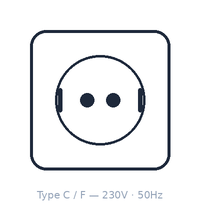
Monaco uses the same power system as France — Type C, E, and F plugs at 230V/50Hz. If you already have a standard European adapter, it works in Monaco. US visitors will need a US-to-European adapter.
Mobile coverage is excellent. Monaco has its own operator (Monaco Telecom), but French operators also work seamlessly due to the open border. EU roaming regulations don’t technically apply in Monaco (it’s not an EU member), but in practice, most EU SIM cards work normally — check with your provider. Wi-Fi is widely available in hotels, restaurants, and public areas.
📱 Need mobile data? An eSIM is the easiest way to stay connected in Europe — no SIM swapping, activate before you land. Compare the best eSIM providers for Europe →
Health and Safety
Monaco has excellent healthcare facilities. The Princess Grace Hospital Centre is the main hospital. EU citizens with an EHIC card may face complications as Monaco is not in the EU — travel insurance is recommended for all visitors.
In an emergency, call 112 (universal), 17 (police), 18 (fire), or 15 (ambulance).
Monaco is extremely safe — it has one of the lowest crime rates in the world, with CCTV cameras covering virtually every public space and a large police presence relative to its size. Petty theft is rare. The biggest practical hazard is the hills and steep walkways — wear comfortable shoes.
Language
French is the official language and used in all official contexts. English is widely spoken — Monaco is intensely international, with residents from over 130 nationalities, and the tourism and hospitality sectors are fully bilingual. Italian is also commonly heard given Monaco’s proximity to Italy and its historical connections. Monégasque, the native Ligurian dialect, is spoken by a small number of native Monégasques.
Food and Dining Culture
Monaco’s dining scene reflects its position between France and Italy, filtered through extraordinary wealth. French and Italian cuisines dominate, with restaurants ranging from Michelin-starred establishments to surprisingly accessible cafés in the old town. Barbagiuan (fried pastries stuffed with Swiss chard and ricotta) is Monaco’s signature dish. Socca (chickpea flatbread, shared with Nice) and other Niçois/Ligurian specialties are common.
For more affordable eating, head to Monaco-Ville (the old town), which has casual restaurants with reasonable set-lunch menus. The Condamine market (Marché de la Condamine) near the harbor has a food court area with good-value options. Avoid eating directly around Place du Casino unless you’re prepared for extreme prices.
Weather
Monaco shares the French Riviera’s Mediterranean climate — warm, dry summers and mild, wet winters. Summer temperatures reach 26–30°C with abundant sunshine. Winters are mild (8–14°C) with occasional rain. The sea is swimmable from June through October. Spring and autumn are pleasant with fewer crowds.
Events
Monaco punches far above its weight in events. The Monaco Grand Prix (late May) is the most famous, transforming the entire principality into a racetrack. The Monaco Yacht Show (late September) fills the harbor with the world’s largest superyachts. The Monte-Carlo Rally (January) is a legendary motorsport event. The Monte-Carlo Tennis Masters (April) is a prestigious ATP tournament. During major events, hotel prices skyrocket and availability is extremely limited — book months in advance.
Monaco: Economy and Context
Monaco is one of the wealthiest territories in the world. It has no income tax for individuals, which has attracted a large population of ultra-high-net-worth residents — the principality’s approximately 39,000 residents include some of the world’s wealthiest people. Over 75% of residents are foreign nationals. Only about 9,000 people are native Monégasques.
The economy is driven by tourism, finance, real estate, and luxury services. The casino and gambling industry, while iconic, actually contributes a relatively small percentage of government revenue today — tourism and financial services are far more significant. Real estate prices are the highest in the world — averaging over €50,000 per square meter.
Despite the wealth, Monaco is remarkably accessible as a tourist destination. The streets are public, the sights are open, and a day trip from Nice costs less than €30 in transport and admission. You don’t need to be rich to visit — you just need to be comfortable watching people who are.
Frequently Asked Questions
Do I need a visa for Monaco?
Monaco has no border controls — entry requirements are the same as France and the Schengen Area. If you can enter France, you can enter Monaco. When ETIAS launches, it will effectively apply since you transit through France.
Is Monaco in the Schengen Area?
Technically no. In practice, yes. Monaco has no border controls with France and is treated as part of the Schengen zone. Time spent in Monaco effectively counts toward your Schengen 90/180-day limit.
Does time in Monaco count toward my Schengen 90 days?
Effectively yes. Because there are no border controls and you transit through French territory to reach Monaco, your time here counts as part of your Schengen stay. Use our Schengen Calculator to track your days.
Can I visit Monaco as a day trip from Nice?
Absolutely — this is the most popular and practical way to visit. The train from Nice to Monaco takes 20 minutes and costs under €6. You can see the main sights comfortably in a day.
Is Monaco expensive?
Very. It’s one of the most expensive places in the world. However, a day trip is surprisingly manageable — the main sights are free to walk around, and the Oceanographic Museum costs €18. Eating in the old town is more affordable than the Monte Carlo area.
What is the dress code for the Casino de Monte-Carlo?
The atrium is free and has no dress code. The gaming rooms require smart dress (no shorts, sportswear, or flip-flops), a €17 entry fee, and your passport. Men typically wear long trousers and a collared shirt. Jacket is not required but fits the atmosphere.
Do I need a different plug adapter for Monaco than for France?
No. Monaco uses the same power system as France — Type C, E, and F plugs at 230V/50Hz. Any European adapter works.
When is the Monaco Grand Prix?
The Grand Prix weekend is typically in late May. During race week, the entire principality is transformed — hotel prices are extreme, streets are closed, and the atmosphere is electric. If you want to see it, book very far in advance. If you want to avoid it, note the date and plan accordingly.
🌍 Plan Your Trip to Monaco
Entry requirements, visa status, and a full travel briefing — personalized for your nationality.
Use the Europe Travel Planner →📚 Related Articles
- Schengen 90/180-Day Rule — Monaco time effectively counts toward your 90 days
- Non-Schengen Countries in Europe
- ETIAS: Europe’s New Travel Authorization — Effectively applies to Monaco via France
- Best Travel Insurance for Europe
- Travel to France — Monaco’s surrounding country
- All Europe Country Guides
This article is for informational purposes only and does not constitute legal or travel advice. Entry requirements can change — always verify with official government sources before traveling. Last updated: February 2026.