
Home › Country Guides › Travel to North Macedonia
Last Updated: July 2026
North Macedonia is one of the Balkans’ best-kept secrets — a small, landlocked country where ancient churches cling to cliffsides above one of Europe’s oldest and deepest lakes, Ottoman bazaars bustle beneath a hilltop fortress, and mountains stretch in every direction. Ohrid alone would be worth the trip: a UNESCO-listed town with Byzantine churches, crystal-clear water, and a fraction of the crowds you’d find at comparable Mediterranean destinations. What many travelers don’t realize is that North Macedonia is not part of the Schengen Area or the EU, which means it has its own entry rules and your time here doesn’t count toward your Schengen 90 days. Here’s everything you need to know to plan your trip to North Macedonia in 2026.
🇲🇰 North Macedonia at a Glance
| Official Name | Republic of North Macedonia (Република Северна Македонија) |
| Capital | Skopje |
| Population | ~1.8 million (2026) |
| Currency | Macedonian Denar (MKD / ден) |
| Language | Macedonian · Albanian (both official) |
| Time Zone | CET (UTC+1) · CEST in summer (UTC+2) |
| Plug Type | Type C & F · 230V / 50Hz |
| Driving Side | Right |
| International Driving Permit (IDP) | Required for non-EU license holders — see IDP guide |
| Schengen Member | No — North Macedonia is not an EU or Schengen member. It has its own immigration system. Time spent here does not count toward your Schengen 90 days. |
| Emergency Number | 112 (universal) · 192 (police) · 193 (fire) · 194 (ambulance) |
Entry Requirements for North Macedonia
North Macedonia is not a member of the European Union or the Schengen Area. It is an EU candidate country with accession negotiations ongoing, but membership is not expected in the near term. This means North Macedonia has its own immigration rules, entirely separate from both the Schengen system and EU free movement.
🇺🇸 US Citizens: Visa-Free for 90 Days
US citizens can visit North Macedonia without a visa for up to 90 days within any 180-day period. No pre-travel authorization, no online application, no fee — just arrive with a valid passport. Your passport must be valid for at least three months beyond your planned departure date.
At the border, you’ll receive an entry stamp. Immigration is generally quick and straightforward. You may be asked for proof of accommodation and a return or onward ticket, though this is uncommon for US passport holders.
Foreign visitors are required to register with the local police within 24 hours of arrival. Hotels and registered accommodation do this automatically. If staying in private or informal accommodation, you should register at the nearest police station — enforcement varies but fines are possible at exit if you can’t show registration.
⚠️ North Macedonia is not Schengen and not EU. North Macedonia has its own visa policy, and ETIAS (launching in late 2026 for Schengen countries) will not apply here. Useful exceptions for visa-required nationalities: holders of a valid multiple-entry Schengen (type C) visa — or a temporary or permanent residence permit from an EU/Schengen country — can enter North Macedonia visa-free for up to 15 days per entry (total stays capped at 90 days in 180; the visa must be valid at least 5 days beyond your planned stay). Under a temporary decision valid through December 31, 2026, holders of a valid multiple-entry UK, US, or Canadian visa get the same 15-day access.
EU/EEA Citizens
EU and EEA citizens can enter North Macedonia without a visa for up to 90 days within a 180-day period using a valid passport or national ID card. There is no automatic right to live or work — that requires separate permits. North Macedonia is not part of EU free movement.
Other Nationalities
Citizens of many countries — including Canada, Australia, New Zealand, Japan, the UK, and others — can visit North Macedonia visa-free for up to 90 days. Some nationalities require a visa, which must be obtained at a North Macedonian embassy or consulate before traveling — unless they qualify for the 15-day entry rule via a multiple-entry Schengen, UK, US, or Canadian visa or an EU/Schengen residence permit (see above). Use our Europe Travel Planner to check your specific requirements.
🛂 Need a visa for the European leg of your trip?
A multiple-entry Schengen visa opens more than the Schengen Area — it also gets you into North Macedonia visa-free for up to 15 days per entry. If your nationality needs a Schengen visa, or any other visa for your route, iVisa checks your requirements and handles the application end to end.
Check your requirements on iVisa →Combining with Schengen Travel
North Macedonia’s non-Schengen, non-EU status makes it a natural part of the Balkans circuit for travelers rotating between Schengen and non-Schengen countries.
Your Schengen Clock Stops in North Macedonia
Time spent in North Macedonia does not count toward your Schengen 90-day limit. If you’ve been traveling in Schengen countries and cross into North Macedonia, your Schengen clock pauses. When you re-enter a Schengen country, it resumes where it left off.
North Macedonia fits naturally into Balkans itineraries alongside Serbia, Kosovo, Albania, Montenegro, and Bosnia — none of which are in Schengen. You can spend weeks or months in the Western Balkans without touching your Schengen allowance.
✅ Planning a long Europe trip? Use our Schengen Calculator to track your 90/180-day count. North Macedonia and the rest of the Western Balkans are all non-Schengen — your clock stays paused for the entire Balkan leg.
Separate Documents for Each
North Macedonian visa-free entry does not grant access to Schengen countries. If your trip includes both, check the requirements for each leg separately: a Schengen visa doesn’t give you Schengen-style 90-day access to North Macedonia, though a valid multiple-entry Schengen visa does allow visa-free entry for up to 15 days at a time. When ETIAS launches, visa-exempt travelers visiting both North Macedonia and Schengen countries will need ETIAS for the Schengen portion only.
Border Crossings
North Macedonia shares land borders with Greece (Schengen), Serbia (non-Schengen), Kosovo (non-Schengen), Albania (non-Schengen), and Bulgaria (Schengen). Crossing into Greece or Bulgaria means re-entering the Schengen Area — your 90-day clock resumes. Crossing into Serbia, Kosovo, or Albania keeps you outside Schengen. Border crossings are generally straightforward, though the Greek border at Bogorodica/Evzoni can have queues in summer.
Getting to North Macedonia
North Macedonia is accessible by air, bus, and car — though as a smaller country, international flight options are more limited than in neighboring Greece or Serbia.
By Air
Skopje International Airport (SKP) is the main gateway, located about 20 km east of the capital. Wizz Air is the dominant carrier, with direct flights to dozens of European cities including London, Vienna, Milan, Basel, Dortmund, Malmö, and many more. Turkish Airlines connects Skopje to Istanbul (and from there, worldwide). There are no direct flights from North America — the most common routings connect through Istanbul, Vienna, or a Wizz Air European hub.
Ohrid St. Paul the Apostle Airport (OHD) has limited seasonal service, primarily charter and low-cost flights in summer to destinations in the UK, Netherlands, and other European cities. Most travelers to Ohrid fly into Skopje and drive or bus the rest of the way (3 hours).
By Bus
International buses connect North Macedonia with all neighboring countries and beyond. Major routes include Thessaloniki (Greece) to Skopje (4 hours), Sofia (Bulgaria) to Skopje (5 hours), Belgrade (Serbia) to Skopje (6 hours), Pristina (Kosovo) to Skopje (2 hours), and Tirana (Albania) to Skopje or Ohrid. Flixbus operates some routes; regional operators cover the rest. Buses are affordable and the primary way most people cross borders overland.
By Car
Driving into North Macedonia is straightforward from all neighboring countries. The main highways from Greece (E75 from Thessaloniki) and Serbia (E75 from Belgrade) are in reasonable condition. Border crossings involve passport checks — the Greek and Bulgarian borders are Schengen entry/exit points. A motorway vignette is required for driving on North Macedonian highways — purchase one at the border or at gas stations (200 MKD for 7 days).
Getting Around North Macedonia
North Macedonia is a small country — Skopje to Ohrid is about 180 km — but the mountainous terrain means journeys take longer than expected. The country is easy to navigate with a combination of buses and a rental car.
Driving
A rental car offers the most flexibility, especially for reaching Mavrovo National Park, Pelister, and the wine regions. Main highways are generally in good condition, though secondary roads can be rough. North Macedonia drives on the right. Speed limits are 50 km/h in towns, 80 km/h on open roads, and 120–130 km/h on motorways. Headlights must be on at all times. The blood alcohol limit is 0.05%.
An International Driving Permit (IDP) is required for US license holders. See our IDP guide. Fuel costs approximately 75–85 MKD per liter. A motorway vignette is mandatory — 200 MKD for 7 days, available at borders and gas stations.
Buses
Buses are the backbone of public transport. Frequent services connect Skopje with Ohrid (3 hours, 500–700 MKD), Bitola (3 hours), Prilep, Tetovo, and other towns. The Skopje–Ohrid route is the most popular and has departures throughout the day. Buy tickets at bus stations or sometimes on board. Schedules can be inconsistent for smaller towns — ask locally.
| Route | Typical Duration | Approximate Fare |
|---|---|---|
| Skopje to Ohrid | 3 hrs | 500–700 MKD |
| Skopje to Bitola | 3 hrs | 450–600 MKD |
| Skopje to Tetovo | 45 min | 150–200 MKD |
| Skopje to Pristina (Kosovo) | 2 hrs | 350–500 MKD |
| Ohrid to Bitola | 1 hr 30 min | 250–350 MKD |
Trains
North Macedonia’s rail network is limited and slow. Routes exist between Skopje–Bitola, Skopje–Kičevo, and Skopje–Thessaloniki (Greece), but trains are infrequent and take significantly longer than buses. The Skopje–Bitola train passes through scenic mountain landscapes but is better treated as an experience than a practical transport option. Buses are faster and more reliable for all domestic routes.
Taxis
Taxis are inexpensive in North Macedonia. Skopje rides typically cost 100–300 MKD. Always use metered taxis or agree on a fare in advance. In Skopje, apps like inTaxi work well.
Where to Go in North Macedonia
North Macedonia packs a remarkable amount into a small area — ancient churches, Ottoman architecture, two national parks, a UNESCO lake town, and an increasingly dynamic capital.
🕌 Skopje
North Macedonia’s capital is unlike any other European city — and opinions are divided. The “Skopje 2014” project transformed the city center with dozens of neoclassical statues, triumphal arches, and grandiose buildings in a controversial attempt to project historical grandeur. The result is surreal and polarizing. Behind the facades, the Old Bazaar (Čaršija) is one of the largest and best-preserved Ottoman bazaars in the Balkans — a labyrinth of workshops, mosques, tea houses, and restaurants that’s been in continuous use since the 15th century. The Kale Fortress overlooks the city from a hill above the bazaar. Skopje was also the birthplace of Mother Teresa — the memorial house on the main square marks her baptism site.
🏖️ Ohrid
Ohrid is North Macedonia’s crown jewel and one of the most beautiful lake towns in all of Europe. Lake Ohrid is one of the oldest and deepest lakes in the world, with water clarity that rivals the Mediterranean. The town itself is a UNESCO World Heritage Site (both cultural and natural) — medieval churches, Roman ruins, a hilltop fortress, and cobblestone lanes tumbling down to a waterfront lined with cafés and swimmers. The Church of St. John at Kaneo, perched on a cliff above the lake, is one of the most photographed spots in the Balkans. Ohrid has over 365 churches — one for each day of the year, locals like to say. Summer brings a festival season including the Ohrid Summer Festival (music, theatre, and dance). The town fills up in July and August but remains more affordable and less overrun than comparable Mediterranean lake towns.
🏛️ Bitola
North Macedonia’s second city has an elegant, faded Austro-Ottoman charm. Širok Sokak (the main pedestrian boulevard) is lined with cafés and neoclassical buildings. The ancient city of Heraclea Lyncestis, just outside town, has remarkable Roman and early Christian mosaics. Bitola was once one of the most important cities in the Ottoman Balkans — the “City of Consuls” — and its cosmopolitan heritage is still visible. The Pelister National Park, with its glacial lakes and hiking trails, is a short drive away.
🏔️ Mavrovo National Park
North Macedonia’s largest national park covers a dramatic mountain landscape between Skopje and Ohrid. The half-submerged Church of St. Nicholas, visible in the middle of Lake Mavrovo when water levels are low, is one of the country’s most striking images. In winter, the Mavrovo ski resort offers affordable skiing. In summer, the park has hiking, canyoning, and mountain biking. The Galicica National Park between Ohrid and Prespa lakes is another mountain highlight, with panoramic views over both lakes.
🍷 Tikveš Wine Region
North Macedonia has been making wine for over 4,000 years and is one of Europe’s oldest wine-producing regions. The Tikveš region in central-south Macedonia is the heart of production — warm, sunny valleys that produce excellent reds, particularly from the indigenous Vranec grape. Wine tourism is developing, with several wineries offering tastings and tours. Prices are a fraction of what you’d pay in Western European wine regions.
How Much Does North Macedonia Cost?
North Macedonia is one of the most affordable countries in Europe. Your money stretches further here than almost anywhere on the continent.
| Expense | Budget | Mid-Range | Comfortable |
|---|---|---|---|
| Accommodation (per night) | 600–1,500 MKD (hostel/guesthouse) | 2,500–5,000 MKD (hotel/apartment) | 6,000–12,000+ MKD (boutique hotel) |
| Meals (per day) | 400–800 MKD | 1,000–2,000 MKD | 2,500–5,000+ MKD |
| Transport (per day) | 200–500 MKD (buses) | 1,500–2,500 MKD (rental car + fuel) | 2,500–4,000 MKD |
| Activities (per day) | 0–300 MKD | 300–1,000 MKD | 1,000–3,000+ MKD |
Daily budget estimates: Budget travelers can manage on 1,200–2,500 MKD (€20–40) per day. Mid-range travelers should expect 4,000–8,000 MKD (€65–130) per day. Ohrid in peak summer is the most expensive destination, but even then it’s remarkably affordable by European standards. A full restaurant meal with drinks rarely exceeds 1,000 MKD in most of the country.
Currency note: The Macedonian Denar (MKD) is the only legal tender. The exchange rate hovers around 61–62 MKD to 1 EUR. ATMs are available in all cities and most towns. Credit cards are accepted at hotels and larger restaurants but many smaller establishments, cafés, and shops are cash-only — carry cash outside Skopje and Ohrid’s main tourist areas.
Tipping: Tipping is appreciated but not expected. Rounding up the bill or leaving 10% at restaurants is generous. In cafés, leaving small change is common.
Practical Information
Money
The Macedonian Denar (MKD) is the only legal tender. ATMs are available in all cities and most towns. Visa and Mastercard are accepted at hotels and larger establishments, but cash is king for smaller shops, markets, cafés, and rural areas. Euros are sometimes accepted in tourist areas but change comes in MKD. Exchange offices (menjačnica) are found in cities and at borders.
Power and Connectivity
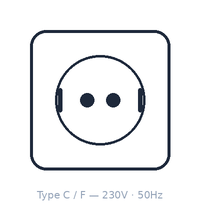
North Macedonia uses Type C and F power plugs at 230V/50Hz — the same as most of continental Europe. If you already have a standard European adapter, it will work here. US visitors will need a US-to-European adapter.
Mobile coverage is good in cities and along main roads. Rural and mountainous areas can have patchy signals. Major operators are T-Mobile (Makedonski Telekom), A1, and Lycamobile. Prepaid SIM cards are available at phone shops — bring your passport. North Macedonia is not in the EU, so EU roaming regulations do not apply — check with your provider before using an EU SIM card here. Wi-Fi is widely available in accommodations and cafés in Skopje and Ohrid.
📱 Need mobile data? An eSIM is the easiest way to stay connected in Europe — no SIM swapping, activate before you land. Compare the best eSIM providers for Europe →
Health and Safety
North Macedonia has adequate healthcare in cities, but rural facilities are limited. Travel insurance is strongly recommended for all visitors. Pharmacies (аптека) are available in towns.
🏥 One policy for North Macedonia AND the rest of your route
Healthcare outside Skopje is limited, and serious emergencies can mean evacuation to Greece or Western Europe. SafetyWing Nomad Insurance covers your whole European trip — Balkans and Schengen alike — with emergency medical care, evacuation, travel delay, and lost luggage protection. Buy it before you leave or even mid-trip.
Get a quote from SafetyWing →In an emergency, call 112 (universal), 192 (police), 193 (fire), or 194 (ambulance).
North Macedonia is generally safe for tourists. Violent crime against visitors is rare. Standard precautions apply for petty theft in crowded areas, particularly in Skopje’s Old Bazaar and around Ohrid during peak season. Political tensions occasionally flare (the country has a complex ethnic and political landscape) but rarely affect tourists.
Language
Macedonian (a South Slavic language written in Cyrillic) is the primary language. Albanian is the second official language and widely spoken in the western part of the country, Skopje, and Tetovo. English is increasingly common among younger people in Skopje and tourist areas like Ohrid, but limited in rural areas and among older generations. Learning a few basic Macedonian phrases is appreciated. Signs in Skopje and major towns are generally in both Macedonian and Albanian, and sometimes English.
Food and Dining Culture
North Macedonian cuisine blends Ottoman, Mediterranean, and Balkan influences with a focus on grilled meats, fresh vegetables, dairy products, and bread. Tavče gravče (baked beans in a clay pot) is considered the national dish. Grilled meats dominate — ćevapi, kebapi, and pleskavica (a spiced meat patty) are staples. Shopska salad (tomatoes, cucumbers, onion, peppers, topped with grated white cheese) accompanies nearly every meal. Ajvar (a roasted red pepper and eggplant relish) is a Macedonian essential — families make huge batches every autumn.
Ohrid is famous for its trout — Lake Ohrid trout is a regional delicacy, though the native species is now protected so what you’ll eat at restaurants is farmed. Burek (flaky pastry with meat or cheese) is ubiquitous for breakfast. Macedonian wines, particularly Vranec (red) and Temjanika (white), are excellent and cheap.
Dining is social and relaxed. Portions are generous and prices are low. A full meal at a traditional restaurant (known as a meana or kafana) rarely costs more than 500–800 MKD. Coffee culture is strong — North Macedonians take their coffee breaks seriously, and café-sitting is a national pastime.
Weather
North Macedonia has a mix of continental and Mediterranean climates. Skopje and the interior valleys have hot summers (35°C+ in July and August) and cold winters (regularly below 0°C from December to February). Ohrid and the southwest have a milder, more Mediterranean influence — warm summers and less extreme winters. Mountain areas get heavy snowfall.
The best time to visit is May–June and September–October, when temperatures are pleasant and crowds are light. July and August are peak season at Ohrid, with higher prices and packed lakefront areas. Winter is best for skiing (Mavrovo, Popova Šapka) but many tourist services outside Skopje close or reduce hours.
North Macedonia: Economy and Context
North Macedonia gained independence from Yugoslavia in 1991 — the only former Yugoslav republic to do so without armed conflict. The country’s path since has been shaped by a long-running name dispute with Greece (resolved in 2018 with the Prespa Agreement, which changed the country’s name from “Macedonia” to “North Macedonia”), EU candidacy (since 2005, with accession negotiations finally beginning in 2022), and the challenges common to small Balkan economies: high unemployment, brain drain, and the balancing act between EU aspirations and domestic political complexity.
Tourism is a growing sector, with Ohrid as the anchor. Visitor numbers have increased significantly in recent years, driven by Ohrid’s UNESCO status, the country’s affordability, and growing awareness among travelers looking for alternatives to overcrowded Mediterranean destinations. Skopje’s quirky cityscape has also attracted curiosity-driven tourism. Infrastructure is improving but remains a work in progress — particularly road quality and rural tourism facilities.
Frequently Asked Questions
Do Americans need a visa for North Macedonia?
No. US citizens can visit North Macedonia without a visa for up to 90 days within a 180-day period. No advance application or fee is required — just a valid passport with at least three months’ validity beyond your departure date.
Is North Macedonia in the Schengen Area?
No. North Macedonia is not a member of the Schengen Area or the European Union (though it is an EU candidate country). It has its own immigration system, and ETIAS will not apply here. Note that a valid multiple-entry Schengen, UK, US, or Canadian visa — or an EU/Schengen residence permit — does allow visa-free entry for up to 15 days per visit.
Can I enter North Macedonia with a Schengen visa?
Yes, with conditions. If your nationality normally requires a North Macedonian visa, you can enter visa-free for up to 15 days per entry if you hold a valid multiple-entry Schengen (type C) visa or a temporary or permanent residence permit from an EU/Schengen country — total stays capped at 90 days in 180, and the visa must remain valid at least 5 days beyond your planned stay. A temporary decision valid through December 31, 2026 extends the same 15-day access to holders of valid multiple-entry UK, US, or Canadian visas.
Does time in North Macedonia count toward my Schengen 90 days?
No. Time spent in North Macedonia does not count toward your Schengen 90/180-day limit. Use our Schengen Calculator to track your days.
What is the best time to visit North Macedonia?
May–June and September–October offer the best weather and manageable crowds. July and August are hot and Ohrid gets busy. Winter suits skiing at Mavrovo but many tourist services close.
Is North Macedonia expensive?
Not at all — it’s one of the cheapest countries in Europe. Budget travelers can manage on €20–40 per day. A restaurant meal with drinks costs €5–8. Even mid-range travel rarely exceeds €65–130 per day.
Do I need travel insurance for North Macedonia?
It’s not routinely checked at the border for visa-free visitors, but it’s strongly recommended — the public system doesn’t cover foreign tourists, healthcare outside Skopje is limited, and a serious emergency can mean costly evacuation to Greece or Western Europe. If you’re applying for a North Macedonian visa, travel health insurance is part of the required documentation. One policy covering both North Macedonia and the Schengen Area keeps your whole European trip protected — see our Europe travel insurance guide.
Do I need a different plug adapter for North Macedonia than for other European countries?
No. North Macedonia uses the same Type C and F plugs as most of continental Europe at 230V/50Hz. A standard European adapter works here.
Is Ohrid worth visiting?
Absolutely. Ohrid is one of the most beautiful lake towns in Europe — UNESCO-listed, with ancient churches, clear water, and a fraction of the crowds and cost of comparable Mediterranean destinations. It’s the main reason most people visit North Macedonia.
Can I combine North Macedonia with other Balkan countries?
Easily. Kosovo is 2 hours from Skopje. Albania (Tirana) is about 3–4 hours from Ohrid. Thessaloniki (Greece) is 4 hours from Skopje. Serbia (Belgrade) is 6 hours north. Albania’s Lake Ohrid shore is directly accessible from the Macedonian side.
🌍 Plan Your Trip to North Macedonia
Beyond entry rules — get currencies, plug types, driving permits, and eSIM options for 45+ European countries in one personalized briefing. Free, no signup.
Use the Europe Travel Planner →📚 Related Articles
- Schengen 90/180-Day Rule — How the visa-free stay limit works (North Macedonia time doesn’t count)
- Non-Schengen Countries in Europe — Where your 90 days don’t count
- How to Split Time Between Schengen and Non-Schengen Countries
- ETIAS: Europe’s New Travel Authorization — Does not apply to North Macedonia
- International Driving Permit in Europe — Required for driving in North Macedonia
- Best Travel Insurance for Europe
- Travel to Albania — Neighboring non-Schengen destination
- Travel to Serbia — The Balkans hub to the north
- Travel to Bosnia and Herzegovina
- All Europe Country Guides
This article is for informational purposes only and does not constitute legal or travel advice. Entry requirements can change — always verify with official government sources before traveling. Last updated: July 2026.