
Home › Country Guides › Travel to Bosnia and Herzegovina
Last Updated: August 2026
Bosnia and Herzegovina packs remarkable depth into a small country — Ottoman bazaars beneath Austro-Hungarian facades, rivers running an impossible shade of emerald, and a Sarajevo skyline where mosques, churches, a synagogue and a cathedral share a single view. Unlike its Schengen neighbors, Bosnia is outside both the Schengen Area and the EU — so your time here doesn’t count toward your Schengen 90 days. From Mostar’s Old Bridge to the wild Neretva valley and the Una National Park cascades, here’s everything you need to know to plan your trip to Bosnia and Herzegovina in 2026.
🇧🇦 Bosnia and Herzegovina at a Glance
| Official Name | Bosnia and Herzegovina (Bosna i Hercegovina) |
| Capital | Sarajevo |
| Population | ~3.2 million (2026) |
| Currency | Convertible Mark (BAM / KM) |
| Language | Bosnian · Croatian · Serbian (mutually intelligible) |
| Time Zone | CET (UTC+1) · CEST in summer (UTC+2) |
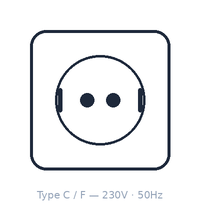
| Plug Type | Type C & F · 230V / 50Hz |
| Driving Side | Right |
| International Driving Permit (IDP) | Required for non-EU license holders — see IDP guide |
| Schengen Member | No — Bosnia and Herzegovina is not an EU or Schengen member. It has its own immigration system. Time spent here does not count toward your Schengen 90 days. |
| Emergency Number | 112 (universal) · 122 (police) · 123 (fire) · 124 (ambulance) |
Entry Requirements for Bosnia and Herzegovina
Bosnia and Herzegovina is not a member of the European Union or the Schengen Area. It is an EU candidate country, but accession is not expected in the near term. This means Bosnia has its own immigration rules, entirely separate from both the Schengen system and EU free movement.
🇺🇸 US Citizens: Visa-Free for 90 Days
US citizens can visit Bosnia and Herzegovina without a visa for up to 90 days within any 180-day period. No pre-travel authorization, no online application, no fee — just arrive with a valid passport. Your passport must be valid for at least three months beyond your planned departure date.
At the border, you’ll receive an entry stamp. Immigration checks are generally quick and straightforward. You may be asked for proof of accommodation, sufficient funds, and a return or onward ticket, though this is uncommon for US passport holders.
Foreign visitors are technically required to register with the local police within 72 hours of arrival. Hotels and registered accommodation providers do this automatically. If you’re staying in private accommodation (such as with friends or via informal arrangements), you’re supposed to register at the nearest police station — though enforcement is inconsistent.
⚠️ Bosnia is not Schengen and not EU. Bosnia has its own visa policy, and ETIAS (currently 2027 likely for Schengen countries, after the EU removed the Q4 2026 target in July 2026) will not apply here. One useful exception for visa-required nationalities: if you hold a valid multiple-entry Schengen, EU, or US visa — or a residence permit from those countries — you can enter Bosnia visa-free for up to 30 days at a time (within your visa’s validity). This exception does not apply to holders of Kosovan passports.
EU/EEA Citizens
EU and EEA citizens can enter Bosnia and Herzegovina without a visa for up to 90 days within a 180-day period using a valid passport or national ID card. Unlike within the EU, there is no automatic right to live or work — that requires separate permits. Bosnia is not part of EU free movement.
Other Nationalities
Citizens of many countries — including Canada, Australia, New Zealand, Japan, the UK, and others — can visit Bosnia and Herzegovina visa-free for up to 90 days. Some nationalities require a visa, which must be obtained at a Bosnian embassy or consulate before traveling — unless they hold a valid multiple-entry Schengen, EU, or US visa or residence permit, which allows visa-free entry for up to 30 days. Use our Europe Travel Planner to check your specific requirements.
🛂 Need a visa for the European leg of your trip?
A multiple-entry Schengen visa opens more than the Schengen Area — it also gets you into Bosnia visa-free for up to 30 days. If your nationality needs a Schengen visa, or any other visa for your route, iVisa checks your requirements and handles the application end to end.
Check your requirements on iVisa →Affiliate partner — we may earn a commission at no extra cost to you.
Combining with Schengen Travel
Bosnia’s non-Schengen, non-EU status makes it one of the most strategically useful stops for travelers on extended European trips — particularly those rotating between Schengen and non-Schengen countries.
Your Schengen Clock Stops in Bosnia
Time spent in Bosnia and Herzegovina does not count toward your Schengen 90-day limit. If you’ve spent 60 days in Schengen countries and then cross into Bosnia for three weeks, those three weeks don’t count. When you re-enter a Schengen country, you’ll still have 30 Schengen days remaining.
Bosnia is a natural part of the Balkans circuit that many long-term travelers use to extend their time in Europe. Combined with Serbia, Montenegro, Albania, and North Macedonia — none of which are in Schengen — you can spend months in the Western Balkans without touching your Schengen allowance.
If your route strings multiple non-Schengen countries together with Schengen legs, one insurance policy covering the whole zone is simpler than switching providers per country. Our comparison of the best travel insurance for Europe covers policies that keep a single plan running across Bosnia, the other Western Balkans, and all 29 Schengen countries.
✅ Planning a long Europe trip? Use our Schengen Calculator to track your 90/180-day count. Bosnia, Serbia, Montenegro, Albania, and the rest of the Western Balkans are all non-Schengen — your clock stays paused for the entire Balkan leg.
Separate Documents for Each
Bosnian visa-free entry does not grant access to Schengen countries. If your trip includes both, check the requirements for each leg separately: a Schengen visa doesn’t give you Schengen-style 90-day access to Bosnia, though a valid multiple-entry Schengen visa does allow visa-free entry to Bosnia for up to 30 days at a time. Once ETIAS launches — currently 2027 likely, after the EU removed the Q4 2026 target in July 2026 — visa-exempt travelers visiting both Bosnia and Schengen countries will need ETIAS for the Schengen portion only. Bosnia is not part of the system.
Border Crossings
Bosnia shares land borders with Croatia (a Schengen member since 2023) and Serbia and Montenegro (both non-Schengen). Crossing into Croatia means re-entering the Schengen Area — your 90-day clock resumes. Crossing into Serbia or Montenegro keeps you outside Schengen. Border crossings are generally straightforward but can have queues during summer, particularly at popular crossings between the Dalmatian coast (Croatia) and Mostar or Sarajevo.
Getting to Bosnia and Herzegovina
Bosnia is accessible by air, bus, and car — though options are more limited than in neighboring Croatia or Serbia.
By Air
Sarajevo International Airport (SJJ) is the main gateway, with direct flights to cities across Europe including Istanbul, Munich, Vienna, Zürich, Stockholm, and Ljubljana. Wizz Air, Turkish Airlines, Lufthansa, Austrian Airlines, and Pegasus are among the carriers serving Sarajevo. There are no direct flights from North America — the most common routings connect through Istanbul, Munich, Vienna, or Zagreb.
Tuzla International Airport (TZL) is a budget alternative, primarily served by Wizz Air with connections to several European cities. Mostar Airport (OMO) has limited seasonal service. Many travelers fly into Dubrovnik (Croatia), Split (Croatia), or Belgrade (Serbia) and enter Bosnia overland — Dubrovnik to Mostar is about 2.5 hours by car.
By Bus
International buses connect Bosnia with Croatia, Serbia, Montenegro, and beyond. Major routes include Dubrovnik to Mostar (3–4 hours), Split to Mostar (3–4 hours), Zagreb to Sarajevo (7–8 hours), Belgrade to Sarajevo (7–8 hours), and Podgorica to Sarajevo (5–6 hours). Buses are affordable and frequent on popular routes. Flixbus and regional operators like Centrotrans and Autoprevoz serve these corridors.
By Car
Driving into Bosnia from Croatia is common — the Dalmatian coast to Mostar or Sarajevo is a popular day trip or transit route. From Dubrovnik, it’s about 2.5 hours to Mostar via the Neum corridor (Bosnia’s only coastal access — you briefly pass through Bosnia on the main coastal highway). The A1 motorway connects Sarajevo to the Croatian border and is in good condition. Border crossings with Croatia are Schengen entry/exit points, so expect passport checks.
Getting Around Bosnia and Herzegovina
Bosnia is a compact but mountainous country. Distances aren’t huge, but winding mountain roads mean journeys take longer than the map suggests.
Driving
A rental car gives you the most flexibility, especially for reaching smaller towns, mountain villages, and scenic routes. Main highways (particularly the A1 connecting Sarajevo to the Croatian border) are in good condition. Secondary and rural roads vary — some are narrow and winding, particularly through river valleys and mountain passes. Winter driving in mountainous areas requires chains or winter tires (mandatory from November 15 to April 15).
Bosnia drives on the right. Speed limits are 50 km/h in towns, 80 km/h on open roads, and 100–130 km/h on motorways. Headlights must be on at all times. The blood alcohol limit is 0.03% — effectively zero tolerance. An International Driving Permit (IDP) is required for US license holders. See our IDP guide. Fuel costs approximately 2.60–2.90 BAM per liter (roughly €1.30–1.50).
⚠️ Drive carefully. Bosnian roads outside the main highways can be narrow, poorly lit, and shared with slow-moving vehicles. Mountain roads require concentration, especially at night. Some areas — particularly near the former front lines — still have landmine warnings posted along roadsides. Never leave marked paths in rural areas.
Buses
Buses are the backbone of public transport in Bosnia. Frequent services connect Sarajevo with Mostar (2.5 hours, from 20 BAM), Banja Luka (4–5 hours), Tuzla (2.5 hours), Jajce, Travnik, and most larger towns. The Sarajevo–Mostar route is one of the most scenic bus rides in Europe, following the Neretva River through dramatic gorges. Buses are affordable and generally reliable on main routes, but schedules thin out for smaller destinations. Bus stations (autobuske stanice) are found in every town.
| Route | Typical Duration | Approximate Fare |
|---|---|---|
| Sarajevo to Mostar | 2 hrs 30 min | 20–25 BAM |
| Sarajevo to Banja Luka | 4–5 hrs | 30–40 BAM |
| Sarajevo to Tuzla | 2 hrs 30 min | 20–25 BAM |
| Sarajevo to Jajce | 2 hrs 30 min | 20–25 BAM |
| Mostar to Dubrovnik (Croatia) | 3–4 hrs | 25–35 BAM |
Trains
Bosnia’s rail network is limited and slow, but the Sarajevo–Mostar train is one of the most scenic railway journeys in Europe — winding through the Neretva valley with views that the bus route can’t match. The train runs twice daily and takes about 2 hours. Other rail routes exist (Sarajevo–Zenica, Sarajevo–Tuzla) but buses are faster and more frequent for most journeys. Don’t rely on trains as your primary transport.
Taxis and Ride-Hailing
Taxis are affordable in Bosnian cities. In Sarajevo, short rides cost 5–10 BAM. Always ensure the meter is running or agree on a fare in advance. Ride-hailing apps are gaining ground — the local app is Crveni Taxi in Sarajevo.
Where to Go in Bosnia and Herzegovina
Bosnia packs a remarkable amount of diversity into a relatively small area. Ottoman old towns, Austro-Hungarian architecture, medieval fortresses, pristine rivers, and war memorials coexist throughout the country.
🕌 Sarajevo
Bosnia’s capital is one of Europe’s most fascinating and layered cities. The old town (Baščaršija) is an Ottoman bazaar quarter with coppersmith shops, mosques, and ćevapi stands that has been the heart of the city since the 15th century. Walk a few blocks west and the architecture shifts to Austro-Hungarian — grand buildings from the period when Bosnia was administered by the Habsburg Empire. The spot where Archduke Franz Ferdinand was assassinated in 1914, triggering World War I, is marked by a small museum on the Latin Bridge.
The 1992–1996 siege of Sarajevo — the longest siege of a capital city in modern warfare — left deep marks. The Tunnel of Hope (a tunnel dug beneath the airport that was the city’s lifeline), the Sarajevo Roses (mortar impact craters filled with red resin), and the Gallery 11/07/95 (documenting the Srebrenica massacre) provide essential context. The city has rebuilt with energy and pride, and the coexistence of mosques, churches, a synagogue, and a cathedral within walking distance gave it the historical nickname “Jerusalem of Europe.”
🌉 Mostar
Mostar’s Stari Most (Old Bridge) is one of the most iconic images in the Balkans — a 16th-century Ottoman bridge arching over the impossibly turquoise Neretva River. The bridge was destroyed during the war in 1993 and rebuilt in 2004, and is now a UNESCO World Heritage Site. The old town around it is atmospheric but heavily touristic — the best experience comes from wandering the side streets away from the main drag. Mostar is extremely popular as a day trip from Dubrovnik (Croatia), and the town fills with tour groups by midday. Stay overnight to see it without the crowds.
🏞️ Kravice Waterfalls and the Herzegovina Region
The Kravice Waterfalls, about 40 km south of Mostar, are a dramatic series of cascades on the Trebižat River — often compared to a miniature Plitvice Lakes. Swimming is possible in summer. The broader Herzegovina region (the southern part of the country) is drier and more Mediterranean in feel than central Bosnia, with vineyards, stone villages, and the historic town of Počitelj (a stunning Ottoman fortress village perched above the Neretva).
🏰 Jajce and Central Bosnia
Jajce is a medieval fortress town built around a dramatic waterfall where the Pliva River drops 22 meters into the Vrbas River right in the center of town. It’s also where the borders of modern Yugoslavia were drawn in 1943. The Pliva Lakes above Jajce, with their historic watermills, are a highlight. Travnik, a short drive east, was once the capital of Ottoman Bosnia and has a well-preserved fortress, colorful mosque, and is the birthplace of Nobel laureate Ivo Andrić.
🌲 Una National Park and Bihać
The Una River in northwestern Bosnia is one of Europe’s most beautiful rivers — crystal-clear water flowing through gorges and over cascades. Una National Park protects the most scenic stretch, and the Štrbački Buk waterfall is a highlight. The town of Bihać is the gateway. This region is less visited than Sarajevo or Mostar and offers excellent rafting and outdoor activities.
🏔️ Banja Luka and Republika Srpska
Banja Luka, the largest city in the Republika Srpska entity, has a different character from Sarajevo — more Serbian-influenced, with Orthodox churches, the Kastel fortress along the Vrbas River, and a growing café culture. The Vrbas River canyon near the city is popular for rafting and kayaking. Banja Luka is also the gateway to the Kozara National Park.
How Much Does Bosnia and Herzegovina Cost?
Bosnia and Herzegovina is one of the most affordable countries in Europe. Your money goes significantly further here than in neighboring Croatia or in Western Europe, making it an excellent destination for budget-conscious travelers and digital nomads.
| Expense | Budget | Mid-Range | Comfortable |
|---|---|---|---|
| Accommodation (per night) | 15–30 BAM (hostel/guesthouse) | 60–120 BAM (hotel/apartment) | 150–300+ BAM (boutique hotel) |
| Meals (per day) | 10–20 BAM | 25–50 BAM | 60–120+ BAM |
| Transport (per day) | 5–10 BAM (buses) | 30–50 BAM (rental car + fuel) | 50–80 BAM |
| Activities (per day) | 0–10 BAM | 10–30 BAM | 30–80+ BAM |
Daily budget estimates: Budget travelers can manage on 50–100 BAM (€25–50) per day. Mid-range travelers should expect 120–250 BAM (€60–130) per day. Sarajevo and Mostar are the most expensive cities, but even they are remarkably affordable by European standards. A full plate of ćevapi with bread, onion, and kajmak costs 8–12 BAM in most places.
Currency note: The Convertible Mark (BAM or KM) is pegged to the euro at a fixed rate of 1 EUR = 1.95583 BAM. This makes currency conversion easy — roughly double the euro amount for BAM. Euros are sometimes accepted in tourist areas but change will come in BAM. ATMs are widely available. Credit cards are accepted at hotels and larger restaurants but many smaller establishments, cafés, and market vendors are cash-only.
Tipping: Tipping is appreciated but not obligatory. Rounding up the bill or leaving 10% at restaurants is generous. In cafés, leaving small change is common. Tipping taxi drivers is not expected.
Practical Information
Money
The Convertible Mark (BAM/KM) is the only legal tender. ATMs are available in all cities and most towns. Visa and Mastercard are accepted at hotels, larger restaurants, and shops — but carry cash for smaller establishments, markets, cafés, and rural areas. The fixed euro peg (1 EUR = 1.95583 BAM) makes mental math easy. You can sometimes withdraw euros from ATMs in tourist areas, but BAM is what you’ll need. Avoid exchanging money at the airport — rates are worse than in town.
Power and Connectivity
Bosnia and Herzegovina uses Type C and F power plugs at 230V/50Hz — the same as most of continental Europe. If you already have a standard European adapter, it will work in Bosnia. US visitors will need a US-to-European adapter.
Mobile coverage is good in cities and along main roads. Rural and mountainous areas can have gaps. Major operators are BH Telecom, m:tel, and HT Eronet. Prepaid SIM cards are available at phone shops and some kiosks — bring your passport. Bosnia is not in the EU, so EU roaming regulations do not apply — check with your provider before using an EU SIM card here, as roaming charges may apply. Wi-Fi is widely available in accommodations and cafés in cities.
📱 Need mobile data? An eSIM is the easiest way to stay connected in Europe — no SIM swapping, activate before you land. Compare the best eSIM providers for Europe →
Health and Safety
Bosnia has adequate healthcare in cities, but facilities in rural areas are more limited. Mountain rescue, private-clinic bills, and medical evacuation costs fall entirely on you if uninsured, so comprehensive travel insurance for Europe is strongly recommended. Pharmacies (apoteke) are available in towns. Tap water is generally safe in cities but bottled water is cheap and widely available.
🏥 One policy for Bosnia AND the rest of your route
Bosnia’s rural healthcare is limited, and non-EU visitors aren’t covered by the public system. SafetyWing Nomad Insurance covers your whole European trip — Balkans and Schengen alike — with emergency medical care, evacuation, travel delay, and lost luggage protection. Buy it before you leave or even mid-trip.
Get a quote from SafetyWing →Affiliate partner — we may earn a commission at no extra cost to you.
In an emergency, call 112 (universal), 122 (police), 123 (fire), or 124 (ambulance).
Bosnia is generally safe for tourists. Violent crime against visitors is rare, and Bosnians are known for warm hospitality. Petty theft can occur in crowded tourist areas (particularly around Mostar’s Old Bridge area in summer). The most serious safety consideration is landmines — remnants of the 1992–1995 war. Mined areas exist in rural and mountainous regions, particularly along former front lines. Marked areas are signposted with skull-and-crossbones warnings. Never walk off paved or well-trodden paths in rural areas, and never enter abandoned buildings. Stick to established trails and roads and you’ll be fine.
⚠️ Landmine warning. Bosnia still has areas contaminated by landmines from the 1990s war. This primarily affects rural and mountainous areas, not cities or tourist sites. The rule is simple: stay on paved roads and established paths. If you see warning signs with a skull-and-crossbones symbol, do not enter the area under any circumstances.
Language
The country has three official languages — Bosnian, Croatian, and Serbian — which are mutually intelligible and essentially variants of the same language (formerly called Serbo-Croatian). You’ll encounter both Latin and Cyrillic script, with Latin predominating in the Federation entity and Cyrillic more common in Republika Srpska. English is increasingly spoken among younger people in Sarajevo and tourist areas, but limited in rural areas and among older generations. German is sometimes spoken as a second language. Learning a few basic phrases goes a long way and is warmly received.
Food and Dining Culture
Bosnian cuisine reflects centuries of Ottoman influence blended with Balkan, Mediterranean, and Central European traditions. The national dish is ćevapi — small grilled minced meat sausages served in somun (flatbread) with raw onion and kajmak (a creamy dairy spread). You’ll find ćevapi everywhere, and the debate over which city makes the best (Sarajevo, Banja Luka, or Travnik — each has a different style) is a national pastime.
Don’t miss: burek (flaky pastry with meat filling — the cheese version is called sirnica and the spinach version zeljanica), dolma (stuffed vegetables), begova čorba (a rich chicken and vegetable soup), and klepe (Bosnian dumplings). Bosnian coffee (bosanska kafa) is a ritual — served in a džezva (small pot) with sugar cubes and lokum (Turkish delight), it’s meant to be sipped slowly over conversation. It’s different from Turkish coffee and Bosnians will correct you if you call it Turkish.
Restaurants are called restoran, while a traditional ćevapi shop is an ćevabdžinica (pronounced roughly “cheh-vab-JEE-nee-tsa”) and a burek shop is a buregdžinica. Dining is relaxed and social. Meals are affordable — a full ćevapi plate at a quality ćevabdžinica costs 8–12 BAM, and a restaurant dinner with drinks rarely exceeds 40–50 BAM per person. Bosnia has a growing craft beer and wine scene, and Herzegovina produces surprisingly good wines.
Weather
Bosnia’s climate varies significantly by region. Sarajevo and central Bosnia have a continental climate with cold, snowy winters (temperatures regularly below 0°C from December to February) and warm summers (25–32°C). Herzegovina (the southern region around Mostar) has a Mediterranean-influenced climate — hotter summers (frequently 35–40°C) and milder winters. Mountain areas get heavy snowfall in winter.
The best time to visit is May–June and September–October, when temperatures are pleasant and crowds are manageable. July and August bring heat (especially in Mostar) and the peak tourist season. Winter is atmospheric in Sarajevo and suitable for skiing at resorts like Jahorina and Bjelašnica (both 1984 Winter Olympics venues), but many rural attractions close or become difficult to reach.
Bosnia and Herzegovina: Economy and Context
Bosnia and Herzegovina’s modern history is defined by the 1992–1995 war that followed the breakup of Yugoslavia — Europe’s deadliest conflict since World War II. The war killed approximately 100,000 people, displaced over two million, and devastated the country’s infrastructure and economy. The Dayton Agreement that ended the war created the country’s complex political structure: two semi-autonomous entities (the Federation of Bosnia and Herzegovina and Republika Srpska) plus the Brčko District, each with significant self-governance.
The economy has recovered but remains one of the weakest in Europe, with high unemployment (particularly among youth) and significant brain drain as young professionals emigrate to the EU. Bosnia was granted EU candidate status in 2022, but the path to membership faces significant political and structural hurdles. Tourism is a growing bright spot — visitor numbers have increased steadily, driven by the country’s affordability, cultural richness, and proximity to the Croatian coast. Sarajevo and Mostar receive the most visitors, but emerging destinations like Jajce, Bihać, and the Una River are gaining attention.
Travelers should approach the country’s war history with sensitivity. The war and its legacy remain deeply personal for Bosnians. Visiting memorials and museums is encouraged — the Tunnel of Hope, Gallery 11/07/95, and Srebrenica Memorial Center are important and educational. But treating war sites as casual photo opportunities or making light of the conflict is deeply disrespectful.
Frequently Asked Questions
Do Americans need a visa for Bosnia and Herzegovina?
No. US citizens can visit Bosnia and Herzegovina without a visa for up to 90 days within a 180-day period. No advance application or fee is required — just a valid passport with at least three months’ validity beyond your departure date.
Is Bosnia and Herzegovina in the Schengen Area?
No. Bosnia is not a member of the Schengen Area or the European Union. It has its own immigration system, and ETIAS (currently 2027 likely for Schengen countries) will not apply here. Note that a valid multiple-entry Schengen, EU, or US visa or residence permit does allow visa-free entry to Bosnia for up to 30 days at a time.
Can I enter Bosnia with a Schengen visa?
Yes, with conditions. If your nationality normally requires a Bosnian visa, you can enter Bosnia visa-free for up to 30 days at a time if you hold a valid multiple-entry Schengen, EU, or US visa or residence permit — your total stay can’t exceed 90 days in 180, and entry must fall within your visa’s validity. Single-entry Schengen visas don’t qualify (and using one to exit Schengen would void your re-entry anyway). The exception doesn’t apply to Kosovan passport holders.
Does time in Bosnia count toward my Schengen 90 days?
No. Time spent in Bosnia and Herzegovina does not count toward your Schengen 90/180-day limit. This makes it a strategic stop on longer European trips, especially as part of a Balkans circuit. Use our Schengen Calculator to track your days.
Is Bosnia and Herzegovina safe?
Yes, for tourists. Violent crime against visitors is extremely rare. The main safety consideration is landmines in rural areas — remnants of the 1990s war. Stay on paved roads and established paths, heed warning signs, and you’ll have no issues. Cities and tourist sites are completely safe.
What is the best time to visit Bosnia and Herzegovina?
May–June and September–October offer the best weather and manageable crowds. July and August are hot (especially in Mostar) and busy. Winter is cold but atmospheric in Sarajevo, with skiing at Olympic-era resorts. The shoulder seasons offer the best value and experience.
Is Bosnia and Herzegovina expensive?
Not at all — it’s one of the most affordable countries in Europe. Budget travelers can manage on €25–50 per day. A plate of ćevapi costs €4–6. Even mid-range travel rarely exceeds €60–130 per day. The currency (Convertible Mark) is pegged to the euro at roughly 2:1.
Do I need travel insurance for Bosnia and Herzegovina?
It’s not checked at the border for visa-free visitors, but it’s strongly recommended — Bosnia’s public healthcare doesn’t cover foreign tourists, facilities outside the cities are limited, and evacuation or repatriation costs fall entirely on you. If you’re applying for a Bosnian visa, valid travel health insurance is a required document. One policy covering both Bosnia and the Schengen Area keeps your whole European trip protected — see our Europe travel insurance guide.
Do I need a different plug adapter for Bosnia than for other European countries?
No. Bosnia uses the same Type C and F plugs as most of continental Europe at 230V/50Hz. A standard European adapter works here.
Can I combine Bosnia with other Balkan countries?
Absolutely. Bosnia is perfectly positioned for Balkan travel. Dubrovnik (Croatia) is 2.5 hours from Mostar. Belgrade (Serbia) is 7–8 hours from Sarajevo by bus. Montenegro is 5–6 hours south. None of the Western Balkan neighbors (except Croatia) are in Schengen, so your 90-day clock stays paused.
🌍 Plan Your Trip to Bosnia and Herzegovina
Beyond entry rules — get currencies, plug types, driving permits, and eSIM options for 45+ European countries in one personalized briefing. Free, no signup.
Use the Europe Travel Planner →📚 Related Articles
- Schengen 90/180-Day Rule — How the visa-free stay limit works (Bosnia time doesn’t count)
- Non-Schengen Countries in Europe — Where your 90 days don’t count
- How to Split Time Between Schengen and Non-Schengen Countries
- ETIAS: Europe’s New Travel Authorization — Does not apply to Bosnia
- International Driving Permit in Europe — Required for driving in Bosnia
- Best Travel Insurance for Europe
- Travel to Serbia — Neighboring non-Schengen destination
- Travel to Montenegro — The Adriatic coast next door
- Travel to Albania — Another Balkan gem with generous visa-free access
- All Europe Country Guides
This article is for informational purposes only and does not constitute legal or travel advice. Entry requirements can change — always verify with official government sources before traveling. Last updated: August 2026.