
Home › Country Guides › Travel to Serbia
Last Updated: August 2026
Serbia is one of Europe’s most underrated destinations — a country of legendary nightlife, centuries-old fortresses, and wild mountain landscapes. Belgrade’s floating river clubs have made it a capital of nightlife, while the rest of the country rewards with UNESCO monasteries, dramatic gorges, wine villages, and a ćevapi scene that’ll ruin you for the ones anywhere else. Serbia welcomed 2.4 million tourists in 2024 and numbers keep climbing in 2025, yet it remains refreshingly uncrowded and affordable. Here’s everything you need to know to plan your trip to Serbia in 2026.
🇷🇸 Serbia at a Glance
| Official Name | Republic of Serbia (Republika Srbija) |
| Capital | Belgrade (Beograd) |
| Population | ~6.6 million (2026) |
| Currency | Serbian Dinar (RSD / дин.) — ~117 RSD = €1 |
| Language | Serbian (Cyrillic and Latin scripts both used) |
| Time Zone | CET (UTC+1) / CEST (UTC+2) in summer |
| Plug Type | Type C and F · 230V / 50Hz |
| Driving Side | Right |
| International Driving Permit (IDP) | Required for US and other non-EU licenses — see IDP guide |
| Schengen Member | No — Serbia has its own immigration system. Time spent here does not count toward your Schengen 90 days. |
| Emergency Number | 112 (also 192 for police, 194 for ambulance) |
Entry Requirements for Serbia
Serbia is not part of the Schengen Area or the European Union (though it has been an EU candidate country since 2012, with accession negotiations ongoing). It operates its own visa and immigration system with a 90-day-in-180-day stay limit similar to the Schengen framework — but the two are entirely separate.
🇺🇸 US Citizens: Visa-Free Entry
US citizens can enter Serbia visa-free for up to 90 days within any 180-day period. No application, no fee — just show up with a valid US passport (valid for at least 90 days beyond your departure, though six months is recommended). You must enter and exit Serbia using the same passport.
There is one important requirement that’s unique to Serbia: you must register with local police within 24 hours of arrival at each location. Hotels and hostels handle this automatically. If you’re staying at a private residence, Airbnb, or with friends, you need to register in person at the nearest police station. Failure to register can result in fines or complications when exiting the country.
⚠️ Important — Police Registration: Serbia’s 24-hour registration requirement is actively enforced. Hotels do it for you, but if you’re staying privately, register yourself at the local police station. Keep the registration confirmation until you leave the country.
🇪🇺 EU Citizens: Visa-Free Entry
Citizens of all EU and EEA countries can enter Serbia visa-free for up to 90 days within a 180-day period. Most EU citizens can enter with either a valid passport or a national ID card. Serbia’s visa policy closely mirrors the Schengen Area’s — essentially all nationalities that are visa-exempt for Schengen are also visa-exempt for Serbia.
Other Nationalities
Serbia grants visa-free entry to nationals of most European, North and South American, and many Asian countries. The UK, Canada, Australia, New Zealand, Japan, Israel, and most Latin American countries qualify. Notably, Russia, China, Turkey, and several Central Asian countries also have visa-free access — making Serbia’s visa policy broader in some directions than the Schengen Area’s.
Additionally, holders of a valid visa or residence permit issued by a Schengen Area state, an EU member state (including Ireland and Cyprus), the UK, or the US can enter Serbia visa-free for up to 90 days within a 180-day period, regardless of nationality — but the stay cannot extend beyond the expiry date of that visa or permit. Note that this route covers visits only: Serbia’s Foreign Ministry confirms you can’t use a foreign visa to then register a stay on employment grounds — that requires a Serbian long-stay (Type D) visa.
Use our Europe Travel Planner to check what your nationality requires for Serbia.
🛂 Need a visa for the European leg of your trip?
A valid Schengen visa opens more than the Schengen Area — it also gets you into Serbia visa-free for up to 90 days. If your nationality needs a Schengen visa, or any other visa for your route, iVisa checks your requirements and handles the application end to end.
Check your requirements on iVisa →Affiliate partner — we may earn a commission at no extra cost to you.
Combining with Schengen Travel
Serbia is one of the most popular non-Schengen countries for travelers on longer European trips. It’s centrally located in the Balkans, affordable, and well-connected to Schengen neighbors like Hungary and Croatia.
Your Schengen Clock Stops in Serbia
Time spent in Serbia does not count toward your Schengen 90-day limit. If you’ve used 50 of your 90 Schengen days in Hungary and Greece, then spend three weeks in Serbia, those three weeks don’t count. When you return to a Schengen country, you’ll still have 40 Schengen days remaining.
Serbia is commonly used as part of a “Balkan rotation” — many long-term travelers alternate between Schengen countries and the non-Schengen Western Balkans (Serbia, Montenegro, Albania, Bosnia, North Macedonia) to extend their total time in Europe well beyond 90 days.
If your route strings multiple non-Schengen countries together with Schengen legs, one insurance policy covering the whole zone is simpler than switching providers per country. Our comparison of the best travel insurance for Europe covers policies that keep a single plan running across Serbia, the other Western Balkans, and all 29 Schengen countries.
✅ Planning a long Europe trip? Use our Schengen Calculator to track your 90/180-day count, and build Serbia into your itinerary strategically. A popular rotation: Schengen countries → Western Balkans → back to Schengen once your days have refilled.
Separate Documents for Each
Serbia’s visa-free status does not grant access to Schengen countries, and a Schengen visa does not cover Serbia in the Schengen sense (though holding a valid one does grant visa-free entry for up to 90 days, within the visa’s validity). If your trip includes both regions, check the entry requirements separately. Once ETIAS launches — currently 2027 likely, after the EU removed the Q4 2026 target in July 2026 — visa-exempt travelers visiting both Serbia and the Schengen Area will need separate documentation for each.
Getting to Serbia
Serbia is well-connected by air and has extensive overland links to all of its neighbors. Most international travelers fly into Belgrade.
By Air
Belgrade Nikola Tesla Airport (BEG) is the main international gateway, served by Air Serbia (the national carrier), Wizz Air, and a growing number of European airlines. Direct flights connect Belgrade to most major European cities, including London, Paris, Vienna, Zurich, Istanbul, and many more. The airport is about 18 km west of the city center — the A1 minibus (400 RSD) connects to Slavija Square, and taxis cost around 1,800–2,200 RSD (€15–19).
Niš Constantine the Great Airport (INI) handles budget carriers, mainly Wizz Air, with connections to several European cities. It’s a useful alternative if you’re heading to southern Serbia.
By Land
Serbia shares borders with Hungary, Croatia, Bosnia and Herzegovina, Montenegro, Kosovo, North Macedonia, Romania, and Bulgaria. Bus connections to all neighboring capitals are frequent and affordable. The most common overland routes are from Budapest (5–6 hours by bus), Sarajevo (7–8 hours), Zagreb (6 hours), and Sofia (6–7 hours). International trains connect Belgrade to Budapest, Bar (Montenegro), and Szeged (Hungary).
⚠️ Kosovo Border Note: Serbia does not recognize Kosovo’s independence. If you enter Kosovo from a country other than Serbia, Serbian border officials may refuse you entry into Serbia. To avoid issues, enter Serbia first through a recognized border crossing, get your Serbian entry stamp, and then travel to Kosovo if needed. Travelers arriving in Serbia by air and driving directly to Kosovo (without passing through a third country) will be permitted to re-enter Serbia from Kosovo.
Getting Around Serbia
Serbia is a mid-sized country (88,361 sq km, about the size of South Carolina) with a mostly flat north (Vojvodina) and a hillier, more mountainous south. Getting between cities is straightforward and affordable.
Buses
Buses are the backbone of Serbia’s intercity transport. Every city and most towns have a bus station (autobuska stanica) with frequent departures. The network is extensive and reliable, particularly for major routes. Fares are very affordable — Belgrade to Niš runs about 1,500–2,000 RSD (€13–17, 4–5 hours), and Belgrade to Zlatibor is around 1,500 RSD (€13, 4 hours). Tickets can be bought at bus stations; pay a small platform fee (usually 200–300 RSD) when entering the station. Luggage fees of 100–200 RSD per bag are common.
Trains
Serbia’s rail network has improved dramatically with the SOKO high-speed train between Belgrade and Novi Sad — a modern, comfortable service covering the route in approximately 35–50 minutes for just 120 RSD (roughly €1). Trains depart every 30 minutes and have made this one of Europe’s best-value rail connections. Beyond this flagship route, the network is slower and less convenient than buses — the Belgrade to Niš train takes nearly 6 hours. International trains run to Bar (Montenegro) on one of Europe’s most scenic routes, and to Szeged (Hungary) from Subotica.
Driving
Renting a car opens up Serbia’s countryside, mountain parks, and the scenic Danube gorge region. Roads are generally in decent condition, particularly the main highways. The Vojvodina plains in the north are flat and easy driving; the south and west are hillier with more winding roads. Serbia drives on the right.
An International Driving Permit (IDP) is required for US and other non-EU license holders. The US Embassy confirms that a US license paired with an IDP is valid for up to six months. Get your IDP from AAA before departure. See our IDP guide for details. Note: Serbia has a strict 0.02% blood alcohol limit (effectively zero tolerance) and headlights must be on at all times from November through March.
Belgrade City Transport
As of January 2025, all public transport in Belgrade — buses, trams, trolleybuses, and the BG urban rail — is completely free for everyone, including tourists. No tickets, no passes needed. Just hop on. The only exceptions are the A1 express minibus to the airport (400 RSD) and a few E-line minibuses (200 RSD). This makes Belgrade one of the largest cities in Europe with free public transport.
| Route | Mode | Duration | Approximate Cost |
|---|---|---|---|
| Belgrade → Novi Sad | SOKO Train | 35–50 min | 120 RSD (~€1) |
| Belgrade → Novi Sad | Bus | 1.5 hrs | 800–1,200 RSD (~€7–10) |
| Belgrade → Niš | Bus | 4–5 hrs | 1,500–2,000 RSD (~€13–17) |
| Belgrade → Zlatibor | Bus | 4 hrs | ~1,500 RSD (~€13) |
| Belgrade → Subotica | Train | 3–3.5 hrs | ~700 RSD (~€6) |
| Belgrade → Bar (Montenegro) | Train | ~11 hrs | ~350 RSD (~€3) + sleeping car extra |
| Belgrade city transport | Bus/Tram/Trolley | — | Free (since Jan 2025) |
✅ Getting around tip: The SOKO train between Belgrade and Novi Sad is a game-changer — fast, modern, air-conditioned, and absurdly cheap (~€1). It runs every 30 minutes and is far better than the bus for this route. For other destinations, buses remain faster and more frequent than trains.
Where to Go in Serbia
Serbia’s attractions range from Europe-tier nightlife in Belgrade to wild mountain canyons, medieval monasteries, and charming wine villages. The country rewards exploration well beyond the capital.
🏙️ Belgrade
Serbia’s capital is a city of contradictions and contrasts — ancient fortresses meet brutalist blocks, traditional kafanas sit beside cutting-edge restaurants, and the nightlife is world-famous. Start with Kalemegdan Fortress, the city’s ancient citadel at the confluence of the Danube and Sava rivers, dating back over 2,000 years. Skadarlija is Belgrade’s bohemian quarter — a cobblestone street lined with traditional restaurants and live music, often compared to Paris’s Montmartre. The Temple of Saint Sava, one of the world’s largest Orthodox churches, is a must-see. The Nikola Tesla Museum is a fascinating tribute to Serbia’s most famous inventor. At night, the floating splavovi (river barges converted into clubs) along the Sava and Danube are the beating heart of Belgrade’s legendary nightlife scene.
🏰 Novi Sad and Vojvodina
Novi Sad, Serbia’s second city, sits on the Danube in the flat Vojvodina plains. The monumental Petrovaradin Fortress overlooks the river and hosts the famous EXIT Festival each July — one of Europe’s biggest music festivals. The city itself is cultured, walkable, and charming, with the lovely Dunavski Park, the Synagogue, and great cafés. Just outside the city, Sremski Karlovci is a small baroque town renowned for its wineries and honey. The wider Vojvodina region offers the art nouveau treasures of Subotica, the Fruška Gora monasteries, and unique ethnic diversity across Hungarian, Croatian, and Serbian communities.
🏞️ Tara National Park and Zlatibor
Tara National Park in western Serbia offers some of the country’s most dramatic scenery — dense forests, the serpentine Drina River with its famous “House on the Rock” (Drina River House), and the spectacular Đerdap-like gorges. The nearby resort town of Zlatibor is Serbia’s most popular mountain destination. From the village of Mokra Gora, the heritage Šargan Eight railway (Šarganska Osmica) takes you on a narrow-gauge train through tunnels and over bridges in a figure-eight loop — one of Serbia’s most memorable experiences. Director Emir Kusturica’s wooden village of Drvengrad (Küstendorf) is here too.
🦅 Uvac Canyon and Đerdap Gorge
The Uvac Canyon in southwestern Serbia is famous for its dramatic meanders and the griffon vultures that soar above them — a boat trip through the canyon is one of Serbia’s most spectacular nature experiences. In the east, Đerdap National Park (the Iron Gates) straddles the Serbian-Romanian border along the Danube, featuring Europe’s largest river gorge, the medieval Golubac Fortress, and the prehistoric archaeological site of Lepenski Vir.
⛪ Monasteries and History
Serbia’s medieval monasteries are among the country’s greatest cultural treasures. Studenica Monastery (UNESCO World Heritage) is the most important, founded in 1190 with stunning Byzantine frescoes. Manasija Monastery, with its massive defensive walls, is another highlight. In the south, Niš — the third-largest city — is the birthplace of Constantine the Great and home to the sobering Skull Tower and the Niš Fortress. The ancient Roman site of Felix Romuliana (UNESCO) lies nearby.
How Much Does Serbia Cost?
Serbia is one of the most affordable countries in Europe. Your money goes remarkably far here — excellent restaurant meals for €5–10, rakija for less than €2, and hostels under €15. Belgrade is the priciest area, but even there it’s cheap by European standards. The rest of the country is a genuine bargain.
| Expense | Budget | Mid-Range | Comfortable |
|---|---|---|---|
| Accommodation (per night) | €8–20 (hostel / basic room) | €35–70 (apartment / 3-star hotel) | €100–200+ (boutique / 4–5 star) |
| Meals (per day) | €5–12 (bakeries / local restaurants) | €15–30 (restaurants) | €40–70+ (upscale dining) |
| Transport (per day) | €0–5 (free Belgrade transit / short buses) | €5–15 (intercity buses / trains) | €20–35+ (rental car + fuel) |
| Activities | Free–€3 (parks, fortress walks) | €5–15 (museums, tours) | €20–60+ (boat trips, guided tours) |
| Total per day | €15–40 | €60–130 | €180–370+ |
Serbia uses the Serbian Dinar (RSD). Euros are not accepted for regular transactions (unlike in Montenegro or Kosovo), so you’ll need to exchange money or withdraw dinars from ATMs. ATMs are widely available in cities and large towns; less so in rural areas, so carry some cash when heading to the countryside. Exchange offices (menjačnica) in city centers typically offer better rates than banks or airports. Credit cards are accepted at most hotels, restaurants, and shops in Belgrade and Novi Sad, but cash is still king elsewhere. When using an ATM, always choose to be charged in the local currency (RSD) to avoid unfavorable conversion rates.
Practical Information
Power and Connectivity
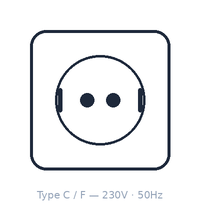
Serbia uses Type C and F plugs — the same round two-pin plugs used across most of continental Europe. The standard voltage is 230V at 50Hz. If you’re coming from the US, you’ll need a European adapter. If you’re already carrying one from other European countries, it will work here.
Mobile coverage is good in cities and along major highways, with 4G widely available from operators like Telekom Srbija, A1, and Yettel. Coverage can be patchy in mountainous and rural areas. Tourist SIM cards and eSIMs are available in Belgrade. Free Wi-Fi is common in hotels, cafés, and restaurants in cities.
📱 Need mobile data? An eSIM is the easiest way to stay connected in Europe — no SIM swapping, activate before you land. Compare the best eSIM providers for Europe →
Health and Safety
Serbia is generally very safe for travelers. Belgrade’s reputation for edgy nightlife shouldn’t be confused with danger — violent crime against tourists is rare. The usual precautions apply: watch for pickpockets in crowded areas and be careful with taxis (use the CarGo app or Pink Taxi rather than unmarked cabs at bus stations or airports). Driving on the Ibarska Magistrala highway between Belgrade and Čačak requires extra caution due to a higher accident rate.
Healthcare facilities are adequate in Belgrade, Novi Sad, and larger cities, with private clinics offering a higher standard of care. Rural facilities are more basic. Serbia’s public healthcare doesn’t cover foreign tourists — treatment is paid in cash at the point of service, so comprehensive travel insurance for Europe is strongly recommended. Pharmacies (apoteka) are available in all towns. No special vaccinations are required for Serbia. In an emergency, call 112.
🏥 One policy for Serbia AND the rest of your route
Serbia’s public healthcare doesn’t cover foreign tourists — treatment is paid in cash at the point of service. SafetyWing Nomad Insurance covers your whole European trip — Balkans and Schengen alike — with emergency medical care, evacuation, travel delay, and lost luggage protection. Buy it before you leave or even mid-trip.
Get a quote from SafetyWing →Affiliate partner — we may earn a commission at no extra cost to you.
Tap water is safe to drink in Belgrade and most cities, though some locals prefer bottled water. In rural areas, use bottled water to be safe.
Language
Serbian is the official language, written in both Cyrillic and Latin scripts. You’ll encounter both — signs, menus, and official documents may use either or both. Don’t be intimidated by Cyrillic; most tourist-facing places use Latin script. Serbian is mutually intelligible with Croatian, Bosnian, and Montenegrin. English is increasingly spoken in Belgrade and Novi Sad, particularly among younger people and in tourist areas. In smaller cities and rural areas, English is less common. Learning a few basics — zdravo (hello), hvala (thank you), molim (please), pivo (beer) — is always appreciated.
Food and Dining Culture
Serbian food is hearty, meat-heavy, and incredibly satisfying. The national obsession is grilled meat: ćevapi (small grilled meat rolls served in somun bread with onions and kajmak cream cheese), pljeskavica (Serbia’s answer to the burger, often stuffed with cheese and kajmak), and roštilj (mixed grill) are found everywhere. Try gibanica (flaky cheese-and-egg pastry), karadjordjeva šnicla (rolled veal stuffed with kajmak), and for something lighter, šopska salata (tomato, cucumber, onion, and grated white cheese).
The kafana is a quintessential Serbian institution — a traditional tavern-restaurant with live folk music, hearty food, and a convivial atmosphere. Kafanas range from rustic village establishments to upscale Belgrade restaurants. Rakija (fruit brandy, usually plum or quince) is the national drink — it starts meals, ends meals, and accompanies everything in between. Serbian wine is an emerging scene, with Sremski Karlovci and the Fruška Gora region producing quality reds and whites. A generous meal with rakija and wine at a local restaurant rarely exceeds €10–15 per person outside of Belgrade.
Serbia: Economy and Context
Serbia is one of Europe’s emerging economies, with a GDP of approximately $75 billion and steady growth in recent years. The country has been an EU candidate since 2012, with accession negotiations progressing slowly. Serbia maintains a complex geopolitical position — it pursues EU integration while maintaining close ties with Russia and China and has not recognized Kosovo’s independence (declared in 2008).
Tourism is a growing but still modest sector, contributing around 2–3% of GDP directly and employing about 120,000 people. Serbia welcomed approximately 2.4 million tourists in 2024, with numbers trending upward in 2025 — about 1.8 million in the first nine months alone. Belgrade accounts for the lion’s share of international arrivals, followed by Zlatibor, Novi Sad, and Niš. The country has gained attention as a welcoming, affordable alternative to over-touristed Western European cities, and Belgrade in particular has drawn praise for its nightlife, food scene, and authentic atmosphere.
Frequently Asked Questions
Do Americans need a visa for Serbia?
No. US citizens can enter Serbia visa-free for up to 90 days within a 180-day period. Just bring a valid US passport. You must register with police within 24 hours of arrival — hotels do this automatically; for private stays, register at the local police station.
Can I enter Serbia with a Schengen visa?
Yes. If your nationality normally requires a Serbian visa, you can enter Serbia visa-free for up to 90 days within a 180-day period if you hold a valid visa or residence permit issued by a Schengen Area state, an EU member state (including Ireland and Cyprus), the UK, or the US — but your stay can’t extend beyond that document’s expiry date. This covers tourism and visits only; working or registering longer-term residence requires a Serbian Type D visa.
Does time in Serbia count toward my Schengen 90 days?
No. Serbia is completely separate from the Schengen Area. Time spent in Serbia does not count toward your Schengen 90/180-day limit. Use our Schengen Calculator to track your days.
What is the best time to visit Serbia?
April–June and September–October offer the best weather and fewest crowds. Summer (July–August) is festival season — EXIT, Guča, Belgrade Beer Fest — and ideal for mountain travel, but cities get hot (35°C+). Winter brings cold temperatures and some charm to Belgrade, plus skiing at Kopaonik or Zlatibor.
Is Serbia safe for travelers?
Yes. The US State Department rates Serbia at Level 1 — “Exercise Normal Precautions.” Violent crime against tourists is extremely rare. Take standard precautions against petty theft and use trusted taxi apps rather than unmarked taxis.
Is Serbia expensive?
Not at all — Serbia is one of the most affordable countries in Europe. Budget travelers can manage on €15–40 per day; mid-range travelers should expect €60–130. Restaurant meals, drinks, and transport are all remarkably cheap. Belgrade is the priciest area, but still far below Western European costs.
Do I need travel insurance for Serbia?
It’s not checked at the border for visa-free visitors, but it’s strongly recommended — Serbia’s public healthcare doesn’t cover foreign tourists, and treatment is paid in cash at the point of service. If you’re applying for a Serbian visa, travel health insurance is part of the required documentation, with recommended coverage of at least €20,000. One policy covering both Serbia and the Schengen Area keeps your whole European trip protected — see our Europe travel insurance guide.
Do I need an International Driving Permit (IDP)?
Yes — US and other non-EU license holders are required to carry an IDP alongside their domestic license. The US Embassy in Belgrade confirms this. Get your IDP from AAA before departure ($20, takes minutes). Your IDP plus US license is valid for up to six months. See our IDP guide.
Do I need a different plug adapter than for other European countries?
No — Serbia uses the same Type C and F plugs as most of continental Europe (230V/50Hz). A standard European adapter works here. If coming from the UK or Ireland, you’ll need a different adapter.
Can I combine Serbia with other Balkan countries?
Absolutely. Serbia borders seven countries and is the natural hub for Balkan travel. Budapest (Hungary) is 5–6 hours by bus, Sarajevo (Bosnia) 7–8 hours, and the scenic Belgrade–Bar train reaches Montenegro in about 11 hours. Buses connect to all neighbors frequently and cheaply. None of the other Western Balkan countries (Montenegro, Albania, Bosnia, North Macedonia) are in Schengen, so your 90-day clock stays paused for the entire Balkan leg of your trip.
🌍 Plan Your Trip to Serbia
Beyond entry rules — get currencies, plug types, driving permits, and eSIM options for 45+ European countries in one personalized briefing. Free, no signup.
Use the Europe Travel Planner →📚 Related Articles
- Schengen 90/180-Day Rule — How the visa-free stay limit works (Serbia time doesn’t count)
- Non-Schengen Countries in Europe — Where your 90 days don’t count
- How to Split Time Between Schengen and Non-Schengen Countries
- ETIAS: Europe’s New Travel Authorization — Separate from Serbia’s visa system
- International Driving Permit in Europe — Country-by-country IDP requirements
- Best Travel Insurance for Europe — Coverage for Balkans and Schengen trips
- Travel to Montenegro — Connected by the scenic Belgrade–Bar railway
- Travel to Albania — Another non-Schengen Balkan destination
- All Europe Country Guides
This article is for informational purposes only and does not constitute legal or travel advice. Entry requirements can change — always verify with official government sources before traveling. Last updated: August 2026.