
Home › Country Guides › Travel to Malta
Last Updated: August 2026
Malta is a sun-drenched Mediterranean archipelago with a history that stretches back over 7,000 years — older than the Egyptian pyramids. Sitting between Sicily and North Africa, this tiny island nation packs ancient temples, fortified cities, turquoise waters, and a unique cultural identity into a space smaller than most cities. English is an official language, the climate is warm year-round, and the value for money is excellent by Western European standards. Here’s everything a visitor needs to know to plan a trip to Malta in 2026.
🇲🇹 Malta at a Glance
| Capital | Valletta |
| Population | ~542,000 (2026) |
| Currency | Euro (€) |
| Languages | Maltese and English (both official) |
| Time Zone | CET (UTC+1) · CEST in summer (UTC+2) |
| Plug Type | Type G (British) · 230V / 50Hz |
| Driving Side | Left |
| International Driving Permit (IDP) | Recommended — see IDP guide |
| Schengen Member | Yes — since 2007 |
| Emergency Number | 112 (EU-wide) |
Entry Requirements for Malta
Malta is part of the Schengen Area, meaning it follows the same entry rules as the other 28 Schengen member countries. What you need to enter Malta depends on your nationality.
Visa-Exempt Visitors (US, UK, Canada, Australia, and Others)
Citizens of 59 visa-exempt countries — including the United States, United Kingdom, Canada, Australia, New Zealand, Japan, and most Latin American nations — can enter Malta without a visa for short stays of up to 90 days within any 180-day period. This is the standard Schengen 90/180-day rule, and it applies across all 29 Schengen countries combined, not just Malta.
To enter Malta as a visa-exempt visitor, your passport must meet two requirements. It must have been issued within the last 10 years at the time of entry, and it must remain valid for at least three months after your planned departure date from the Schengen area.
At the border, Maltese officials may ask for proof of accommodation, proof of sufficient funds, and evidence of onward or return travel. These documents aren’t always requested, but having them available avoids potential complications.
Visitors Who Need a Visa
If your country is not on the visa-exempt list, you’ll need to apply for a Schengen short-stay visa (Type C) through the Maltese consulate in your home country before traveling. This visa allows stays of up to 90 days within a 180-day period and typically costs €80 for adults. The application requires travel medical insurance with minimum €30,000 coverage — see our guide to the best travel insurance for Europe for policies that meet Schengen visa requirements.
For longer stays — work, study, or family reunification — you’ll need a Maltese national long-stay visa, which must be applied for separately from a Schengen visa. Use our Europe Travel Planner to find out exactly what your nationality requires.
🛂 Need a Schengen visa for Malta?
If your nationality isn’t visa-exempt, iVisa handles your Schengen visa application end to end — forms, appointment guidance, and document review before you submit.
Start your application on iVisa →Affiliate partner — we may earn a commission at no extra cost to you.
What’s Changing at Malta’s Borders
Two major systems are transforming how non-EU visitors enter Malta and the rest of the Schengen area. One is fully in place; the other has been pushed back.
Entry/Exit System (EES)
The Entry/Exit System completed its phased rollout and has been fully operational at all Schengen border crossings since April 2026. EES replaced the old passport-stamping process with a digital system that records biometric data — fingerprints and facial images — along with your passport details and entry/exit dates.
The first time you enter the Schengen area under EES, border officials will collect your fingerprints and take a facial photograph. This is done either at a self-service kiosk (if you have a biometric passport) or by a border guard. Once you’re registered, the data stays valid for three years, and subsequent entries only require identity verification rather than a full re-registration.
As an island nation, Malta’s only border crossings are Malta International Airport (MLA) and the Valletta cruise port — both EES-equipped. Processing can be slower during the busy summer season.
ETIAS — Europe’s New Travel Authorization
The European Travel Information and Authorization System (ETIAS) will require visa-exempt travelers — including Americans, Britons, Canadians, and Australians — to apply for a travel authorization online before traveling to any Schengen country, including Malta. The EU removed the previously confirmed Q4 2026 launch target in July 2026, and 2027 is now the most likely launch year.
The ETIAS application is completed online and takes roughly 10 minutes. It asks for personal details, passport information, and security-related questions. The fee is €20 for travelers aged 18 to 70 (free for those younger or older). Once approved, ETIAS is valid for three years or until your passport expires, whichever comes first. It covers all 29 Schengen countries, so you don’t need a separate authorization for each destination.
Getting to Malta
Malta sits in the central Mediterranean, roughly 80 km south of Sicily. The only practical way to arrive is by air or sea — there are no land borders.
By Air
Malta International Airport (MLA), located between Valletta and Mdina, is the country’s sole airport. It handles a strong mix of European routes — Air Malta (the national carrier), Ryanair, Wizz Air, easyJet, and numerous other airlines connect Malta to cities across Europe. Direct flights operate from London, Manchester, Paris, Rome, Berlin, Frankfurt, Amsterdam, Vienna, Barcelona, and many more. In summer, the route network expands significantly with seasonal charter flights.
There are no direct transatlantic flights to Malta. Travelers from the US, Canada, or Australia typically connect through a European hub — Rome, London, Frankfurt, Paris, or Istanbul are the most common routing options.
By Ferry
Virtu Ferries operates a high-speed catamaran service between Valletta and Pozzallo in Sicily (approximately 1 hour 45 minutes) and between Valletta and Catania, Sicily (approximately 4 hours seasonally). The Pozzallo route runs year-round and is a practical option for travelers combining Malta with a wider Italy or Sicily trip. Grimaldi Lines operates a less frequent conventional ferry from Malta to various Italian ports. Cruise ships frequently call at Valletta’s Grand Harbour, one of the most dramatic port approaches in the Mediterranean.
Getting Around Malta
Malta is tiny — the main island is just 27 km long and 14 km wide. Gozo is even smaller. Everything is close, but traffic congestion on Malta’s narrow roads can make short distances take surprisingly long.
Buses
Malta Public Transport operates an extensive bus network radiating from the central hub at Valletta Bus Terminus. Buses cover virtually every town and village on Malta and connect to the Gozo ferry at Ċirkewwa. A single ticket costs €1.50 in winter and €2 in summer (valid for 2 hours). A 7-day Explore card (€21) offers unlimited travel and is excellent value for visitors. Routes run from early morning until late evening, with limited night services on key routes.
Ferries
The Gozo Channel ferry connects Ċirkewwa (northern Malta) to Mġarr (Gozo) and runs approximately every 45 minutes, with crossings taking about 25 minutes. The fare is €4.65 per adult (return included — you pay on the Gozo side). In summer, a direct fast ferry also runs between Valletta and Mġarr, Gozo (approximately 45 minutes). The tiny island of Comino, between Malta and Gozo, is reached by small boat services from both islands.
Driving
A rental car gives you flexibility, but driving in Malta requires patience. The islands are densely populated with narrow, winding roads, and traffic congestion — particularly around Valletta, Sliema, St Julian’s, and the Three Cities — can be severe. Parking in urban areas is difficult.
Speed limits are 80 km/h on main roads and 50 km/h in urban areas. Road surfaces vary — main routes are decent, but secondary roads can be rough. Rental companies operate at the airport and in tourist areas. Fuel is moderately priced by European standards.
International Driving Permit: An IDP is recommended for non-EU drivers. See our International Driving Permit guide for how to get one in your country.
Other Options
Bolt (ride-hailing) operates across Malta and is widely used — it’s often more convenient than buses for point-to-point travel. Water taxis and harbour cruises provide scenic alternatives for short hops around Valletta’s harbours. Many visitors explore by boat, with day trips to Comino’s Blue Lagoon being the most popular excursion on the islands.
Where to Go in Malta
Malta’s compact size means you can see the highlights in a few days, but the islands reward slower exploration — there’s more depth here than most visitors expect.
Valletta
Malta’s capital is a UNESCO World Heritage Site and one of the most concentrated historic areas in the world — a fortified city built by the Knights of St. John after the Great Siege of 1565. The entire city is essentially a museum, with St. John’s Co-Cathedral (housing Caravaggio’s masterpiece “The Beheading of Saint John the Baptist”), the Grand Master’s Palace, Fort St. Elmo, and the stunning Upper Barrakka Gardens overlooking the Grand Harbour. Despite its historical weight, Valletta has been revitalized with excellent restaurants, cafes, and cultural venues — the Renzo Piano-designed City Gate and Parliament building reflect the city’s modern confidence. Valletta was European Capital of Culture in 2018.
Mdina and Rabat
Mdina, the “Silent City,” was Malta’s original capital — a fortified hilltop town that has barely changed in centuries. Cars are restricted, and walking through its honey-colored limestone streets and ramparts feels like stepping back in time. The views from the bastions across the island are panoramic. Adjacent Rabat has the Catacombs of St. Paul, the Roman Villa, and a more local, lived-in atmosphere. Game of Thrones fans will recognize Mdina’s gate — it served as the entrance to King’s Landing.
The Three Cities — Birgu, Senglea, and Cospicua
Across the Grand Harbour from Valletta, the Three Cities (Cottonera) are where the Knights first settled before building Valletta. Birgu (Vittoriosa) is the most atmospheric, with Fort St. Angelo, the Inquisitor’s Palace, and waterfront restaurants overlooking the superyacht marina. The area is less touristy than Valletta and gives a more authentic sense of Maltese life. A water taxi from Valletta makes for a scenic 10-minute crossing.
Gozo
Malta’s sister island is greener, quieter, and more rural than the main island. The Ċitadella in Victoria (Rabat) — a fortified hilltop city visible from across the island — is Gozo’s crown jewel. The island is known for its excellent diving (particularly around Dwejra, where the Azure Window once stood before its collapse in 2017), the ancient Ġgantija Temples (among the oldest freestanding structures on Earth, predating Stonehenge by over 1,000 years), rolling farmland, and a pace of life noticeably slower than Malta. Gozo is popular as a day trip but worth an overnight stay to experience its evening tranquility.
Comino and the Blue Lagoon
The tiny island of Comino, between Malta and Gozo, is essentially uninhabited — its only attraction is the Blue Lagoon, a sheltered bay with crystal-clear turquoise water that’s become one of the most photographed spots in the Mediterranean. It’s spectacular but massively crowded in summer — arrive early or visit in the shoulder season for a more enjoyable experience. Boat tours to the Blue Lagoon depart from Ċirkewwa (Malta) and Mġarr (Gozo).
Megalithic Temples
Malta’s prehistoric temples are among the most remarkable archaeological sites in Europe — seven temple complexes are collectively designated as a UNESCO World Heritage Site. Ħaġar Qim and Mnajdra, dramatically perched on the southern cliffs overlooking the sea, are the most visited and atmospheric. The Ġgantija Temples on Gozo and the Tarxien Temples near Valletta are equally significant. The Hypogeum of Ħal Saflieni — an underground temple carved from rock around 4000 BC — is unique in the world, but tickets are extremely limited (book weeks or months in advance).
St Julian’s, Sliema, and the Coastline
The northeastern coast running from Sliema through St Julian’s to Paceville is Malta’s modern tourist and nightlife hub — hotels, restaurants, bars, and clubs line the waterfront promenades. Paceville is the nightlife epicenter, packed with clubs and bars that attract a young international crowd. The Sliema–Valletta ferry (a few minutes across Marsamxett Harbour) is one of the most scenic short crossings in Europe. For swimming, Malta’s coastline offers rocky coves and natural pools rather than sandy beaches — Peter’s Pool, St Peter’s Pool near Marsaxlokk, and Golden Bay on the west coast are favorites.
Marsaxlokk
This traditional fishing village in southeastern Malta is famous for its colorful luzzu boats — traditional Maltese fishing boats painted in bright blues, reds, yellows, and greens, each with the Eye of Osiris on the bow for protection. The Sunday fish market is one of Malta’s most atmospheric experiences, with the harbour lined with stalls selling fresh seafood and local produce. Several waterfront restaurants serve excellent fish — order the lampuki (mahi-mahi) when it’s in season (September–November).
Practical Information for Visitors
Money and Costs
Malta uses the euro (€), adopted in 2008. Credit and debit cards are widely accepted in cities, tourist areas, and most restaurants. Contactless payment is standard. Cash is more commonly needed at market stalls, some village shops, and beach vendors. ATMs are plentiful in urban areas and at the airport.
Malta is moderately priced by Western European standards — cheaper than Italy, France, or Spain, but more expensive than Eastern Europe. Budget travelers can manage on €50–70 per day with hostel accommodation, local food, and buses. Mid-range travel — comfortable hotels, restaurant meals, and activities — runs €90–150 per day. The tourist areas of Sliema and St Julian’s are the most expensive. A two-week trip for two people typically costs €2,500–5,000 total.
Tipping in Malta is not obligatory but appreciated. Leaving 5–10% at restaurants for good service is common. Rounding up taxi fares is typical. Tipping is not expected in cafes or hotels.
Language
Malta has two official languages: Maltese and English. Maltese is a Semitic language — the only one written in the Latin alphabet — with heavy Italian and some French and English influences. It sounds unlike any other European language and reflects Malta’s unique position between Europe and North Africa.
English is spoken fluently by virtually the entire population, a legacy of 150 years of British rule. Signs, menus, and official documents are typically in both Maltese and English. Italian is also widely understood, particularly by older Maltese, due to the proximity to Sicily and decades of Italian television reception. As an English-speaking visitor, you’ll have no communication difficulties whatsoever in Malta.
Power and Connectivity
Malta uses Type G power plugs at 230V/50Hz — the same British-style three-pin rectangular plug used in the United Kingdom and Ireland. This is different from the rest of continental Europe.
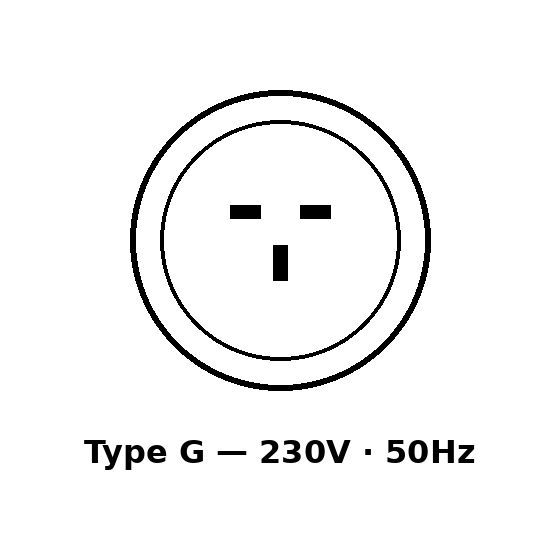
Most modern electronics (phones, laptops, cameras) handle the voltage automatically — check the label on your charger for “INPUT: 100-240V” to confirm. The voltage (230V) is the same as continental Europe, so you only need a plug shape adapter, not a voltage converter.
Malta has good mobile coverage across both islands. EU residents benefit from “roam like at home” regulations with no extra charges. For visitors from outside the EU, local SIM cards and eSIMs are available from GO, Melita, and Epic at the airport and shops. Free Wi-Fi is available in most hotels, cafes, and restaurants. Coverage in rural Gozo can be spottier.
📱 Need mobile data? An eSIM is the easiest way to stay connected in Europe — no SIM swapping, activate before you land. Compare the best eSIM providers for Europe →
Health and Safety
Malta has a good healthcare system. Mater Dei Hospital, the main public hospital, is modern and well-equipped. EU/EEA citizens can use the European Health Insurance Card (EHIC) or Global Health Insurance Card (GHIC) for necessary medical treatment. Non-EU visitors aren’t covered by public healthcare, and private care bills full rates. Comprehensive travel insurance for Europe is strongly recommended — particularly if you’re planning to dive, snorkel, or take boat tours to the Blue Lagoon and Comino.
🏥 Cover your Malta trip with one policy
SafetyWing Nomad Insurance covers Malta and every other stop on your route — emergency medical coverage, evacuation (important for diving accidents around Dwejra, boat-trip mishaps at the Blue Lagoon, and coastal swim incidents), travel delay, and lost luggage protection in one plan. It meets the €30,000 Schengen visa medical minimum too. Buy it before you leave or even mid-trip.
Get a quote from SafetyWing →Affiliate partner — we may earn a commission at no extra cost to you.
In a medical emergency, call 112 (EU-wide emergency number). Pharmacies are well-stocked and pharmacists can provide advice for minor ailments. There’s at least one pharmacy open 24/7 on a rotating schedule — check the roster at any pharmacy or online.
Malta is generally very safe for visitors. Petty theft can occur in crowded tourist areas and on buses, but violent crime is rare. The main safety considerations are sun-related — the Mediterranean sun is intense, especially from June through September. Sunburn, dehydration, and heatstroke are genuine risks. Stay hydrated, use sunscreen, and avoid prolonged exposure during midday hours. Sea conditions can be dangerous at certain coastal spots — always check local conditions before swimming, particularly on the exposed western coast.
Food and Dining Culture
Maltese cuisine reflects the islands’ position at the crossroads of the Mediterranean — Italian, North African, British, and Middle Eastern influences blend into something distinctly Maltese. Pastizzi (flaky diamond-shaped pastries filled with ricotta or mushy peas) are the quintessential Maltese snack — available at pastizzerias across the islands for as little as €0.50 each. Rabbit (fenek) is the national dish, traditionally slow-cooked in garlic and wine. Ftira (Maltese bread, similar to focaccia) and ħobż biż-żejt (bread with tomatoes, olives, capers, and tuna) are staples.
Fish and seafood are excellent and fresh — lampuki (mahi-mahi) is the prized catch, in season from September through November. The Sunday fish market at Marsaxlokk is a highlight. Maltese wines are underrated — local grapes Girgentina (white) and Gellewża (red) produce distinctive wines, and Meridiana and Marsovin are among the better-known producers.
Dining is affordable compared to most of Western Europe. A meal at a mid-range restaurant costs €15–25 per person. Pastizzerias and village bars offer snacks and light meals for a few euros. The Valletta waterfront and Sliema seafront are lined with restaurants ranging from casual to upscale. For the best value and most authentic food, seek out restaurants in Valletta’s back streets, the Three Cities, and village squares away from the main tourist strip.
Malta: Economy and Context
Malta is one of the EU’s smallest member states — both in area and population — but its economy punches well above its weight. The country has transformed from a British naval base into a service-oriented economy driven by financial services, online gaming (Malta is a major iGaming hub), tourism, and film production (Game of Thrones, Gladiator, Troy, and numerous other productions have filmed here). Malta joined the EU in 2004, adopted the euro in 2008, and joined the Schengen Area in 2007.
Tourism is a critical sector, accounting for roughly 15% of GDP. Malta receives over 3 million international visitors annually — an extraordinary number for a country of just over half a million people. The islands are particularly popular with British visitors, who make up the largest single source market, followed by Italians, Germans, and French.
Malta’s population density is among the highest in Europe, and overdevelopment — particularly along the eastern coast — is an ongoing concern. Construction cranes are a common sight, and the contrast between the historic beauty of Valletta and the concrete sprawl of parts of Sliema and Buġibba is stark. Despite this, Malta’s cultural heritage, climate, diving, and unique character continue to draw visitors who find far more depth than they expected in these small islands.
Frequently Asked Questions
Do I need a visa to visit Malta?
Citizens of 59 countries, including the US, UK, Canada, and Australia, can visit Malta without a visa for up to 90 days within any 180-day period. This is the Schengen 90/180-day rule, which applies across all Schengen countries combined. Use our Europe Travel Planner to find out if your nationality requires a visa.
Will I need ETIAS to visit Malta in 2026?
Not in 2026. The EU removed the Q4 2026 ETIAS launch target in July 2026, and 2027 is now the most likely launch year. Once operational, visa-exempt visitors will need to apply online before traveling — €20 for adults, valid for three years, covering all 29 Schengen countries. Until ETIAS launches, you only need your valid passport. See our ETIAS guide for the latest timeline.
What is the best time to visit Malta?
May, June, September, and October offer the ideal combination of warm weather, swimmable seas, and manageable crowds. July and August are the hottest months (regularly exceeding 35°C) with the largest crowds. Winter (November through March) is mild (15–18°C) and quiet, ideal for sightseeing, hiking, and cultural exploration without the summer heat. The shoulder months are the sweet spot.
Do people speak English in Malta?
Yes — English is one of Malta’s two official languages and is spoken fluently by virtually the entire population. Signs, menus, and official documents are in both Maltese and English. You’ll have no communication difficulties whatsoever.
How much does a trip to Malta cost?
Malta is moderately priced by Western European standards. Budget travelers can manage on €50–70 per day. Mid-range travel runs €90–150 per day. The tourist areas of Sliema and St Julian’s are the most expensive. A two-week trip for two people typically costs €2,500–5,000 total.
Do I need travel insurance for Malta?
Not required for entry for visa-exempt visitors, but strongly recommended — non-EU visitors aren’t covered by Malta’s public healthcare, and diving, boat trips, and coastal swimming carry genuine risk. If you need a Schengen visa, travel medical insurance with at least €30,000 coverage is mandatory for your application. See our Europe travel insurance guide for policies that cover water sports and meet visa requirements.
Is Malta safe for tourists?
Malta is very safe. Petty theft is uncommon but possible in crowded tourist areas. The main risks are sun-related — the Mediterranean sun is intense from June through September. Use sunscreen, stay hydrated, and avoid midday exposure. Sea conditions can be dangerous at some coastal spots — check local advice before swimming.
Does Malta use European plugs?
No — Malta uses British-style Type G plugs (three rectangular pins), not the standard European two-pin plugs. If you’re arriving from continental Europe, you’ll need a UK adapter. Adapters are cheap and widely available at Malta Airport and convenience stores. If you’re coming from the UK or Ireland, your plugs work without an adapter.
How do I get to Gozo?
The Gozo Channel ferry runs from Ċirkewwa (northern Malta) to Mġarr (Gozo) approximately every 45 minutes, taking about 25 minutes. The fare is €4.65 per adult (return included). In summer, a direct fast ferry also runs between Valletta and Gozo (approximately 45 minutes). No booking required for walk-on passengers — just turn up.
🌍 Plan Your Trip to Malta
Entry requirements, visa status, and a full travel briefing — personalized for your nationality.
Use the Europe Travel Planner →📚 Related Articles
- Schengen 90/180-Day Rule — How the visa-free stay limit works across Europe
- ETIAS: Europe’s New Travel Authorization — What you’ll need when it launches
- Entry/Exit System (EES) — How the new biometric borders work
- International Driving Permit in Europe — Country-by-country IDP requirements
- Best Travel Insurance for Europe — Protect your trip
- Travel to Italy: Complete Guide
- Travel to Greece: Complete Guide
- Travel to Croatia: Complete Guide
- All Europe Country Guides
This article is for informational purposes only and does not constitute legal or travel advice. Entry requirements can change — always verify with official government sources before traveling. Last updated: August 2026.