
Home › Country Guides › Travel to Luxembourg
Last Updated: August 2026
Luxembourg is one of Europe’s smallest countries but one of its wealthiest — a grand duchy where medieval fortresses perch above deep river gorges, where three languages are spoken daily, and where a cosmopolitan capital blends old-world charm with the headquarters of European institutions and global finance. Often overlooked between France, Belgium, and Germany, Luxembourg rewards visitors with stunning scenery, rich history, and a quality of life that’s immediately apparent. Here’s everything a visitor needs to know to plan a trip to Luxembourg in 2026.
🇱🇺 Luxembourg at a Glance
| Capital | Luxembourg City |
| Population | ~672,000 (2026) |
| Currency | Euro (€) |
| Languages | Luxembourgish, French, German |
| Time Zone | CET (UTC+1) · CEST in summer (UTC+2) |
| Plug Type | Type C and F · 230V / 50Hz |
| Driving Side | Right |
| International Driving Permit (IDP) | Recommended — see IDP guide |
| Schengen Member | Yes — founding member |
| Emergency Number | 112 (EU-wide) · 113 (police) · 112 (ambulance/fire) |
Entry Requirements for Luxembourg
Luxembourg is part of the Schengen Area — in fact, it’s one of the five founding members that signed the original Schengen Agreement in 1985, in the Luxembourg village of Schengen itself. It follows the same entry rules as the other 28 Schengen member countries. What you need to enter Luxembourg depends on your nationality.
Visa-Exempt Visitors (US, UK, Canada, Australia, and Others)
Citizens of 59 visa-exempt countries — including the United States, United Kingdom, Canada, Australia, New Zealand, Japan, and most Latin American nations — can enter Luxembourg without a visa for short stays of up to 90 days within any 180-day period. This is the standard Schengen 90/180-day rule, and it applies across all 29 Schengen countries combined, not just Luxembourg.
To enter Luxembourg as a visa-exempt visitor, your passport must meet two requirements. It must have been issued within the last 10 years at the time of entry, and it must remain valid for at least three months after your planned departure date from the Schengen area.
At the border, officials may ask for proof of accommodation, proof of sufficient funds, and evidence of onward or return travel. In practice, Luxembourg has no staffed border crossings — you’ll enter from France, Belgium, or Germany without stopping. But you should carry your passport, as random checks can occur.
Visitors Who Need a Visa
If your country is not on the visa-exempt list, you’ll need to apply for a Schengen short-stay visa (Type C) through the Luxembourg consulate in your home country before traveling. This visa allows stays of up to 90 days within a 180-day period and typically costs €80 for adults. The application requires travel medical insurance with minimum €30,000 coverage — see our guide to the best travel insurance for Europe for policies that meet Schengen visa requirements.
For longer stays — work, study, or family reunification — you’ll need a Luxembourg national long-stay visa, which must be applied for separately from a Schengen visa. Use our Europe Travel Planner to find out exactly what your nationality requires.
🛂 Need a Schengen visa for Luxembourg?
If your nationality isn’t visa-exempt, iVisa handles your Schengen visa application end to end — forms, appointment guidance, and document review before you submit.
Start your application on iVisa →Affiliate partner — we may earn a commission at no extra cost to you.
What’s Changing at Luxembourg’s Borders
Two major systems are transforming how non-EU visitors enter the Schengen area. While Luxembourg has no staffed border crossings of its own, these systems still apply — they’ll be processed at whichever Schengen border you first enter (likely an airport in a neighboring country, or Luxembourg Airport itself).
Entry/Exit System (EES)
The Entry/Exit System completed its phased rollout and has been fully operational at all Schengen border crossings since April 2026. EES replaced the old passport-stamping process with a digital system that records biometric data — fingerprints and facial images — along with your passport details and entry/exit dates.
The first time you enter the Schengen area under EES, border officials will collect your fingerprints and take a facial photograph. Once registered, the data stays valid for three years, and subsequent entries only require identity verification rather than a full re-registration.
ETIAS — Europe’s New Travel Authorization
The European Travel Information and Authorization System (ETIAS) will require visa-exempt travelers — including Americans, Britons, Canadians, and Australians — to apply for a travel authorization online before traveling to any Schengen country, including Luxembourg. The EU removed the previously confirmed Q4 2026 launch target in July 2026, and 2027 is now the most likely launch year.
The ETIAS application is completed online and takes roughly 10 minutes. It asks for personal details, passport information, and security-related questions. The fee is €20 for travelers aged 18 to 70 (free for those younger or older). Once approved, ETIAS is valid for three years or until your passport expires, whichever comes first. It covers all 29 Schengen countries, so you don’t need a separate authorization for each destination.
Getting to Luxembourg
Luxembourg’s central location between France, Belgium, and Germany makes it easy to reach from all directions. Its small size means many visitors arrive overland from neighboring countries.
By Air
Luxembourg Airport (LUX), also known as Findel, is located just 6 km from the city center. It handles a decent range of European routes — Luxair (the national carrier), Ryanair, easyJet, and several major airlines connect Luxembourg to cities across Europe. Direct routes include London, Paris, Frankfurt, Munich, Amsterdam, Lisbon, and many others. The airport is small and efficient, with minimal wait times.
There are no direct transatlantic flights to Luxembourg. Travelers from the US, Canada, or Australia typically connect through a major European hub — Frankfurt, Paris, Amsterdam, or Brussels are the most common routing options, all within easy reach.
By Train
Luxembourg has excellent rail connections to its neighbors. High-speed TGV service connects Luxembourg City to Paris in about 2 hours 10 minutes. Direct trains run to Brussels (approximately 3 hours), Metz and Strasbourg in France, Trier and Koblenz in Germany, and Liège in Belgium. The Gare Centrale (Luxembourg Central Station) is the main hub, located in the city center.
By Bus
FlixBus and Eurolines connect Luxembourg City to major European cities including Paris, Brussels, Frankfurt, Amsterdam, and others. The international bus station is adjacent to the Gare Centrale. Prices are often cheaper than train fares, particularly for longer routes.
By Car
Luxembourg shares open Schengen borders with France, Belgium, and Germany — there are no border controls or checkpoints. The country sits at the intersection of major European motorway routes. From Paris, the drive takes about 3.5 hours; from Brussels, about 2.5 hours; from Frankfurt, about 2.5 hours. No motorway vignette or toll is required in Luxembourg — motorways are free.
Getting Around Luxembourg
Luxembourg is tiny — the entire country is roughly 80 km long and 50 km wide. Getting around is exceptionally easy, especially given that all public transport is free.
Free Public Transport
Luxembourg became the first country in the world to make all public transport free in 2020. Buses, trams, and domestic trains are all free in second class. This covers the entire country — from Luxembourg City to every village and town. The tram system in Luxembourg City is modern and expanding, connecting the Kirchberg business district (home to EU institutions) through the city center to the Gare Centrale. Buses run frequently in the city and connect all major towns.
| Route | Mode | Duration |
|---|---|---|
| Luxembourg City → Echternach | Bus | ~45 min |
| Luxembourg City → Vianden | Bus | ~1.5 hours |
| Luxembourg City → Clervaux | Train | ~1 hour |
| Luxembourg City → Ettelbruck | Train | ~30 min |
| Luxembourg City → Esch-sur-Alzette | Train | ~20 min |
Driving
A car is useful for exploring the countryside at your own pace, but it’s not essential given the comprehensive free bus and train network. Rental companies operate at Luxembourg Airport and in the city center.
Luxembourg drives on the right. Speed limits are 130 km/h on motorways, 90 km/h on rural roads, and 50 km/h in urban areas. Roads are in excellent condition throughout the country. Fuel is noticeably cheaper than in neighboring France, Belgium, and Germany — many cross-border commuters fill up in Luxembourg, so petrol stations near the borders can be busy.
International Driving Permit: An IDP is recommended for non-EU drivers. See our International Driving Permit guide for how to get one in your country.
Cycling
Luxembourg has an excellent network of cycling paths, including several national cycle routes (pistes cyclables) that follow former railway lines through scenic valleys. The Vennbahn trail connects Luxembourg to Belgium and Germany. Bikes can be rented in Luxembourg City through the vel’oh bike-sharing system, and many hotels in the countryside offer bikes to guests. The terrain is hilly in the north (Oesling region) and gentler in the south (Gutland).
Where to Go in Luxembourg
Luxembourg’s small size means everything is within easy reach, but the country packs a surprising amount of variety into its compact footprint.
Luxembourg City
The capital is built on a dramatic promontory overlooking the Alzette and Pétrusse river valleys — deep gorges cutting through the city center that give Luxembourg its distinctive vertical geography. The Old Town and fortifications are a UNESCO World Heritage Site. The Bock Casemates — 17 km of tunnels carved into the cliff face, once capable of sheltering 35,000 soldiers — are the most visited attraction. The Grand Ducal Palace, the Gothic Notre-Dame Cathedral, the Place d’Armes, and the Chemin de la Corniche (called “Europe’s most beautiful balcony” for its valley views) anchor the historic center. The Kirchberg plateau, connected by the striking Pont Adolphe bridge and the Red Bridge, houses EU institutions, the MUDAM contemporary art museum, and the Philharmonie Luxembourg concert hall.
Mullerthal — Luxembourg’s Little Switzerland
The Mullerthal region east of Luxembourg City is a landscape of mossy sandstone rock formations, dense forests, and winding streams that has earned the nickname “Little Switzerland” (Petite Suisse Luxembourgeoise). The Mullerthal Trail, a 112 km long-distance hiking route (also walkable in shorter loops), winds through narrow gorges, past waterfalls, and beneath towering rock overhangs. Echternach, the country’s oldest town, sits at the edge of the region and is known for its ancient abbey and the unique Hopping Procession — a UNESCO-recognized tradition held on Whit Tuesday.
Vianden
Vianden Castle is one of the most impressive feudal castles in Europe — a magnificently restored Romanesque and Gothic fortress perched above the Our river valley. The town of Vianden below is picture-perfect, with stone houses along the riverbank, a small chairlift offering valley views, and the house where Victor Hugo lived during his exile from France (now a museum). Vianden is an easy day trip from Luxembourg City by bus (about 1.5 hours) and is best combined with a hike along the Our valley.
The Moselle Valley
Luxembourg’s eastern border with Germany follows the Moselle River, and the gentle slopes above it produce excellent white wines — Riesling, Pinot Gris, Auxerrois, and Crémant de Luxembourg (sparkling wine) are the standouts. The wine villages of Remich, Ehnen, and Wormeldange offer tastings, vineyard walks, and river-terrace restaurants. The Moselle region has a distinctly different feel from the rest of Luxembourg — warmer, more Mediterranean in character, and centered on wine culture. A drive or cycle along the Moselle wine route makes a pleasant day trip.
Clervaux and the Ardennes
The northern third of Luxembourg — the Oesling region — is part of the Ardennes uplands, a landscape of forested hills, deep valleys, and stone-built villages. Clervaux is a small town dominated by its medieval castle, which houses Edward Steichen’s legendary “The Family of Man” photography exhibition — a UNESCO Memory of the World collection. The surrounding area was the scene of intense fighting during the Battle of the Bulge in the winter of 1944–45, and several museums and memorials commemorate this history. The Ardennes is Luxembourg’s best region for hiking, with trails through forests and along valley floors.
Esch-sur-Alzette and the Red Lands
Luxembourg’s second-largest city, Esch-sur-Alzette, anchors the former industrial south — the Terre Rouge (Red Lands), named for the iron-rich soil that fueled Luxembourg’s steel industry. Esch was European Capital of Culture in 2022, and the transformation of its industrial heritage continues — the Belval district, built on the site of former blast furnaces (several of which are preserved as dramatic landmarks), houses the University of Luxembourg and a growing cultural scene. The Fond-de-Gras industrial heritage site nearby offers vintage train rides and a preserved early industrial landscape.
The Village of Schengen
For readers of this site, the tiny village of Schengen on the Moselle holds special significance — it’s where the Schengen Agreement was signed in 1985 aboard a boat at the point where Luxembourg, France, and Germany meet. The European Museum in Schengen tells the story of European border-free travel. It’s a modest but meaningful stop, especially if you’re already touring the Moselle wine region.
Practical Information for Visitors
Money and Costs
Luxembourg uses the euro (€). Credit and debit cards are accepted virtually everywhere. Contactless payment is standard. ATMs are widely available. Cash is rarely necessary except at some markets.
Luxembourg is expensive — among the most expensive countries in Europe. The high cost of living is driven by the financial sector and EU institutions. A meal at a mid-range restaurant costs €20–35 per person. Hotel rooms start around €120–180 per night for mid-range options in the capital. Budget travelers will find Luxembourg challenging, though the free public transport helps. Expect to spend €120–200 per day for mid-range travel, or €60–90 on a tight budget with hostel accommodation and supermarket meals.
Tipping in Luxembourg is not obligatory — service is included in restaurant bills. Leaving a few euros or rounding up for good service is common but not expected. Tipping in taxis and hotels is not customary.
Language
Luxembourg is genuinely trilingual. Luxembourgish (Lëtzebuergesch) is the national language and the one used in everyday conversation. French is the primary language of government, law, and formal communication. German is widely used in media and commerce. Most Luxembourgers switch effortlessly between all three, and many also speak English fluently — particularly in Luxembourg City, where the highly international population (nearly 50% of residents are foreign nationals) means English is commonly heard.
As a visitor, you’ll get by perfectly well with English in Luxembourg City and most tourist areas. French is the most useful second language to have. Signage is typically in French or a mix of French and Luxembourgish. Menus are often in French and German.
Power and Connectivity
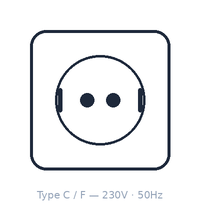
Luxembourg uses Type C and Type F power plugs at 230V/50Hz. If you’re traveling from the US, Canada, UK, or Australia, you’ll need a plug adapter.
Most modern electronics (phones, laptops, cameras) handle the voltage difference automatically — check the label on your charger for “INPUT: 100-240V” to confirm. Hair dryers and straighteners from North America may need a voltage converter, or it’s easier to buy or borrow one locally.
Luxembourg has excellent mobile coverage and widespread Wi-Fi. EU residents benefit from “roam like at home” regulations with no extra charges. For visitors from outside the EU, local SIM cards and eSIMs are available from POST Luxembourg, Tango, and Orange at shops and kiosks. Free Wi-Fi is available in most cafes, hotels, and many public spaces.
📱 Need mobile data? An eSIM is the easiest way to stay connected in Europe — no SIM swapping, activate before you land. Compare the best eSIM providers for Europe →
Health and Safety
Luxembourg has an excellent healthcare system. EU citizens can use the European Health Insurance Card (EHIC) or Global Health Insurance Card (GHIC) for necessary medical treatment at public facilities. Non-EU visitors aren’t covered by Luxembourg’s public healthcare, and medical costs here are among the highest in Europe. Comprehensive travel insurance for Europe is strongly recommended, particularly since most trips to Luxembourg extend across multiple neighboring countries.
🏥 Cover your whole trip to Luxembourg with one policy
SafetyWing Nomad Insurance covers Luxembourg and every other stop on your route — emergency medical coverage, evacuation, travel delay, and lost luggage protection in one plan. Perfect for Benelux and Rhineland circuits that cross borders daily. It meets the €30,000 Schengen visa medical minimum too. Buy it before you leave or even mid-trip.
Get a quote from SafetyWing →Affiliate partner — we may earn a commission at no extra cost to you.
In a medical emergency, call 112 (EU-wide emergency number). For police, call 113. Pharmacies (pharmacie) are well-stocked and pharmacists can provide advice for minor ailments. The Centre Hospitalier de Luxembourg (CHL) in the capital is the main hospital.
Luxembourg is one of the safest countries in the world. Violent crime is extremely rare, and petty theft is uncommon. The main safety considerations are related to driving — watch for the intense commuter traffic, and note that speed cameras are widespread. Luxembourg’s nightlife areas in the Gare district can feel slightly edgier than the rest of the city, but remain safe by any reasonable standard.
Food and Dining Culture
Luxembourg’s cuisine reflects its position at the crossroads of French, German, and Belgian culinary traditions. Judd mat Gaardebounen (smoked pork collar with broad beans) is the national dish. Bouneschlupp (green bean soup with potatoes and bacon) is a comfort-food staple. Kniddelen (Luxembourg-style dumplings) can be served sweet or savory. Gromperekichelcher (crispy potato fritters) are a street-food favorite, particularly at festivals and the Schueberfouer annual fair.
The Moselle wine region produces excellent whites and Crémant (sparkling wine) that deserve more international recognition. Luxembourg also has a strong cafe culture — Luxembourgers take their coffee seriously, and the capital’s cafes range from traditional pastry shops to specialty coffee roasters.
Luxembourg City has a surprisingly diverse restaurant scene for its size, with French fine dining, Portuguese cuisine (Portugal being the largest immigrant community), Italian, Asian, and modern European options all well-represented. Dining is expensive — a main course at a mid-range restaurant runs €20–30, and fine dining can easily exceed €50 per person before wine.
Luxembourg: Economy and Context
Luxembourg has one of the highest GDP per capita figures in the world, driven by its financial services sector — the country is the EU’s largest investment fund center and a major hub for private banking, insurance, and fintech. The European Court of Justice, European Investment Bank, Eurostat, and several other EU institutions are headquartered in Luxembourg City, giving this tiny country an outsized role in European governance.
The country’s population has grown rapidly through immigration — nearly 50% of residents are foreign nationals, predominantly Portuguese, French, Italian, and Belgian. An additional 200,000 cross-border commuters enter daily from France, Belgium, and Germany, making Luxembourg’s workforce far larger than its resident population.
Tourism is a modest but growing sector. The country receives roughly 1–1.5 million international visitors annually — many as day-trippers from neighboring countries or as business travelers visiting EU institutions and financial firms. Luxembourg’s combination of historical depth, natural beauty, multilingual culture, and sheer uniqueness makes it a rewarding destination that most travelers to Western Europe overlook entirely.
Frequently Asked Questions
Do I need a visa to visit Luxembourg?
Citizens of 59 countries, including the US, UK, Canada, and Australia, can visit Luxembourg without a visa for up to 90 days within any 180-day period. This is the Schengen 90/180-day rule, which applies across all Schengen countries combined. Use our Europe Travel Planner to find out if your nationality requires a visa.
Will I need ETIAS to visit Luxembourg in 2026?
Not in 2026. The EU removed the Q4 2026 ETIAS launch target in July 2026, and 2027 is now the most likely launch year. Once operational, visa-exempt visitors will need to apply online before traveling — €20 for adults, valid for three years, covering all 29 Schengen countries. Until ETIAS launches, you only need your valid passport. See our ETIAS guide for the latest timeline.
What is the best time to visit Luxembourg?
May through September offers the warmest weather and the best conditions for hiking and outdoor activities. June is particularly pleasant, with long days and blooming landscapes. The Schueberfouer fair in late August and early September is a major cultural event. December brings Christmas markets to Luxembourg City and smaller towns. Spring and autumn offer mild weather and fewer visitors — ideal for the Mullerthal trails and Moselle wine region.
Do people speak English in Luxembourg?
Yes — English is widely spoken in Luxembourg City, where nearly half the population is international. Luxembourgers are typically trilingual (Luxembourgish, French, German), and many speak English as well. Outside the capital, French is the most useful language for visitors. You won’t have significant communication difficulties.
How much does a trip to Luxembourg cost?
Luxembourg is expensive — among the priciest in Europe. Mid-range travel costs €120–200 per day. Budget travelers can manage €60–90 per day with hostels and supermarket meals. The completely free public transport system helps offset costs. A one-week trip for two people typically costs €1,500–3,000 depending on accommodation and dining choices.
Do I need travel insurance for Luxembourg?
Not required for entry for visa-exempt visitors, but strongly recommended — non-EU visitors aren’t covered by Luxembourg’s public healthcare, and medical costs are among the highest in Europe. If you need a Schengen visa, travel medical insurance with at least €30,000 coverage is mandatory for your application. See our Europe travel insurance guide for policies that meet the requirement.
Is public transport really free in Luxembourg?
Yes — since March 2020, all buses, trams, and second-class train travel within Luxembourg are completely free. No tickets, passes, or registration required. Just board and ride. The only exceptions are first-class train seats and international routes (e.g., trains to Paris or Brussels).
Is Luxembourg worth visiting?
Absolutely. Luxembourg City’s dramatic gorge setting, UNESCO-listed old town, and world-class museums make it a rewarding stop. The Mullerthal hiking region, Vianden Castle, and the Moselle wine valley add natural beauty and variety. It’s easily combined with trips to Belgium, France, or Germany. A two or three-day visit covers the highlights; a week lets you explore in depth.
Can I visit Schengen village in Luxembourg?
Yes — the village of Schengen, where the border-free Schengen Agreement was signed in 1985, is in southeastern Luxembourg on the Moselle River. The European Museum there tells the story of European integration and open borders. It’s a small but meaningful stop, especially if you’re touring the nearby Moselle wine region.
🌍 Plan Your Trip to Luxembourg
Entry requirements, visa status, and a full travel briefing — personalized for your nationality.
Use the Europe Travel Planner →📚 Related Articles
- Schengen 90/180-Day Rule — How the visa-free stay limit works across Europe
- ETIAS: Europe’s New Travel Authorization — What you’ll need when it launches
- Entry/Exit System (EES) — How the new biometric borders work
- International Driving Permit in Europe — Country-by-country IDP requirements
- Best Travel Insurance for Europe — Protect your trip
- Travel to Belgium: Complete Guide
- Travel to Germany: Complete Guide
- Travel to France: Complete Guide
- Travel to Netherlands: Complete Guide
- All Europe Country Guides
This article is for informational purposes only and does not constitute legal or travel advice. Entry requirements can change — always verify with official government sources before traveling. Last updated: August 2026.