
Home › Country Guides › Travel to Latvia
Last Updated: August 2026
Latvia sits at the heart of the Baltic states — a country of Art Nouveau architecture, dense pine forests, white sand beaches, and a capital city that blends medieval charm with a thriving modern culture. Less visited than its neighbors, Latvia rewards travelers with authentic experiences, affordable prices, and a sense of discovery that’s increasingly rare in Europe. Here’s everything a visitor needs to know to plan a trip to Latvia in 2026.
🇱🇻 Latvia at a Glance
| Capital | Riga |
| Population | ~1.8 million (2026) |
| Currency | Euro (€) |
| Language | Latvian |
| Time Zone | EET (UTC+2) · EEST in summer (UTC+3) |
| Plug Type | Type C and F · 230V / 50Hz |
| Driving Side | Right |
| International Driving Permit (IDP) | Recommended — see IDP guide |
| Schengen Member | Yes — since 2007 |
| Emergency Number | 112 (EU-wide) · 113 (police) · 113 (fire) · 113 (ambulance) |
Entry Requirements for Latvia
Latvia is part of the Schengen Area, meaning it follows the same entry rules as the other 28 Schengen member countries. What you need to enter Latvia depends on your nationality.
Visa-Exempt Visitors (US, UK, Canada, Australia, and Others)
Citizens of 59 visa-exempt countries — including the United States, United Kingdom, Canada, Australia, New Zealand, Japan, and most Latin American nations — can enter Latvia without a visa for short stays of up to 90 days within any 180-day period. This is the standard Schengen 90/180-day rule, and it applies across all 29 Schengen countries combined, not just Latvia.
To enter Latvia as a visa-exempt visitor, your passport must meet two requirements. It must have been issued within the last 10 years at the time of entry, and it must remain valid for at least three months after your planned departure date from the Schengen area.
At the border, Latvian officials may ask for proof of accommodation, proof of sufficient funds, and evidence of onward or return travel. These documents aren’t always requested, but having them available avoids potential complications.
Visitors Who Need a Visa
If your country is not on the visa-exempt list, you’ll need to apply for a Schengen short-stay visa (Type C) through the Latvian consulate in your home country before traveling. This visa allows stays of up to 90 days within a 180-day period and typically costs €80 for adults. The application requires travel medical insurance with minimum €30,000 coverage — see our guide to the best travel insurance for Europe for policies that meet Schengen visa requirements.
For longer stays — work, study, or family reunification — you’ll need a Latvian national long-stay visa (Type D), which must be applied for separately from a Schengen visa. Use our Europe Travel Planner to find out exactly what your nationality requires.
🛂 Need a Schengen visa for Latvia?
If your nationality isn’t visa-exempt, iVisa handles your Schengen visa application end to end — forms, appointment guidance, and document review before you submit.
Start your application on iVisa →Affiliate partner — we may earn a commission at no extra cost to you.
What’s Changing at Latvia’s Borders
Two major systems are transforming how non-EU visitors enter Latvia and the rest of the Schengen area. One is fully in place; the other has been pushed back.
Entry/Exit System (EES)
The Entry/Exit System completed its phased rollout and has been fully operational at all Schengen border crossings since April 2026. EES replaced the old passport-stamping process with a digital system that records biometric data — fingerprints and facial images — along with your passport details and entry/exit dates.
The first time you enter the Schengen area under EES, border officials will collect your fingerprints and take a facial photograph. This is done either at a self-service kiosk (if you have a biometric passport) or by a border guard. Once you’re registered, the data stays valid for three years, and subsequent entries only require identity verification rather than a full re-registration.
Latvia’s main points of entry — Riga Airport, the Riga passenger port, and the land border crossings with Russia and Belarus — are all EES-equipped. The Russian border at Terehova and the Belarusian border at Pāternieki can experience longer wait times.
ETIAS — Europe’s New Travel Authorization
The European Travel Information and Authorization System (ETIAS) will require visa-exempt travelers — including Americans, Britons, Canadians, and Australians — to apply for a travel authorization online before traveling to any Schengen country, including Latvia. The EU removed the previously confirmed Q4 2026 launch target in July 2026, and 2027 is now the most likely launch year.
The ETIAS application is completed online and takes roughly 10 minutes. It asks for personal details, passport information, and security-related questions. The fee is €20 for travelers aged 18 to 70 (free for those younger or older). Once approved, ETIAS is valid for three years or until your passport expires, whichever comes first. It covers all 29 Schengen countries, so you don’t need a separate authorization for each destination.
Getting to Latvia
Riga is the largest city in the Baltic states and serves as the regional transport hub, with strong air connections and good overland links to its neighbors.
By Air
Riga International Airport (RIX) is the busiest airport in the Baltic states and a hub for airBaltic, the dominant regional carrier. airBaltic operates direct flights to over 70 European destinations. Ryanair and Wizz Air also serve Riga with budget routes across Europe. Other carriers including Lufthansa, Finnair, SAS, Turkish Airlines, and Norwegian connect Riga to their respective hubs.
There are no direct transatlantic flights to Latvia. Travelers from the US, Canada, or Australia typically connect through a European hub — Helsinki, Stockholm, Frankfurt, Amsterdam, or Istanbul are common routing options.
By Bus
International buses are a popular and affordable way to reach Latvia from neighboring countries. Lux Express and FlixBus run frequent services from Tallinn (4–4.5 hours, from €10–15), Vilnius (3.5–4 hours, from €10–15), and Warsaw (approximately 10 hours). Ecolines also serves routes to Minsk, Moscow, and other Eastern European cities, though services to Russia and Belarus are subject to changing restrictions. The Riga International Bus Station is centrally located next to the Central Market.
By Train
Latvia’s international rail connections are limited. A direct overnight train to Moscow was suspended in 2020 and has not resumed. There is no direct train to Tallinn or Vilnius as of 2026, though the Rail Baltica high-speed rail project — connecting Tallinn, Riga, and Vilnius with eventual extension to Warsaw and Berlin — is under construction with a projected completion in the late 2020s. For now, buses are faster and more practical for cross-Baltic travel.
By Ferry
Tallink operates a ferry service from Riga to Stockholm (approximately 17 hours overnight). It’s more of a cruise experience than a transport connection — with restaurants, bars, and entertainment on board. Fares vary widely by season and cabin type.
By Car
Latvia shares land borders with Estonia to the north, Lithuania to the south, Russia to the east, and Belarus to the southeast. As a Schengen member, there are no border controls between Latvia, Estonia, and Lithuania. The Russian and Belarusian border crossings involve passport and customs checks — wait times can be significant, and crossing restrictions should be checked before travel given the current geopolitical situation.
Getting Around Latvia
Latvia is a compact country — Riga to any corner takes roughly 3–4 hours by car. The transport network centers heavily on the capital, with connections between secondary cities often requiring a transfer through Riga.
Buses
Buses are Latvia’s most practical intercity transport option, faster and more frequent than trains for most routes. Nordeka and other regional operators run services from Riga to all major towns. The journey planner at 1188.lv covers bus and train schedules nationwide.
| Route | Duration | Approximate Cost |
|---|---|---|
| Riga → Jūrmala | ~30–40 min | €2–3 |
| Riga → Sigulda | ~1 hour | €3–4 |
| Riga → Liepāja | ~3–3.5 hours | €8–12 |
| Riga → Daugavpils | ~3.5–4 hours | €8–12 |
| Riga → Cēsis | ~1.5–2 hours | €4–6 |
Trains
Latvian Railways (Pasažieru vilciens) operates domestic services, primarily commuter routes radiating from Riga. The most useful route for visitors is Riga to Jūrmala (30 minutes, frequent departures). Trains to Sigulda and Cēsis in the Gauja Valley are also convenient. Beyond these routes, buses are generally faster and more practical.
Driving
A rental car is the best way to explore Latvia beyond Riga — the Gauja Valley, the coastline, rural Latgale, and the country’s many manor houses and nature areas are difficult to reach by public transit. Major rental companies operate at Riga Airport and in the city center.
Latvia drives on the right. Speed limits are 90 km/h on rural roads (110 km/h on some designated motorway sections), and 50 km/h in urban areas. Main roads are generally in good condition, though secondary and rural roads can be rough, particularly in spring. Headlights must be on at all times while driving.
Winter driving: Winter tires are mandatory from December 1 to March 1. Latvian winters bring heavy snow, black ice, and limited daylight. Rural roads may not be cleared promptly after snowfall. If you’re not experienced with winter driving, consider sticking to main routes or using buses.
International Driving Permit: An IDP is recommended for non-EU drivers. See our International Driving Permit guide for how to get one in your country.
Riga Public Transit
Riga has an extensive network of buses, trams, and trolleybuses. A single ticket costs €1.15 if purchased with an e-ticket card (€2 if bought from the driver). The “Rīgas Satiksme” app handles route planning and payment. The Old Town and city center are compact and easily walkable. Riga also has a growing bike-sharing network, practical in the flat city terrain from spring through autumn.
Where to Go in Latvia
Latvia’s appeal lies in the contrast between its vibrant capital and the quiet, forested countryside that stretches in every direction. Most visitors base themselves in Riga, but the country rewards day trips and overnight excursions.
Riga
Latvia’s capital is the largest city in the Baltic states and a UNESCO World Heritage Site, recognized for its extraordinary collection of over 800 Art Nouveau buildings — more than any other city in the world. The medieval Old Town (Vecrīga) is compact and atmospheric, centered on the Riga Cathedral, St. Peter’s Church (climb the tower for panoramic views), and the lively Līvu Square. Beyond the old center, the Art Nouveau district along Alberta iela and Elizabetes iela is a must-see. The Riga Central Market — housed in five massive former Zeppelin hangars — is one of Europe’s largest and most vibrant markets, packed with local produce, smoked fish, bread, and dairy.
Jūrmala
Latvia’s premier beach resort stretches for 32 km along the Gulf of Riga, just 25 km west of the capital. A string of small resort towns — Majori, Dzintari, Bulduri — are connected by a single main street lined with wooden villas, spa hotels, and pine forests backing onto wide white-sand beaches. Jūrmala has been a resort destination since the 19th century and retains a laid-back seaside charm. The Dzintari Concert Hall hosts summer festivals and events. It’s an easy 30-minute train ride from Riga and makes a perfect half-day or day trip.
Gauja National Park and the Vidzeme Region
The Gauja Valley, about 50 km northeast of Riga, is Latvia’s most scenic natural area — a forested river valley with sandstone cliffs, caves, and medieval castle ruins. Sigulda is the main gateway town, offering the Turaida Castle complex, a cable car across the valley, bobsled and luge tracks (yes, Latvia has an Olympic-standard track open to the public), and excellent hiking. Cēsis, further up the valley, is one of Latvia’s most charming small towns, with a well-preserved medieval castle and a thriving artisan culture. The region is particularly stunning in autumn when the hardwood forests turn golden.
Rundāle Palace
Often called the “Versailles of the Baltics,” Rundāle Palace is a magnificent Baroque and Rococo palace designed by the same architect who created the Winter Palace in St. Petersburg. The restored interiors and French-style gardens are Latvia’s most visited cultural attraction outside Riga. Located about 75 km south of Riga near the town of Bauska, it makes a straightforward day trip by car or organized tour.
Liepāja and the Kurzeme Coast
Latvia’s western coast on the open Baltic Sea is wilder and less developed than the Gulf of Riga beaches. Liepāja, Latvia’s third-largest city, is known for its music scene, wide beaches, and the haunting Karosta district — a former Soviet naval base with a prison that now operates as a tourist attraction. The coast north and south of Liepāja offers windswept dunes, fishing villages, and some of Latvia’s most dramatic scenery. Cape Kolka, where the Baltic Sea meets the Gulf of Riga, is a popular nature destination at the tip of the Kurzeme peninsula.
Latgale — Eastern Latvia
The Latgale region in eastern Latvia is the country’s most ethnically diverse and least-visited area, known as the “Land of Blue Lakes” for its roughly 2,000 lakes. Daugavpils, Latvia’s second-largest city, is home to the Mark Rothko Art Centre — the famed abstract expressionist painter was born here. The Aglona Basilica, Latvia’s most important Catholic pilgrimage site, draws tens of thousands of visitors on Assumption Day (August 15). Latgale offers a different side of Latvia — more rural, more multicultural, and almost entirely off the tourist trail.
Nature and Outdoors
Latvia is one of Europe’s greenest countries, with over 50% forest cover. Beyond the Gauja National Park, highlights include Ķemeri National Park (famous for its Great Ķemeri Bog boardwalk, accessible as a day trip from Riga or Jūrmala), Lake Lubāns (Latvia’s largest lake and a major birdwatching site), and the Daugava River valley with its scenic viewpoints and historic sites. In winter, cross-country skiing and ice fishing are popular activities. Latvia’s flat terrain makes it excellent for cycling, and the EuroVelo 13 “Iron Curtain Trail” runs through the country.
Practical Information for Visitors
Money and Costs
Latvia uses the euro (€), adopted in 2014. Credit and debit cards are widely accepted in Riga and major towns. Contactless payment is standard in most businesses. Cash is more commonly needed in rural areas, small markets, and some older establishments. ATMs are readily available in cities and towns.
Latvia is affordable by European standards — cheaper than Scandinavia and Western Europe, roughly comparable to Estonia, and slightly more expensive than Lithuania. Budget travelers can manage on €35–55 per day with hostel accommodation, local food, and public transit. Mid-range travel — comfortable hotels, restaurant meals, and activities — runs €70–120 per day. Riga is the most expensive area; prices drop noticeably in smaller cities and the countryside.
Tipping in Latvia is not obligatory but increasingly common. Leaving 10% at restaurants for good service is appreciated. At cafes, rounding up is typical. Tipping is not expected in taxis.
Language
Latvian is the official language — a Baltic language related to Lithuanian but not mutually intelligible with it, and unrelated to Estonian or the Slavic languages. It uses the Latin alphabet with several diacritical marks (ā, č, ē, ģ, ī, ķ, ļ, ņ, š, ū, ž).
English is widely spoken in Riga, particularly by younger Latvians and in the tourism and service industries. Outside the capital, English proficiency drops off — though you’ll usually find someone who can help. Russian is widely spoken across the country, particularly in Riga and eastern Latvia, where ethnic Russians make up a significant portion of the population. Learning a few Latvian phrases — “sveiki” (hello), “paldies” (thank you), “lūdzu” (please) — is appreciated and goes a long way.
Power and Connectivity
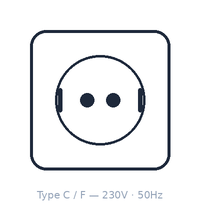
Latvia uses Type C and Type F power plugs at 230V/50Hz. If you’re traveling from the US, Canada, UK, or Australia, you’ll need a plug adapter.
Most modern electronics (phones, laptops, cameras) handle the voltage difference automatically — check the label on your charger for “INPUT: 100-240V” to confirm. Hair dryers and straighteners from North America may need a voltage converter, or it’s easier to buy or borrow one locally.
Latvia has good mobile coverage in cities and along major roads, with patchier service in rural and forested areas. Free Wi-Fi is widely available in cafes, hotels, and public spaces in Riga. EU residents benefit from “roam like at home” regulations. For visitors from outside the EU, local SIM cards and eSIMs are available from LMT, Tele2, and Bite at airports, shops, and kiosks.
📱 Need mobile data? An eSIM is the easiest way to stay connected in Europe — no SIM swapping, activate before you land. Compare the best eSIM providers for Europe →
Health and Safety
Latvia’s healthcare system is adequate in Riga but limited in rural areas. EU/EEA citizens can use the European Health Insurance Card (EHIC) or Global Health Insurance Card (GHIC) for necessary medical treatment. Non-EU visitors aren’t covered by public healthcare — and private clinics in Riga, while excellent, bill full rates. Comprehensive travel insurance for Europe ensures access to private care and covers evacuation from remote areas like the Kurzeme coast, Gauja Valley, or Latgale.
🏥 Cover your whole Baltic trip with one policy
SafetyWing Nomad Insurance covers Latvia and every other stop on your route — emergency medical coverage, evacuation, travel delay, and lost luggage protection in one plan. Perfect for Tallinn–Riga–Vilnius circuits that cross Baltic borders in a week. It meets the €30,000 Schengen visa medical minimum too. Buy it before you leave or even mid-trip.
Get a quote from SafetyWing →Affiliate partner — we may earn a commission at no extra cost to you.
In a medical emergency, call 112 (EU-wide emergency number) or 113 (national emergency line). Pharmacies (aptieka) are well-stocked and pharmacists can provide advice for minor ailments.
Latvia is generally safe for visitors. Petty theft can occur in Riga’s Old Town and around the Central Market, particularly during the busy summer months. Riga’s nightlife district around Kaļķu iela can get rowdy on weekend nights — the city has historically attracted stag party groups, though this has diminished in recent years. Scams targeting tourists in bars (inflated bills, drink spiking) have been reported, though they’re becoming rarer. Stick to established venues and you’ll be fine.
Food and Dining Culture
Latvian cuisine is hearty, seasonal, and shaped by the country’s long winters and agricultural traditions. Rye bread (rupjmaize) is a cornerstone — dark, dense, and often flavored with caraway seeds. Traditional dishes include grey peas with bacon (pelēkie zirņi ar speķi, the unofficial national dish), pīrāgi (bacon-filled pastries), sklandrausis (a carrot and potato tart from the Kurzeme region), and cold beet soup (aukstā zupa, a vibrant pink summer staple). Smoked fish — particularly sprats and lamprey — is a specialty, especially along the coast.
Riga’s restaurant scene has evolved significantly, with a growing number of modern Latvian restaurants that reinterpret traditional ingredients with contemporary techniques. The city’s Central Market is the best place to sample local flavors — from smoked fish and fresh dairy to artisan bread and seasonal berries. Street food and casual dining have also expanded, with food trucks and pop-ups appearing across the city.
Latvia has a craft beer renaissance underway, with breweries like Labietis, Valmiermuiža, and Malduguns producing distinctive ales and lagers. The country also has a long tradition of herbal spirits — Riga Black Balsam, a bitter herbal liqueur dating to 1752, is Latvia’s most famous drink and an acquired taste well worth acquiring.
A meal at a mid-range restaurant in Riga costs €10–18 per person. Lunch specials (biznesa pusdienas) are widely available and excellent value — a full meal for €5–8. Outside Riga, prices are even lower.
Latvia: Economy and Context
Latvia is a small, open economy that has undergone a dramatic transformation since regaining independence from the Soviet Union in 1991. The country joined the EU and NATO in 2004, the Schengen Area in 2007, and adopted the euro in 2014. Latvia’s economy is driven by services, logistics (the Port of Riga is a major Baltic shipping hub), IT, timber, and food processing.
Tourism has grown steadily, with Riga as the primary draw — the city receives roughly 2 million international visitors annually, many arriving on budget flights or as part of Baltic multi-country trips. Latvia is increasingly promoting its nature tourism, spa traditions, and cultural heritage to attract visitors beyond the capital.
Latvia’s population has declined since independence due to emigration, primarily to the UK, Ireland, and other Western European countries. This demographic shift is noticeable outside Riga, where some rural areas feel sparsely populated. For travelers, this means quiet roads, uncrowded attractions, and a genuine sense of space that’s hard to find elsewhere in Europe.
Frequently Asked Questions
Do I need a visa to visit Latvia?
Citizens of 59 countries, including the US, UK, Canada, and Australia, can visit Latvia without a visa for up to 90 days within any 180-day period. This is the Schengen 90/180-day rule, which applies across all Schengen countries combined. Use our Europe Travel Planner to find out if your nationality requires a visa.
Will I need ETIAS to visit Latvia in 2026?
Not in 2026. The EU removed the Q4 2026 ETIAS launch target in July 2026, and 2027 is now the most likely launch year. Once operational, visa-exempt visitors will need to apply online before traveling — €20 for adults, valid for three years, covering all 29 Schengen countries. Until ETIAS launches, you only need your valid passport. See our ETIAS guide for the latest timeline.
What is the best time to visit Latvia?
June through August offers the warmest weather, long daylight hours, and the liveliest cultural calendar — the Riga City Festival and Latvian Song and Dance Festival are summer highlights. May and September are pleasant with fewer visitors. Winter (November through March) is cold and dark but offers Christmas markets, cozy restaurants, and a chance to experience the country’s sauna culture. The shoulder seasons offer the best balance of weather and value.
Do people speak English in Latvia?
English is widely spoken in Riga, especially by younger Latvians and in the tourism industry. Outside the capital, English proficiency drops off. Russian is also widely spoken across the country. Learning a few Latvian phrases is appreciated but rarely essential in tourist areas.
How much does a trip to Latvia cost?
Latvia is affordable by European standards. Budget travelers can manage on €35–55 per day. Mid-range travel runs €70–120 per day. Riga is the most expensive area. A two-week trip for two people typically costs €1,800–3,500 total.
Do I need travel insurance for Latvia?
Not required for entry for visa-exempt visitors, but strongly recommended — non-EU visitors aren’t covered by Latvian public healthcare, and quality private care in Riga bills full rates. If you need a Schengen visa, travel medical insurance with at least €30,000 coverage is mandatory for your application. See our Europe travel insurance guide for policies that meet the requirement.
Is Latvia safe for tourists?
Latvia is generally safe. Petty theft can occur in Riga’s Old Town and around the Central Market. Exercise normal caution in Riga’s nightlife district. Tick-borne diseases are a health concern in forested areas — TBE vaccination is recommended for nature-focused trips. Violent crime against tourists is rare.
What is Riga Black Balsam?
Riga Black Balsam is Latvia’s signature herbal liqueur, produced since 1752. It’s made from a blend of 24 botanicals, herbs, roots, and berries, and has a distinctively bitter, complex flavor. Traditionally served in coffee, mixed with blackcurrant juice, or sipped neat. It’s available in the original (45% ABV) and several flavored versions.
Can I combine Latvia with Estonia and Lithuania?
Absolutely — the three Baltic states are compact, well-connected, and share Schengen membership, making multi-country trips straightforward. Lux Express buses connect Tallinn, Riga, and Vilnius with frequent, affordable services. A week to ten days is enough for highlights of all three capitals and surrounding areas. All three countries share the same Schengen 90/180-day limit.
🌍 Plan Your Trip to Latvia
Entry requirements, visa status, and a full travel briefing — personalized for your nationality.
Use the Europe Travel Planner →📚 Related Articles
- Schengen 90/180-Day Rule — How the visa-free stay limit works across Europe
- ETIAS: Europe’s New Travel Authorization — What you’ll need when it launches
- Entry/Exit System (EES) — How the new biometric borders work
- International Driving Permit in Europe — Country-by-country IDP requirements
- Best Travel Insurance for Europe — Protect your trip
- Travel to Estonia: Complete Guide
- Travel to Lithuania: Complete Guide
- Travel to Finland: Complete Guide
- All Europe Country Guides
This article is for informational purposes only and does not constitute legal or travel advice. Entry requirements can change — always verify with official government sources before traveling. Last updated: August 2026.