
Home › Country Guides › Travel to Estonia
Last Updated: August 2026
Estonia is the smallest and most digitally advanced of the three Baltic states — a country where medieval old towns meet cutting-edge technology, where vast forests and bogs stretch to the horizon, and where a fiercely independent culture punches well above its weight. From the cobblestone streets of Tallinn to the wild islands of the west coast, Estonia offers a distinct Northern European experience at a fraction of Scandinavian prices. Here’s everything a visitor needs to know to plan a trip to Estonia in 2026.
🇪🇪 Estonia at a Glance
| Capital | Tallinn |
| Population | ~1.4 million (2026) |
| Currency | Euro (€) |
| Language | Estonian |
| Time Zone | EET (UTC+2) · EEST in summer (UTC+3) |
| Plug Type | Type C and F · 230V / 50Hz |
| Driving Side | Right |
| International Driving Permit (IDP) | Recommended — see IDP guide |
| Schengen Member | Yes — since 2007 |
| Emergency Number | 112 (EU-wide) |
Entry Requirements for Estonia
Estonia is part of the Schengen Area, meaning it follows the same entry rules as the other 28 Schengen member countries. What you need to enter Estonia depends on your nationality.
Visa-Exempt Visitors (US, UK, Canada, Australia, and Others)
Citizens of 59 visa-exempt countries — including the United States, United Kingdom, Canada, Australia, New Zealand, Japan, and most Latin American nations — can enter Estonia without a visa for short stays of up to 90 days within any 180-day period. This is the standard Schengen 90/180-day rule, and it applies across all 29 Schengen countries combined, not just Estonia.
To enter Estonia as a visa-exempt visitor, your passport must meet two requirements. It must have been issued within the last 10 years at the time of entry, and it must remain valid for at least three months after your planned departure date from the Schengen area.
At the border, Estonian officials may ask for proof of accommodation, proof of sufficient funds, and evidence of onward or return travel. These documents aren’t always requested, but having them available avoids potential complications.
Visitors Who Need a Visa
If your country is not on the visa-exempt list, you’ll need to apply for a Schengen short-stay visa (Type C) through the Estonian consulate in your home country before traveling. This visa allows stays of up to 90 days within a 180-day period and typically costs €80 for adults. The application requires travel medical insurance with minimum €30,000 coverage — see our guide to the best travel insurance for Europe for policies that meet Schengen visa requirements.
For longer stays — work, study, or family reunification — you’ll need an Estonian national long-stay visa (Type D), which must be applied for separately from a Schengen visa. Use our Europe Travel Planner to find out exactly what your nationality requires.
🛂 Need a Schengen visa for Estonia?
If your nationality isn’t visa-exempt, iVisa handles your Schengen visa application end to end — forms, appointment guidance, and document review before you submit.
Start your application on iVisa →Affiliate partner — we may earn a commission at no extra cost to you.
What’s Changing at Estonia’s Borders
Two major systems are transforming how non-EU visitors enter Estonia and the rest of the Schengen area. One is fully in place; the other has been pushed back.
Entry/Exit System (EES)
The Entry/Exit System completed its phased rollout and has been fully operational at all Schengen border crossings since April 2026. EES replaced the old passport-stamping process with a digital system that records biometric data — fingerprints and facial images — along with your passport details and entry/exit dates.
The first time you enter the Schengen area under EES, border officials will collect your fingerprints and take a facial photograph. This is done either at a self-service kiosk (if you have a biometric passport) or by a border guard. Once you’re registered, the data stays valid for three years, and subsequent entries only require identity verification rather than a full re-registration.
Estonia’s main points of entry — Tallinn Airport, the Tallinn passenger port (serving ferries from Helsinki and Stockholm), and the land border crossings with Russia at Narva and Luhamaa — are all EES-equipped. The Russian border crossings in particular can experience longer wait times.
ETIAS — Europe’s New Travel Authorization
The European Travel Information and Authorization System (ETIAS) will require visa-exempt travelers — including Americans, Britons, Canadians, and Australians — to apply for a travel authorization online before traveling to any Schengen country, including Estonia. The EU removed the previously confirmed Q4 2026 launch target in July 2026, and 2027 is now the most likely launch year.
The ETIAS application is completed online and takes roughly 10 minutes. It asks for personal details, passport information, and security-related questions. The fee is €20 for travelers aged 18 to 70 (free for those younger or older). Once approved, ETIAS is valid for three years or until your passport expires, whichever comes first. It covers all 29 Schengen countries, so you don’t need a separate authorization for each destination.
Getting to Estonia
Estonia’s position on the Baltic Sea gives it strong connections to Scandinavia and good links to the rest of Europe, though it’s not as heavily served as Western European destinations.
By Air
Tallinn Airport (TLL) is compact, efficient, and well-connected to European destinations. Direct flights operate from most major European cities including London, Berlin, Frankfurt, Amsterdam, Paris, Stockholm, Helsinki, Warsaw, and Riga. Budget carriers Wizz Air and Ryanair serve multiple routes, alongside national carriers like Finnair, Lufthansa, SAS, and airBaltic (the dominant Baltic regional carrier).
There are no direct transatlantic flights to Estonia. Travelers from the US, Canada, or Australia typically connect through Helsinki (the closest major hub, just 80 km across the Gulf of Finland), Stockholm, Frankfurt, or Amsterdam.
By Ferry
The Tallinn–Helsinki ferry is one of the busiest passenger routes in Europe and the most popular way to combine Estonia with Finland. Multiple operators (Tallink, Viking Line, Eckerö Line) run frequent daily crossings taking 2–2.5 hours. Fares start as low as €15–20 one way. Tallink also operates an overnight ferry from Tallinn to Stockholm (approximately 16 hours).
By Bus
International buses are an affordable way to reach Estonia from the other Baltic states. Lux Express and FlixBus run frequent services from Riga (4–4.5 hours, from €10–15) and Vilnius (approximately 9 hours). Buses are modern, comfortable, and often have Wi-Fi and power outlets. The Tallinn Bus Station (Tallinna Bussijaam) is centrally located near the Old Town.
By Car
Estonia shares land borders with Latvia to the south and Russia to the east. As a Schengen member, there are no border controls between Estonia and Latvia. The Russian border at Narva involves passport and customs checks and can experience significant wait times — pre-booking a border crossing time slot is strongly recommended. The drive from Riga to Tallinn via the coastal road takes roughly 4.5 hours.
Getting Around Estonia
Estonia is a small country — the longest drive from one end to the other takes about 4–5 hours. Getting around is straightforward, though options thin out significantly in rural areas and on the islands.
Buses
Buses are the backbone of Estonia’s domestic transport network, generally faster and more frequent than trains. Lux Express and ATKO operate the main intercity routes. The national journey planner at peatus.ee covers all public transport across the country.
| Route | Duration | Approximate Cost |
|---|---|---|
| Tallinn → Tartu | ~2.5 hours | €8–14 |
| Tallinn → Pärnu | ~2 hours | €7–12 |
| Tallinn → Narva | ~3 hours | €8–13 |
| Tartu → Pärnu | ~2.5 hours | €7–12 |
Trains
Estonia’s rail network is limited but useful for certain routes. Elron operates domestic services, with the most popular route being Tallinn to Tartu (approximately 2–2.5 hours, from €8–12). Trains are modern and comfortable, with Wi-Fi and power outlets. The Tallinn commuter rail network also connects the capital to nearby towns and suburbs.
Driving
A rental car is the best way to explore Estonia beyond the main cities — the islands, national parks, and rural countryside are difficult to access by public transit. Major rental companies operate at Tallinn Airport and in the city center.
Estonia drives on the right. Speed limits are 90 km/h on rural roads (110 km/h on some designated motorway sections in summer), and 50 km/h in urban areas. Roads are generally in good condition on main routes, though rural and forest roads can be rough, particularly in spring after the thaw. Headlights must be on at all times while driving.
Winter driving: Winter tires are mandatory from December 1 to March 1 (and recommended from October to April). Estonian winters bring snow, ice, and limited daylight — conditions can change rapidly. If you’re not experienced with winter driving, stick to main roads or use buses.
International Driving Permit: An IDP is recommended for non-EU drivers, particularly for rental purposes. See our International Driving Permit guide for how to get one in your country.
Ferries to the Islands
Estonia’s two largest islands — Saaremaa and Hiiumaa — are connected to the mainland by regular ferry services operated by TS Laevad. Ferries run from Virtsu to Kuivastu (Muhu/Saaremaa, ~30 minutes) and from Rohuküla to Heltermaa (Hiiumaa, ~1.5 hours). During summer, booking in advance is essential, especially for vehicles. Smaller islands like Kihnu and Ruhnu have less frequent connections.
Tallinn Public Transit
Tallinn made headlines in 2013 by becoming the first EU capital to offer free public transit for residents, and the system remains free for registered Tallinn residents. Visitors pay a flat fare of €2 per ride (or €5 for a day pass) on buses, trams, and trolleybuses. The network covers the city comprehensively. Tallinn’s Old Town is compact and best explored on foot.
Where to Go in Estonia
Estonia is small but remarkably diverse — dense forests, boglands, over 2,000 islands, medieval architecture, and university towns all packed into a country roughly the size of the Netherlands.
Tallinn
Estonia’s capital is the country’s undisputed highlight and one of the best-preserved medieval cities in Northern Europe. The Old Town, a UNESCO World Heritage Site, is a compact maze of cobblestone streets, Gothic spires, merchant houses, and medieval walls. Toompea Hill offers panoramic views across the city’s red rooftops to the Baltic Sea. Beyond the Old Town, the Telliskivi Creative City is a converted industrial complex buzzing with restaurants, bars, galleries, and shops. The Kalamaja neighborhood is a trendy residential area with colorful wooden houses, the excellent Lennusadam (Seaplane Harbour) maritime museum, and a growing food scene.
Tartu
Estonia’s second city is a university town with a youthful, intellectual energy. Home to the University of Tartu (founded 1632), the city has a lively cafe and cultural scene that feels disproportionately vibrant for its modest size (~100,000 people). The Estonian National Museum, housed in a striking modern building on the site of a former Soviet airbase, is one of the Baltic region’s best museums. Tartu was European Capital of Culture in 2024, which brought new galleries, venues, and public spaces.
Pärnu
Estonia’s “summer capital” is a laid-back seaside resort town on the southwestern coast. A wide, shallow sandy beach stretches along the bay, backed by parks and a promenade. The town fills up in July and August with Estonian and Finnish holidaymakers, but remains pleasantly quiet the rest of the year. Pärnu also has a long tradition as a spa destination, with several wellness hotels offering mud treatments and other therapies.
Saaremaa and the Islands
Saaremaa, Estonia’s largest island, is a world apart — windswept juniper heaths, thatched-roof farmsteads, ancient stone churches, and the imposing Kuressaare Episcopal Castle. The island moves at a slower pace, and its distinctive character reflects centuries of relative isolation. Smaller Hiiumaa to the north is even quieter and wilder, with pristine forests, historic lighthouses, and very few tourists. Together, the islands represent some of Estonia’s most distinctive and least-visited landscapes.
Lahemaa National Park
Just an hour east of Tallinn, Lahemaa is Estonia’s largest national park and one of the best places to experience the country’s natural landscape. Coastal hiking trails wind through pine forests to rocky headlands and boulder-strewn beaches. Inland, the park includes restored manor houses (Palmse and Sagadi are the most impressive), traditional fishing villages, and vast stretches of boreal forest. The Viru Bog boardwalk trail is an easy and popular introduction to Estonia’s unique wetland ecosystem.
Southeastern Estonia and Setomaa
The rolling, forested hills of southeastern Estonia feel remote and distinctly different from the rest of the country. The Seto people of the border region maintain their own distinct cultural traditions, including a polyphonic singing style recognized by UNESCO. The area around Võru and Haanja includes Suur Munamägi, Estonia’s highest point at a modest 318 meters — but the views across the endless forest are remarkable. This region rewards slow, exploratory travel.
Bog Walking and Nature
Estonia is one of Europe’s most forested countries, with over 50% forest cover and an extraordinary network of bogs, wetlands, and nature reserves. Bog walking — on wooden boardwalks through vast, silent peatlands — is a quintessentially Estonian experience. Soomaa National Park (known for its “fifth season” spring floods when entire forests are submerged) and Endla Nature Reserve are highlights. In winter, frozen bogs become natural ice-skating routes.
Practical Information for Visitors
Money and Costs
Estonia uses the euro (€), adopted in 2011. Credit and debit cards are accepted almost everywhere — Estonia is one of Europe’s most cashless societies, and many Estonians rarely carry cash at all. Contactless payment is standard. ATMs are available in cities and towns but scarce in rural areas.
Estonia is moderately priced by European standards — cheaper than Scandinavia and Western Europe, but more expensive than the other Baltic states and Eastern Europe. Budget travelers can manage on €40–60 per day with hostel accommodation, local food, and public transit. Mid-range travel — comfortable hotels, restaurant meals, and activities — runs €80–130 per day. Tallinn is the most expensive area; prices drop noticeably in Tartu, Pärnu, and the countryside.
Tipping in Estonia is not obligatory. Leaving 10% at restaurants for good service is appreciated but not expected. At cafes, rounding up is common. Tipping is not customary in taxis or hotels.
Language
Estonian is the official language — a Finno-Ugric language closely related to Finnish and completely unrelated to the neighboring Baltic languages of Latvia and Lithuania (or to Russian). It’s notoriously difficult for English speakers, but visitors don’t need to worry — English proficiency in Estonia is among the highest in Europe, particularly in Tallinn, Tartu, and among younger Estonians.
Russian is widely spoken by Estonia’s significant Russian-speaking minority (roughly 25% of the population), concentrated in Tallinn and the northeastern city of Narva. In tourist areas, you’ll have no trouble communicating in English. Learning a few Estonian words — “tere” (hello), “aitäh” (thank you), “palun” (please) — is appreciated but rarely necessary.
Power and Connectivity
Estonia uses Type C and Type F power plugs at 230V/50Hz. If you’re traveling from the US, Canada, UK, or Australia, you’ll need a plug adapter.
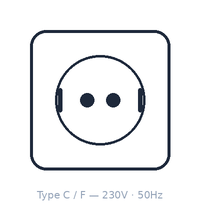
Most modern electronics (phones, laptops, cameras) handle the voltage difference automatically — check the label on your charger for “INPUT: 100-240V” to confirm. Hair dryers and straighteners from North America may need a voltage converter, or it’s easier to buy or borrow one locally.
Estonia is one of the world’s most digitally connected countries. Free public Wi-Fi is available almost everywhere — in cafes, parks, buses, and even forests (seriously). Mobile coverage is excellent across the country. EU residents benefit from “roam like at home” regulations. For visitors from outside the EU, local SIM cards and eSIMs are available from Telia, Elisa, and Tele2 at shops and kiosks.
📱 Need mobile data? An eSIM is the easiest way to stay connected in Europe — no SIM swapping, activate before you land. Compare the best eSIM providers for Europe →
Health and Safety
Estonia has a good healthcare system. EU/EEA citizens can use the European Health Insurance Card (EHIC) or Global Health Insurance Card (GHIC) for necessary medical treatment. Non-EU visitors aren’t covered by Estonian public healthcare, and private clinics — while excellent — bill full rates. Comprehensive travel insurance for Europe ensures access to private care and covers evacuation from remote areas (the islands, national parks, or the southeast).
🏥 Cover your whole Baltic trip with one policy
SafetyWing Nomad Insurance covers Estonia and every other stop on your route — emergency medical coverage, evacuation (important for Saaremaa, Hiiumaa, Lahemaa, and remote southeastern regions), travel delay, and lost luggage protection in one plan. Ideal for Baltic and Nordic circuits. It meets the €30,000 Schengen visa medical minimum too. Buy it before you leave or even mid-trip.
Get a quote from SafetyWing →Affiliate partner — we may earn a commission at no extra cost to you.
In a medical emergency, call 112 (EU-wide emergency number). Pharmacies (apteek) are well-stocked and pharmacists can provide advice for minor ailments.
Estonia is one of the safest countries in Europe for visitors. Petty theft is uncommon but can occur in Tallinn’s Old Town during peak tourist season. The main safety considerations are weather-related — winter conditions can be harsh, and the Baltic Sea can be unpredictable. Tick-borne diseases (Lyme disease and tick-borne encephalitis) are a genuine concern in forested areas from spring through autumn — use repellent and check for ticks after woodland walks.
Food and Dining Culture
Estonian cuisine is rooted in northern European traditions — hearty, seasonal, and heavily influenced by the country’s forests, coastline, and long winters. Black bread (leib) is a staple and a source of national pride. Traditional dishes include sült (head cheese), verivorst (blood sausage, a Christmas staple), mulgikapsad (sauerkraut with pork and barley), and kiluvõileib (sprat sandwiches on dark bread). Wild mushrooms, berries, and game feature prominently in autumn menus.
Tallinn’s restaurant scene has evolved dramatically, with a growing number of modern Estonian restaurants reinterpreting traditional flavors with contemporary techniques. Restaurants like Noa, Ö, and Lee have earned international recognition. The city’s food halls (Balti Jaama Turg market and Telliskivi area) are excellent for sampling a range of local and international food at reasonable prices.
Estonia has a growing craft beer scene and produces distinctive spirits — Vana Tallinn, a rum-based liqueur, is the most famous. Local craft breweries like Põhjala have gained international followings. In summer, outdoor terraces and beer gardens fill up across the country.
A meal at a mid-range restaurant in Tallinn costs €12–20 per person. Outside the capital, prices are lower. Lunch specials (päevapakkumine) offered by many restaurants are excellent value — a full two or three-course meal for €6–10.
Estonia: Economy and Context
Estonia is a small, open economy that has transformed dramatically since regaining independence from the Soviet Union in 1991. The country has become a global leader in digital governance and technology, producing Skype, Wise (formerly TransferWise), Bolt, and a disproportionate number of tech startups for its size. Estonia joined the EU and NATO in 2004, the Schengen Area in 2007, and adopted the euro in 2011.
Tourism has grown steadily, with Tallinn as the primary draw — the city receives over 4 million visitors annually, many arriving on day trips from Helsinki by ferry. The country is working to attract visitors beyond the capital, promoting nature tourism, the islands, and the increasingly vibrant Tartu and Pärnu scenes.
Estonia’s population of roughly 1.4 million makes it one of Europe’s smallest countries, and that intimacy is part of the appeal. This is a place where the president might be spotted grocery shopping, where the startup founder serves you coffee at their own cafe, and where the entire country can feel like a well-kept secret that’s only just beginning to be discovered by international travelers.
Frequently Asked Questions
Do I need a visa to visit Estonia?
Citizens of 59 countries, including the US, UK, Canada, and Australia, can visit Estonia without a visa for up to 90 days within any 180-day period. This is the Schengen 90/180-day rule, which applies across all Schengen countries combined. Use our Europe Travel Planner to find out if your nationality requires a visa.
Will I need ETIAS to visit Estonia in 2026?
Not in 2026. The EU removed the Q4 2026 ETIAS launch target in July 2026, and 2027 is now the most likely launch year. Once operational, visa-exempt visitors will need to apply online before traveling — €20 for adults, valid for three years, covering all 29 Schengen countries. Until ETIAS launches, you only need your valid passport. See our ETIAS guide for the latest timeline.
What is the best time to visit Estonia?
June through August offers the warmest weather and the famous “white nights” — near-endless summer daylight, particularly in late June. May and September are pleasant with fewer visitors. Winter (November through March) is cold and dark but offers a magical atmosphere, Christmas markets, sauna culture, and the chance to walk on frozen bogs and sea ice. The shoulder seasons offer the best balance of weather, daylight, and value.
Do people speak English in Estonia?
Yes — English proficiency in Estonia is among the highest in Europe, particularly in Tallinn, Tartu, and among younger Estonians. You’ll have very few communication problems in tourist areas. Russian is also widely spoken, especially in Tallinn and northeastern Estonia.
How much does a trip to Estonia cost?
Estonia is moderately priced — cheaper than Scandinavia but more expensive than southern or eastern Baltic neighbors. Budget travelers can manage on €40–60 per day. Mid-range travel runs €80–130 per day. Tallinn is the most expensive area. A two-week trip for two people typically costs €2,000–4,000 total.
Do I need travel insurance for Estonia?
Not required for entry for visa-exempt visitors, but strongly recommended — non-EU visitors aren’t covered by Estonian public healthcare, and evacuation from the islands or remote areas isn’t cheap. If you need a Schengen visa, travel medical insurance with at least €30,000 coverage is mandatory for your application. See our Europe travel insurance guide for policies that meet the requirement.
Is Estonia safe for tourists?
Estonia is one of Europe’s safest countries. Petty theft is uncommon but possible in Tallinn’s Old Town during summer. The main health concern is tick-borne diseases in forested areas — TBE vaccination is recommended for nature-focused visits. Winter weather requires appropriate preparation.
How do I get from Helsinki to Tallinn?
Multiple ferry operators (Tallink, Viking Line, Eckerö Line) run frequent daily crossings between Helsinki and Tallinn, taking 2–2.5 hours. Fares start around €15–20 one way. It’s one of the busiest passenger ferry routes in Europe and an easy day trip in either direction.
Do I need a car in Estonia?
For Tallinn only, no — the city is walkable and has good public transit. For exploring the islands, national parks, and countryside, a rental car is highly recommended. Buses connect main cities but are infrequent to rural areas, and islands require ferry connections.
🌍 Plan Your Trip to Estonia
Entry requirements, visa status, and a full travel briefing — personalized for your nationality.
Use the Europe Travel Planner →📚 Related Articles
- Schengen 90/180-Day Rule — How the visa-free stay limit works across Europe
- ETIAS: Europe’s New Travel Authorization — What you’ll need when it launches
- Entry/Exit System (EES) — How the new biometric borders work
- International Driving Permit in Europe — Country-by-country IDP requirements
- Best Travel Insurance for Europe — Protect your trip
- Travel to Finland: Complete Guide
- Travel to Latvia: Complete Guide
- Travel to Sweden: Complete Guide
- All Europe Country Guides
This article is for informational purposes only and does not constitute legal or travel advice. Entry requirements can change — always verify with official government sources before traveling. Last updated: August 2026.