

Home › Country Guides › Travel to Hungary
Last Updated: August 2026
Hungary is Central Europe’s thermal heart — a country sitting on one of the world’s richest geothermal reserves, with bath houses in continuous use since Ottoman times. Budapest alone justifies the trip: the Danube splits hilly Buda from flat Pest, the Parliament building is Europe’s grandest, ruin bars fill abandoned courtyards, and thermal baths have been drawing visitors since the 1500s. But Hungary extends well beyond its capital — Lake Balaton, Eger’s wine cellars, and the wild Puszta grasslands all reward exploration. Hungary is an EU and Schengen member that uses its own currency (the Hungarian forint, not the euro), and prices remain 40–50% below Western Europe. Here’s everything you need to know for 2026.
🇭🇺 Hungary at a Glance
| Capital | Budapest |
| Population | ~9.6 million (2026) |
| Currency | Hungarian Forint (HUF) — not the euro |
| Language | Hungarian (Magyar) |
| Time Zone | CET (UTC+1) · CEST in summer (UTC+2) |
| Plug Type | Type C and F · 230V / 50Hz |
| Driving Side | Right |
| International Driving Permit (IDP) | Recommended — see IDP guide |
| Schengen Member | Yes — EU member since 2004, Schengen since 2007 |
| Emergency Number | 112 (EU-wide) |
Entry Requirements for Hungary
Hungary joined the European Union in 2004 and became a full Schengen member in 2007. Despite EU membership, Hungary uses its own currency — the Hungarian forint (HUF). Entry requirements follow standard Schengen rules.
Visa-Exempt Visitors (US, UK, Canada, Australia, and Others)
Citizens of 59 visa-exempt countries — including the United States, United Kingdom, Canada, Australia, New Zealand, Japan, and most Latin American nations — can enter Hungary without a visa for short stays of up to 90 days within any 180-day period. This is the standard Schengen 90/180-day rule, and it applies across all 29 Schengen countries combined, not just Hungary.
To enter as a visa-exempt visitor, your passport must meet two requirements. It must have been issued within the last 10 years at the time of entry, and it must remain valid for at least three months after your planned departure date from the Schengen area.
⚠️ The 10-year rule catches people off guard. If you renewed your passport early and extra months were added, the issue date — not the expiry date — is what matters. A passport that’s still technically valid might be rejected if the issue date is more than 10 years ago.
At the border, Hungarian officials may ask for proof of accommodation, proof of sufficient funds, and evidence of onward or return travel. These documents aren’t always requested, but having them available avoids potential complications.
Visitors Who Need a Visa
If your country is not on the visa-exempt list, you’ll need to apply for a Schengen short-stay visa (Type C) through the Hungarian embassy or consulate in your home country before traveling. This visa allows stays of up to 90 days within a 180-day period and typically costs €80 for adults. The application requires travel medical insurance with minimum €30,000 coverage — see our guide to the best travel insurance for Europe for policies that meet Schengen visa requirements.
Use our Europe Travel Planner to find out exactly what your nationality requires.
🛂 Need a Schengen visa for Hungary?
If your nationality isn’t visa-exempt, iVisa handles your Schengen visa application end to end — forms, appointment guidance, and document review before you submit.
Start your application on iVisa →Affiliate partner — we may earn a commission at no extra cost to you.
What’s Changing at Hungarian Borders
Two major systems are transforming how non-EU visitors enter Hungary and the rest of the Schengen area. One is fully in place; the other has been pushed back.
Entry/Exit System (EES)
The Entry/Exit System completed its phased rollout and has been fully operational at all Schengen border crossings since April 2026. EES replaced the old passport-stamping process with a digital system that records biometric data — fingerprints and facial images — along with your passport details and entry/exit dates.
The first time you enter the Schengen area under EES, border officials will collect your fingerprints and take a facial photograph. Once registered, the data stays valid for three years, and subsequent entries only require identity verification rather than a full re-registration.
ℹ️ No advance action needed for EES. Everything happens at the border when you arrive. There are no forms to fill out, no applications to submit, and no fees to pay. Just bring your valid passport and allow a few extra minutes on your first entry, when your biometric registration takes place.
For Hungary, EES is most relevant at Budapest Liszt Ferenc International Airport (BUD), the country’s only major international airport. If you’re arriving from another Schengen country, there are no routine border checks.
ETIAS — Europe’s New Travel Authorization
The European Travel Information and Authorization System (ETIAS) will require visa-exempt travelers — including Americans, Britons, Canadians, and Australians — to apply for a travel authorization online before boarding a flight to Hungary or any other Schengen country. The EU removed the previously confirmed Q4 2026 launch target in July 2026, and 2027 is now the most likely launch year.
The ETIAS application is completed online and takes roughly 10 minutes. The fee is €20 for travelers aged 18 to 70 (free for those younger or older). Once approved, ETIAS is valid for three years or until your passport expires, whichever comes first. It covers all 29 Schengen countries.
✅ What to do now: If you’re traveling to Hungary before ETIAS launches, you don’t need it. Just bring your valid passport. Bookmark our ETIAS launch date tracker for the confirmed timeline once the EU announces it.
Getting to Hungary
Hungary’s central position in Europe makes it a natural crossroads — reachable by air, rail, or road from virtually every direction.
By Air
Budapest Liszt Ferenc International Airport (BUD) is Hungary’s only major commercial airport, located 16 km southeast of the city center. Direct flights connect Budapest to cities across Europe, the Middle East, and North America. Wizz Air (Hungary’s own ultra-low-cost carrier) has a massive Budapest operation. Ryanair, LOT, Lufthansa, and many other carriers also serve BUD. The 100E airport express bus reaches Deák Ferenc tér in central Budapest in about 35 minutes for 2,200 HUF.
By Train
Budapest is one of Europe’s great railway crossroads. Direct trains connect to Vienna (~2.5 hours by Railjet, frequent daily services), Bratislava (~2.5 hours), Prague (~6.5 hours), Munich (~6 hours by Railjet), Zagreb (~6 hours), Belgrade (~7 hours), and Bucharest (~13 hours overnight). ÖBB Nightjet sleepers connect Budapest to Zurich and other destinations. Book via MÁV (jegy.mav.hu) or ÖBB (oebb.at) — MÁV tickets are often the cheapest option for routes originating in Hungary.
By Bus
FlixBus and RegioJet connect Budapest to cities across Europe at very competitive prices. The Népliget bus station is the main long-distance hub. Vienna, Bratislava, Prague, and Zagreb are all well-served.
Getting Around Hungary
Hungary’s transport network radiates from Budapest like a wheel, with the capital as the hub. This makes getting to most destinations straightforward, though traveling between non-Budapest cities can require connections through the capital.
Trains
MÁV (Magyar Államvasutak — Hungarian State Railways) operates the national network. InterCity (IC) trains are the fastest domestic option, connecting Budapest with Pécs (~3 hours), Eger (~2 hours), Debrecen (~2.5 hours), Szeged (~2.5 hours), and Győr (~1.5 hours). IC trains require mandatory seat reservations (a few hundred forint on top of the ticket). Regional trains (személyvonat and sebesvonat) are slower and cheaper. GySEV operates trains in the Győr–Sopron–western Hungary region.
Domestic tickets are affordable — most intercity journeys cost 2,500–5,000 HUF (~€6–13). Book at jegy.mav.hu or via the MÁV+ app. The Magyarország24 pass (4,999 HUF, ~€13) gives unlimited 24-hour travel across the entire country — exceptional value for day-trip itineraries.
✅ Anyone over 65 rides free. This applies to all MÁV trains in Hungary — not just Hungarians or EU citizens, but anyone aged 65+. You still need to pay for mandatory IC seat reservations (a few hundred forint), but the base ticket is free. Present your passport as proof of age. Buses and trams are also free for over-65s and under-14s.
| Service | Best For | Cost Range | Notes |
|---|---|---|---|
| MÁV InterCity | Budapest–Pécs, Eger, Debrecen, Szeged | 2,500–5,000 HUF | Fastest domestic trains · Mandatory seat reservation · Book via jegy.mav.hu or MÁV+ app |
| ÖBB Railjet | Budapest–Vienna | €19–54 | ~2.5 hours · Frequent daily service · Book via oebb.at or jegy.mav.hu (often cheaper) |
| MÁV Regional | Short distances, day trips | 500–2,500 HUF | Slower · No reservation needed · Good for Szentendre, Gödöllő, Balaton towns |
| Volánbusz | Towns not on rail network | 1,500–4,000 HUF | Extensive network · Often more direct to smaller destinations than trains |
| FlixBus | Budget intercity + international | 1,500–6,000 HUF | Budapest–Lake Balaton ~2h · International routes to Vienna, Prague, Zagreb |
| Domestic Flight | N/A | — | No significant domestic flights — the country is small enough that trains and buses cover everything |
Local Transit
Budapest has one of Europe’s best public transport networks — an extensive system of metro (4 lines, including the UNESCO-listed M1, continental Europe’s oldest), trams, buses, trolleybuses, suburban railways (HÉV), and even a funicular up to Buda Castle. A single ticket costs 450 HUF (~€1.20). The 24-hour Budapest Pass costs 2,500 HUF, and the 72-hour version 4,950 HUF — excellent value. Buy tickets via the BudapestGO app or at metro stations. The Budapest Card (from ~8,000 HUF/24 hours) adds free museum entries and thermal bath discounts.
Always validate your ticket before boarding (or activate in the app). Ticket inspectors are common, fines are steep (16,000 HUF on the spot), and “I’m a tourist” is not accepted as an excuse.
Driving
Hungary’s motorway network connects Budapest to all major cities and neighboring countries. A car is most useful for exploring Lake Balaton, the countryside, and smaller towns — Budapest itself is best navigated by public transport.
Hungary drives on the right. Speed limits are 50 km/h in urban areas, 90 km/h on rural roads, 110 km/h on expressways, and 130 km/h on motorways. The blood alcohol limit is 0.00% — absolute zero tolerance, the strictest in Europe. Headlights must be on outside urban areas at all times year-round. Seatbelts are mandatory for all passengers.
⚠️ E-vignette required for motorways. All vehicles must purchase an electronic vignette (e-matrica) before entering any Hungarian motorway or expressway. Options: 1-day (~2,480 HUF), 10-day (~5,980 HUF), monthly (~6,560 HUF), or annual (~60,770 HUF). Buy online at nemzetiutdij.hu or at petrol stations. Enforcement is by camera — no barriers, just fines (up to 74,970 HUF) if you’re caught without one. Rental cars may include a vignette — always verify with your rental company.
Winter tires: Required from November 1 to March 1 when conditions warrant (snow, ice, frost on the road). Carry winter tires if visiting in this period.
International Driving Permit: EU/EEA licenses are valid. US, Canadian, and Australian licenses are accepted for short stays — an IDP is recommended and sometimes required by rental companies. You must be at least 21 to rent a car. See our International Driving Permit guide for details.
Where to Go in Hungary
Hungary is compact enough to see the highlights in a week, but diverse enough to fill much longer. The Danube runs through the heart of the country, thermal springs bubble up everywhere, and the flat expanses of the Great Plain give way to wine-country hills in the north.
Budapest
A city that routinely earns its place among Europe’s most beautiful capitals. The Buda side (west bank) has the Castle District, Fisherman’s Bastion with its fairy-tale turrets, Matthias Church, and the Citadella on Gellért Hill with sweeping Danube views. The Pest side (east bank) has the Hungarian Parliament Building (arguably Europe’s grandest — tours ~6,000 HUF, book ahead), St. Stephen’s Basilica, Andrássy Avenue (a UNESCO-listed boulevard), Heroes’ Square, and the Jewish Quarter with its ruin bars and the Dohány Street Synagogue (Europe’s largest). The POLIN-rivaling House of Terror museum documents Hungary’s fascist and communist occupations. And then there are the baths — Széchenyi (the largest medicinal bath in Europe, from ~11,900 HUF), Rudas (Ottoman-era with a rooftop pool, ~6,500 HUF), and Lukács (locals’ favorite). The iconic Gellért Baths are closed for renovation until 2028.
Lake Balaton
Central Europe’s largest lake — 77 km long — is Hungary’s summer playground. The southern shore (Siófok, Zamárdi) has sandy beaches and party culture. The northern shore is more refined: Tihany (a hilltop abbey peninsula), Balatonfüred (elegant promenade and wine), and Badacsony (volcanic hills, wine cellars, hiking). The lake is shallow and warm in summer, making it ideal for families. Accommodations range from campgrounds (6,000+ HUF/night) to resort hotels. Reachable by train from Budapest in about 1.5–2 hours.
Eger
A baroque town in the northern hills with a castle, a minaret (the northernmost Ottoman minaret in Europe), and — most importantly — wine cellars. The Valley of the Beautiful Women (Szépasszony-völgy) is an arc of small wine cellars where you can taste Egri Bikavér (Bull’s Blood) directly from the barrel. Eger also has excellent thermal baths (the Turkish bath dates from 1617). The town is compact, charming, and walkable — a perfect 2-day trip from Budapest (~2 hours by IC train).
Pécs
Hungary’s sunniest city, near the southern border, has a Mediterranean feel and a layered history. The Mosque of Pasha Qasim (now a church but retaining its Ottoman dome) dominates the main square. The Early Christian Necropolis is a UNESCO World Heritage Site with 4th-century painted burial chambers. Pécs was European Capital of Culture 2010 and has a thriving arts and university scene. The Zsolnay Cultural Quarter celebrates the city’s famous porcelain tradition. About 3 hours from Budapest by IC train.
Szentendre
A picturesque artists’ town on the Danube Bend, just 40 minutes from Budapest by HÉV suburban train. Serbian Orthodox churches, cobblestone streets, galleries, and cafés line the waterfront. The Danube Bend itself — where the river makes a dramatic turn between hills — is one of Hungary’s most scenic landscapes. Combine Szentendre with a visit to the Visegrád citadel or the Esztergom basilica (Hungary’s largest church) for a full Danube Bend day trip.
Hortobágy National Park
Hungary’s first national park and a UNESCO World Heritage Site — the largest continuous natural grassland in Europe (the Puszta). This is where csikós horsemen perform trick riding demonstrations, grey cattle roam, and the flat horizon stretches in every direction. The Nine-Arched Bridge is the park’s symbol. Best visited May–October. About 2.5 hours east of Budapest, accessible via Debrecen.
Tokaj Wine Region
Hungary’s most famous wine region — a UNESCO World Heritage cultural landscape in the northeast, producing Tokaji Aszú, one of the world’s great dessert wines. Louis XIV called it “the wine of kings, the king of wines.” Small cellars in the town of Tokaj and surrounding villages offer tastings for very reasonable prices. Combine with a visit to the Zemplén Mountains for hiking. About 3 hours from Budapest by train.
How Much Does Hungary Cost?
Hungary is one of Europe’s best bargains — significantly cheaper than Western Europe and even more affordable than some of its Central European neighbors. The forint trades at roughly 390–400 HUF per euro and around 375–385 HUF per dollar in early 2026, creating excellent value for international visitors.
💰 Hungary Daily Budget Ranges (per person)
| Budget | 15,000–22,000 HUF (~€38–56) | Hostels, street food, market meals, public transport, free attractions |
| Mid-Range | 30,000–50,000 HUF (~€77–128) | 3-star hotel, restaurants, thermal baths, trains, museums |
| Comfort | 65,000+ HUF (~€167+) | 4-star hotel, fine dining, spa packages, guided tours |
Accommodation: Hostel dorms in Budapest run 3,600–8,000 HUF per night. A mid-range hotel double room costs 20,000–35,000 HUF in Budapest, less in regional cities. Prices outside Budapest and Lake Balaton are noticeably lower. Note: Airbnb short-term rentals are now banned in Budapest’s District VI (the Party District/Terézváros) as of January 2026 — hotels and B&Bs remain unaffected.
Eating out: Hungary’s food is hearty, generous, and very affordable. The “napi menü” (daily lunch menu) is the budget hero — a two-course meal at a local restaurant for 2,000–3,500 HUF. A mid-range restaurant dinner main course costs 3,500–6,000 HUF. Lángos (fried dough with sour cream and cheese) costs about 1,500–2,500 HUF from a street vendor. A cappuccino is 800–1,400 HUF. A beer in a bar is 800–1,500 HUF. Hungarian wine is absurdly good value — excellent bottles from 1,500–3,000 HUF in shops, and glasses from 600–1,500 HUF in wine bars.
Transport: A Budapest single ticket costs 450 HUF. The 72-hour Budapest Pass is 4,950 HUF. MÁV intercity trains typically cost 2,500–5,000 HUF. The Magyarország24 unlimited day pass is just 4,999 HUF.
Thermal baths: Széchenyi entry from ~11,900 HUF (weekday), ~13,500 HUF (weekend). Rudas from ~6,500 HUF. Small-town thermal baths outside Budapest can cost as little as 2,000–4,000 HUF.
⚠️ Always pay in forints. Some tourist-area restaurants and shops accept euros, but at exchange rates 10–15% worse than the real rate. Use ATMs from Hungarian banks (OTP, K&H, CIB, MKB) — avoid Euronet-branded ATMs in tourist areas, which charge excessive fees. Cards (Visa, Mastercard) are widely accepted in Budapest and larger cities. Smaller towns, markets, and rural thermal baths may prefer cash.
Health and Insurance
Hungary has good public healthcare and low medical costs by European standards. EU/EEA citizens can use the European Health Insurance Card (EHIC) or Global Health Insurance Card (GHIC) for necessary medical treatment. Non-EU visitors aren’t covered by public healthcare — private treatment is still relatively affordable, but unexpected costs (a hospital admission, an ambulance, or an evacuation from a wine-country accident) add up fast. Comprehensive travel insurance for Europe is strongly recommended.
🏥 Cover your whole trip to Hungary with one policy
SafetyWing Nomad Insurance covers Hungary and every other stop on your route — emergency medical coverage, evacuation, travel delay, and lost luggage protection in one plan. It meets the €30,000 Schengen visa medical minimum too. Buy it before you leave or even mid-trip.
Get a quote from SafetyWing →Affiliate partner — we may earn a commission at no extra cost to you.
In any emergency, call 112. Pharmacies (gyógyszertár or patika) are widely available and Hungarian pharmacists are well-trained. Hungary is a very safe country — violent crime is rare, and the main risks are petty pickpocketing in Budapest’s tourist zones and taxi overcharging (use Bolt or insist on the meter).
Power and Connectivity
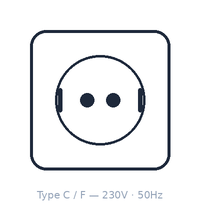
Hungary uses Type C and Type F power sockets — the standard European two-pin plug and the Schuko plug with grounding clips. Voltage is 230V at 50Hz. If you’re coming from the US, Canada, or another country that uses different plug types, you’ll need a standard European adapter. Most modern phone and laptop chargers are dual-voltage (check the label for “INPUT: 100–240V”) and need only a plug adapter, not a voltage converter.
Hungary has good 4G/LTE coverage nationwide and growing 5G in Budapest. Free Wi-Fi is common in hotels, cafés, and many restaurants. Budapest’s BKK transit network offers Wi-Fi on select vehicles. For heavy data use, a local prepaid SIM (Telekom, Yettel, Vodafone) is affordable — typically 2,000–4,000 HUF for a tourist data package.
📱 Need mobile data? An eSIM is the easiest way to stay connected in Europe — no SIM swapping, activate before you land. Compare the best eSIM providers for Europe →
Essential Tips for Visiting Hungary
Thermal bath etiquette: Bring your own towel and flip-flops (or rent them). Most baths offer lockers or cabins. Swimsuits are mandatory in mixed-gender pools. Shower before entering. The baths are meant for soaking, not swimming laps — relax, slow down, and enjoy the experience. Weekend mornings tend to be less crowded than afternoons.
Ruin bars: Budapest’s iconic ruin bars (romkocsma) are bars and cultural spaces built in abandoned buildings and courtyards, filled with mismatched furniture and art. Szimpla Kert is the most famous but far from the only one. They’re concentrated in the Jewish Quarter (District VII) and are best experienced on weekday evenings — weekends can be overwhelmingly crowded with stag parties.
Restaurant service charges: Many Budapest restaurants automatically add a 10–15% service charge to the bill. Check before tipping on top — if service is already included, additional tipping is optional. If no service charge is included, 10% is standard.
Hungarian language: Hungarian (Magyar) is famously unrelated to any neighboring language — it’s a Finno-Ugric language, closer to Finnish and Estonian than to German or Slovak. English proficiency is moderate in Budapest’s tourist areas but limited elsewhere. Younger Hungarians are more likely to speak English. Learning basic phrases (szia — informal hello, köszönöm — thank you, kérem — please) is greatly appreciated.
Wine: Hungary produces excellent wines that are dramatically underpriced compared to their quality. Beyond Tokaji Aszú, try Egri Bikavér (Bull’s Blood) red blends from Eger, dry whites from Somló, and rosé from Villány. Wine bars in Budapest offer glasses from 600–1,500 HUF. Supermarket bottles from 1,500 HUF can be surprisingly good.
Paprika: This is Hungary’s defining spice — essential in goulash, chicken paprikash, and dozens of other dishes. Buy genuine Hungarian paprika (édes for sweet, csípős for hot) at the Central Market Hall in Budapest — it’s the best souvenir and far superior to what you’ll find at home.
Tap water: Safe to drink throughout Hungary. Budapest’s tap water is excellent quality.
Safety: Hungary is generally very safe. Standard precautions in Budapest tourist areas — be alert for pickpocketing on trams (especially #2 and #4/6) and at major attractions. Use Bolt rather than hailing taxis on the street. The Budapest taxi scam (overcharging tourists) is less common than it used to be but not extinct — insist on the meter or use an app.
Best time to visit: May–June and September–October for ideal weather and manageable crowds. July–August is hot (35°C+ days in Budapest) and busy at Lake Balaton. Winter (December–February) brings Christmas markets, atmospheric thermal bathing in steaming outdoor pools, and hotel rates 25–40% below summer peaks — but expect cold (averaging around 0°C in January).
Frequently Asked Questions
Do I need a visa to visit Hungary?
Citizens of 59 countries — including the US, UK, Canada, and Australia — can visit Hungary visa-free for up to 90 days within any 180-day period under the Schengen 90/180-day rule. This limit is shared across all 29 Schengen countries. If you’re unsure, use the Europe Travel Planner.
Will I need ETIAS to visit Hungary in 2026?
Not in 2026. The EU removed the Q4 2026 ETIAS launch target in July 2026, and 2027 is now the most likely launch year. Once operational, visa-exempt visitors will need to apply online before traveling — €20 for adults, valid for three years, covering all 29 Schengen countries. Until ETIAS launches, you only need your valid passport. See our ETIAS guide for the latest timeline.
Does Hungary use the euro?
No. Hungary uses the Hungarian forint (HUF). Despite being an EU member since 2004, Hungary has not adopted the euro and has no plans to do so in the near term. Always pay in forints — accepting euros at tourist venues means losing 10–15% on the exchange rate.
Is Hungary cheap to visit?
Yes — Hungary is one of Europe’s best-value destinations. A comfortable mid-range day costs 30,000–50,000 HUF per person (~€77–128). Prices are 40–50% below Western Europe across accommodation, food, transport, and attractions.
How do I get from Budapest to Vienna?
ÖBB Railjet trains run frequently and take about 2.5 hours. Book via jegy.mav.hu (often cheapest, from ~€19) or oebb.at. FlixBus is an even cheaper alternative at around 2.5–3 hours. No border checks — both countries are in the Schengen area.
Which thermal bath should I visit in Budapest?
Széchenyi is the largest and most iconic (outdoor pools in a grand yellow palace, from ~11,900 HUF). Rudas has Ottoman architecture, a rooftop pool, and lower prices (~6,500 HUF). Lukács is favored by locals. Note: Gellért Baths are closed for renovation until 2028. Weekday mornings are least crowded at all baths.
Do I need travel insurance for Hungary?
Not required for entry for visa-exempt visitors, but strongly recommended — non-EU visitors aren’t covered by Hungarian public healthcare, and unexpected private treatment costs add up. If you need a Schengen visa, travel medical insurance with at least €30,000 coverage is mandatory for your application. See our Europe travel insurance guide for options that meet the requirement.
Is Budapest safe?
Very safe. Violent crime against tourists is rare. Watch for pickpocketing on busy trams and in tourist areas. Use ride-hailing apps (Bolt) rather than hailing taxis on the street. Standard big-city awareness applies.
Do people speak English in Hungary?
English is widely spoken in Budapest’s tourist areas and by younger Hungarians. Outside Budapest and in rural areas, English proficiency drops significantly. Hungarian is unrelated to neighboring languages, so German or Slavic languages won’t help. A few basic Hungarian phrases go a long way.
Do I need a motorway vignette?
Yes — all vehicles must purchase an electronic vignette (e-matrica) before using Hungarian motorways or expressways. A 10-day national vignette costs ~5,980 HUF. Buy online at nemzetiutdij.hu or at petrol stations. Enforcement is by camera and fines are steep. Rental cars may include one — always verify.
🌍 Plan Your Trip to Hungary
Entry requirements, visa status, and a full travel briefing — personalized for your nationality.
Use the Europe Travel Planner →📚 Related Articles
- Schengen 90/180-Day Rule — How the visa-free stay limit works across Europe
- ETIAS: Europe’s New Travel Authorization — What you’ll need when it launches
- Entry/Exit System (EES) — How the new biometric borders work
- International Driving Permit in Europe — Country-by-country IDP requirements
- Best Travel Insurance for Europe — Protect your trip
- Travel to Austria: Complete Guide
- Travel to Croatia: Complete Guide
- Travel to Czech Republic: Complete Guide
- Travel to Poland: Complete Guide
- All Europe Country Guides
This article is for informational purposes only and does not constitute legal or travel advice. Entry requirements can change — always verify with official government sources before traveling. Last updated: August 2026.