
Last Updated: February 2026
Iceland breaks every rule about what a country of 400,000 people should be able to offer. More than 2.2 million tourists arrived in 2024 — outnumbering the population five to one — drawn by a landscape that doesn’t exist anywhere else on Earth: erupting volcanoes, glaciers, geothermal hot springs, black-sand beaches, and waterfalls dropping into moss-covered canyons. The Golden Circle, the 1,332-kilometer Ring Road, the Westfjords, and Jökulsárlón glacial lagoon are just the beginning. Iceland is not in the EU but is a full Schengen member — the same 90-day visa-free rules apply. It uses its own currency (the Icelandic króna), everything costs more than you expect, and the weather changes every 15 minutes. Here’s everything you need to know for 2026.
🇮🇸 Iceland at a Glance
| Capital | Reykjavík |
| Population | ~402,000 (2026) |
| Currency | Icelandic Króna (ISK) — not the euro |
| Language | Icelandic · English widely spoken |
| Time Zone | GMT (UTC+0) — no daylight saving time |
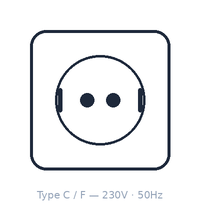
| Plug Type | Type C and F · 230V / 50Hz |
| Driving Side | Right |
| International Driving Permit (IDP) | Recommended — see IDP guide |
| Schengen Member | Yes — not in the EU, but Schengen since 2001 (EEA member) |
| Emergency Number | 112 |
Entry Requirements for Iceland
Iceland is not a member of the European Union but is a full Schengen member (since 2001) and part of the European Economic Area (EEA). It uses its own currency — the Icelandic króna — and sets its own trade and fisheries policies independently of the EU. Entry requirements follow standard Schengen rules.
Visa-Exempt Visitors (US, UK, Canada, Australia, and Others)
Citizens of 59 visa-exempt countries — including the United States, United Kingdom, Canada, Australia, New Zealand, Japan, and most Latin American nations — can enter Iceland without a visa for short stays of up to 90 days within any 180-day period. This is the standard Schengen 90/180-day rule, and it applies across all 29 Schengen countries combined, not just Iceland.
To enter as a visa-exempt visitor, your passport must meet two requirements. It must have been issued within the last 10 years at the time of entry, and it must remain valid for at least three months after your planned departure date from the Schengen area.
At the border, Icelandic officials may ask for proof of accommodation, proof of sufficient funds, and evidence of onward or return travel. These documents aren’t always requested, but having them available avoids potential complications.
Visitors Who Need a Visa
If your country is not on the visa-exempt list, you’ll need to apply for a Schengen short-stay visa (Type C) through the Icelandic embassy or consulate in your home country before traveling. This visa allows stays of up to 90 days within a 180-day period and typically costs €80 for adults.
Use our Europe Travel Planner to find out exactly what your nationality requires.
What’s Changing at Icelandic Borders in 2026
Two major systems are transforming how non-EU visitors enter Iceland and the rest of the Schengen area. Both are rolling out in 2026, and travelers need to be aware of the timeline.
Entry/Exit System (EES)
The Entry/Exit System began its phased rollout on October 12, 2025, and is expected to be fully operational at all Schengen border crossings by April 10, 2026. EES replaces the old passport-stamping process with a digital system that records biometric data — fingerprints and facial images — along with your passport details and entry/exit dates.
The first time you enter the Schengen area under EES, border officials will collect your fingerprints and take a facial photograph. Once registered, the data stays valid for three years, and subsequent entries only require identity verification rather than a full re-registration.
For Iceland, EES is relevant at Keflavík International Airport (KEF), the country’s only major international airport. The vast majority of visitors enter through Keflavík.
ETIAS — Europe’s New Travel Authorization
The European Travel Information and Authorization System (ETIAS) is expected to launch in late 2026, likely in October or November. Once operational, all visa-exempt travelers — including Americans, Britons, Canadians, and Australians — will need to apply for ETIAS authorization before boarding a flight to Iceland or any other Schengen country.
The ETIAS application is completed online and takes roughly 10 minutes. The fee is €20 for travelers aged 18 to 70 (free for those younger or older). Once approved, ETIAS is valid for three years or until your passport expires, whichever comes first. It covers all 29 Schengen countries.
Getting to Iceland
Iceland sits in the middle of the North Atlantic, roughly equidistant between North America and Northern Europe — which makes it a natural transatlantic stopover as well as a destination in itself.
By Air
Keflavík International Airport (KEF) is Iceland’s only major international airport, located about 50 kilometers (45 minutes) southwest of Reykjavík. Icelandair and PLAY are the two Icelandic carriers, with Icelandair offering its famous “Stopover” program — up to seven nights in Iceland at no extra airfare on transatlantic routes between North America and Europe. Direct flights connect Keflavík to major cities across the US (New York, Boston, Washington DC, Denver, Seattle, and more), Canada (Toronto, Montreal), the UK (London, Manchester, Edinburgh), and continental Europe. The Flybus airport shuttle reaches Reykjavík’s BSÍ bus terminal in about 45 minutes (~3,500 ISK one-way).
By Ferry
The Smyril Line ferry Norræna connects Seyðisfjörður (eastern Iceland) to Hirtshals (Denmark) via Tórshavn (Faroe Islands). The crossing takes roughly 2–3 days depending on the route and is the only way to bring your own vehicle to Iceland. Sailings run weekly in summer, with fewer departures in winter. It’s a scenic but slow option — more of an experience than a practical transport choice.
Getting Around Iceland
Iceland has no railway system. Getting around means driving, flying domestically, or taking buses — and for most visitors, a rental car is the way to go. The country’s attractions are spread across vast distances with minimal public transport in between.
Driving (The Primary Way to See Iceland)
Self-drive road trips are the defining Iceland travel experience. The Ring Road (Route 1) circles the entire island in 1,332 kilometers, connecting all major towns and most of the country’s top attractions. It’s well-maintained, mostly paved, and drivable in any standard vehicle during summer — though a 4WD is recommended for winter and essential for Highland F-roads.
Iceland drives on the right. Speed limits are 50 km/h in urban areas, 90 km/h on paved rural roads (including most of the Ring Road), and 80 km/h on gravel roads. Iceland has one of Europe’s strictest drink-driving limits at 0.02% blood alcohol — effectively zero tolerance. Headlights must be on at all times. Seatbelts are mandatory for all passengers.
| Service | Best For | Cost Range | Notes |
|---|---|---|---|
| Rental Car (standard) | Ring Road, Golden Circle, South Coast | 8,000–15,000 ISK/day | Book early for summer · Standard car fine for paved roads June–August · Include CDW insurance |
| Rental Car (4WD/SUV) | Winter driving, Highlands, F-roads | 15,000–35,000 ISK/day | Required for F-roads (Highland tracks) · Essential in winter · Gravel protection insurance recommended |
| Domestic Flight | Akureyri, Westfjords, Egilsstaðir | 8,000–25,000 ISK | Icelandair Connect · Reykjavík domestic airport to Akureyri ~45min · Saves 5+ hours vs driving |
| Strætó Bus (intercity) | Budget travel, Reykjavík–Akureyri | 1,000–10,000 ISK | Limited routes and frequency · No service to many attractions · Summer highland buses available |
| Day Tour (bus) | Golden Circle, South Coast, ice caves | 10,000–40,000 ISK | Convenient for non-drivers · Includes guide · Most depart from Reykjavík |
| Campervan | Budget accommodation + transport combo | 20,000–50,000 ISK/day | Popular option · Campsite fees ~2,000–3,000 ISK/night · Freedom to camp (designated sites) |
Critical Driving Rules
Off-road driving is illegal. Iceland’s moss-covered lava fields take decades to recover from tire damage. Fines can exceed 350,000 ISK (roughly $2,900). Always stay on marked roads and tracks. F-roads (Highland roads marked with “F” prefix) are legal but require a 4WD vehicle and are typically open only June through September — check road.is for current conditions.
One-lane bridges: Common on the Ring Road, especially in eastern and northern Iceland. The first car to arrive has right of way. Approach slowly and check for oncoming traffic.
Sheep on roads: Free-roaming sheep graze near roads throughout summer. They’re unpredictable and may dart across without warning. Hitting a sheep makes you liable for compensation to the farmer.
Wind: Iceland’s wind is extreme. Car doors can be ripped off hinges. Always hold your door firmly when opening, especially in open areas. Park facing into the wind when possible.
Only toll: The Vaðlaheiðargöng tunnel near Akureyri (~1,990 ISK for passenger cars, payable online). All other roads are toll-free.
International Driving Permit: Most licenses from Europe, North America, and other major countries are valid in Iceland. An IDP is recommended if your license is not in Latin script. You must be at least 20 to rent a car (age 23 for larger vehicles at most agencies). See our International Driving Permit guide for details.
Where to Go in Iceland
Iceland’s attractions are almost entirely nature-based — and they’re extraordinary. The country is essentially one enormous geological exhibit.
Reykjavík
The world’s northernmost capital is tiny by global standards (~140,000 in the metro area) but punches far above its weight in culture, food, and nightlife. Hallgrímskirkja church dominates the skyline — its tower offers panoramic views (1,200 ISK). Laugavegur street is the main shopping and dining strip. Harpa Concert Hall, a shimmering glass landmark on the harbor, hosts the Iceland Airwaves music festival (November). The National Museum and the Settlement Exhibition (built around a 10th-century Viking longhouse) cover Iceland’s history. Reykjavík’s food scene has exploded — from traditional lamb soup and fermented shark (hákarl, more of a dare than a dish) to New Nordic fine dining. The city’s weekend nightlife, where locals go out late and stay out later, is legendary for a capital this small.
The Golden Circle
Iceland’s most popular day trip from Reykjavík covers three iconic sites in a 300-kilometer loop. Þingvellir National Park (UNESCO) is where the North American and Eurasian tectonic plates visibly drift apart — you can walk (or snorkel in the crystal-clear Silfra fissure) between continents. Geysir geothermal area has Strokkur, which erupts every 5–10 minutes. Gullfoss (“Golden Falls”) is a massive two-tiered waterfall plunging into a canyon. All three are free to visit (parking fees at Þingvellir and Geysir: ~750 ISK). The Golden Circle is drivable in 4–6 hours but worth a full day.
South Coast
The drive from Reykjavík along the south coast is Iceland’s greatest-hits reel. Seljalandsfoss waterfall lets you walk behind the curtain of water. Skógafoss drops 60 meters in a perfect rectangle. The Reynisfjara black sand beach (with basalt columns and crashing waves — stay well back from the sneaker waves, which have killed visitors) is otherworldly. Vík, Iceland’s southernmost village, anchors the area. Further east, Jökulsárlón glacial lagoon has icebergs calving from Breiðamerkurjökull glacier, floating past you, and washing up on Diamond Beach — black sand glittering with ice chunks. This stretch is drivable as a long day trip or better as a 2–3 day itinerary.
The Westfjords
Iceland’s most remote and least-visited region is a dramatic peninsula of deep fjords, vertical sea cliffs, and gravel roads. Dynjandi, a 100-meter cascading waterfall in a wedding-cake shape, is worth the long drive alone. Látrabjarg sea cliffs — Europe’s westernmost point — are home to millions of nesting seabirds, including puffins (summer only). The Westfjords require more time, a sturdy vehicle, and willingness to embrace slow travel on winding roads. Most accessible June–September.
Akureyri and the North
Iceland’s “capital of the north” (~20,000 people) is the largest town outside the Reykjavík area and a gateway to northern attractions. Whale watching tours depart from nearby Húsavík — Iceland’s best spot for humpback whales (90%+ success rate in summer). Goðafoss waterfall (“Waterfall of the Gods”) is a 30-meter wide horseshoe of cascading water. The Mývatn area east of Akureyri offers volcanic craters, lava formations, geothermal pools (the Mývatn Nature Baths, a less crowded alternative to the Blue Lagoon), and the Dimmuborgir lava labyrinth. Reach Akureyri by domestic flight (45 minutes from Reykjavík) or a full day’s drive on the Ring Road.
The Blue Lagoon and Reykjanes Peninsula
The Blue Lagoon is Iceland’s most famous attraction — a milky-blue geothermal pool set in a black lava field near Keflavík Airport. It’s artificial (fed by runoff from the nearby Svartsengi geothermal power plant) but visually stunning and genuinely relaxing. Advance booking is mandatory; walk-ins are not accepted. Prices start from around 9,990 ISK (~$75) for basic entry. The Reykjanes Peninsula around it has been the site of volcanic eruptions since late 2023, with the town of Grindavík evacuated. Check current conditions — some areas may have restricted access. The new Sky Lagoon, closer to Reykjavík, offers a similar geothermal experience with ocean views.
Landmannalaugar and the Highlands
The Icelandic Highlands — the vast, uninhabited interior — are accessible only in summer (typically late June to September) via F-roads requiring 4WD. Landmannalaugar is the crown jewel: a valley of multicolored rhyolite mountains in shades of pink, green, yellow, and rust, with natural hot springs for bathing. The Laugavegur hiking trail (55 km, 4 days) from Landmannalaugar to Þórsmörk is often called one of the world’s best treks. The Highlands also include Askja caldera, Kerlingarfjöll geothermal mountains, and Þórsmörk valley. These are advanced destinations requiring proper preparation, supplies, and navigation skills.
How Much Does Iceland Cost?
Iceland is expensive. It’s consistently one of Europe’s priciest countries, and it’s not subtle about it. A beer at a Reykjavík bar can cost $12. A lamb stew at a mid-range restaurant runs $30–40. A Blue Lagoon visit starts at $75. But the best things in Iceland — waterfalls, hot springs, volcanic landscapes, the northern lights — are free or nearly free. Smart planning makes it manageable. The Icelandic króna trades at roughly 130 ISK per dollar and 140 per euro in early 2026.
💰 Iceland Daily Budget Ranges (per person)
| Budget | 15,000–22,000 ISK (~€107–157) | Hostel/campervan, supermarket meals, self-drive, free attractions |
| Mid-Range | 30,000–50,000 ISK (~€215–360) | Guesthouse/hotel, mix of dining out and cooking, rental car, one paid tour |
| Comfort | 65,000+ ISK (~€465+) | Boutique hotel, restaurants, guided tours, Blue Lagoon, activities |
Accommodation: Hostel dorms run 5,000–8,000 ISK per night. Guesthouses (Iceland’s most common mid-range option) cost 15,000–25,000 ISK for a double room. Hotels in Reykjavík average 25,000–45,000 ISK. Campervans combine accommodation and transport (~20,000–50,000 ISK/day plus campsite fees of 2,000–3,000 ISK). Camping with your own tent costs 2,000–3,000 ISK per person per night at designated sites.
Eating out: Eating at restaurants adds up fast. A main course at a mid-range restaurant costs 3,500–6,000 ISK. A fast-food meal or basic café lunch runs 2,000–3,000 ISK. The budget strategy: cook your own meals using ingredients from Bónus or Krónan supermarkets (look for the pig logo — Bónus is the budget champion). Hot dogs from Bæjarins Beztu in Reykjavík (590 ISK) are a beloved local institution. Beer in a bar costs 1,400–1,800 ISK. Tap water is excellent — Icelandic water comes from glacial springs and is among the world’s purest.
Transport: A compact rental car costs 8,000–15,000 ISK per day in summer (book months ahead). Gas averages ~203 ISK per liter (post-2026 tax change). The new per-kilometer road tax (6.95 ISK/km) is typically included in rental pricing.
Activities: Most natural attractions are free (waterfalls, geysers, beaches, hiking). Paid activities include the Blue Lagoon (from ~9,990 ISK), glacier hiking (~15,000–20,000 ISK), whale watching (~12,000–14,000 ISK), Silfra snorkeling (~22,000 ISK), and ice cave tours (~18,000–25,000 ISK).
Power and Connectivity
Iceland uses Type C and Type F power sockets — the standard continental European round two-pin plugs. Voltage is 230V at 50Hz. If you’re coming from the US, Canada, or another country that uses different plug types, you’ll need a travel adapter. Most modern phone and laptop chargers are dual-voltage (check the label for “INPUT: 100–240V”) and need only a plug adapter, not a voltage converter.
Iceland has good 4G coverage along the Ring Road, around towns, and in populated areas. Coverage drops in the Highlands, Westfjords, and remote interior. Free Wi-Fi is common in hotels, cafés, and even some gas stations. For a road trip, consider a local SIM (Síminn, Vodafone Iceland, Nova) or download offline maps before heading into rural areas.
📱 Need mobile data? An eSIM is the easiest way to stay connected in Europe — no SIM swapping, activate before you land. Compare the best eSIM providers for Europe →
Essential Tips for Visiting Iceland
Check road conditions daily: Visit road.is (or the Vegagerðin app) before every drive. Road closures for weather, wind, and snow are common and change rapidly. The 1777 hotline provides English-language road assistance.
Layer everything: Iceland’s weather changes constantly — sun, rain, hail, and wind within a single hour is normal. Bring waterproof outer layers, warm mid-layers, and good hiking boots. Cotton is useless when wet; stick to wool and synthetics.
Volcanic activity: The Reykjanes Peninsula has experienced ongoing volcanic eruptions since late 2023. These are monitored and managed, but check the Icelandic Meteorological Office (vedur.is) for updates and any restricted zones before visiting that area.
Hot springs etiquette: Always shower thoroughly (without a swimsuit) before entering any pool or hot spring — this is a strict cultural norm, not optional. Public pools and geothermal baths are a daily ritual for Icelanders. Water is naturally heated by geothermal energy, so running hot water may smell faintly of sulfur — it’s safe.
No tipping: Service is included in all prices. Tipping is not expected anywhere in Iceland.
Tap water: Icelandic cold tap water is exceptional — some of the purest in the world, sourced from glacial springs. Never buy bottled water. Hot tap water comes from geothermal sources and has a slight sulfur smell — safe to drink but better cold.
Alcohol: Like Norway and Sweden, Iceland has a state alcohol monopoly. The Vínbúðin chain is the only place to buy alcohol above 2.25% ABV. Supermarkets sell only near-beer. Vínbúðin stores have limited hours (typically closed Sundays) — plan ahead. Bar prices are steep (~1,500 ISK per beer).
Northern lights: Visible September through March, with peak viewing in October and February–March. You need dark skies and clear weather — both unpredictable. Drive away from Reykjavík’s light pollution. No viewing is guaranteed, but Iceland’s latitude and low light pollution make it one of the world’s best spots. The Icelandic Met Office aurora forecast (vedur.is) helps with timing.
Midnight sun: From late May through July, Iceland barely gets dark. Around the summer solstice (June 21), the sun dips to the horizon but doesn’t fully set. This is extraordinary for photography and maximizing daylight — but bring an eye mask for sleeping.
Best time to visit: Summer (June–August) for the midnight sun, road access (including Highlands), puffins, whale watching, and the most stable weather. Winter (October–March) for northern lights, ice caves, and lower prices — but shorter days, road closures, and cold. September and May are shoulder seasons with fewer crowds.
Frequently Asked Questions
Do I need a visa to visit Iceland?
Citizens of 59 countries — including the US, UK, Canada, and Australia — can visit Iceland visa-free for up to 90 days within any 180-day period under the Schengen 90/180-day rule. This limit is shared across all 29 Schengen countries. If you’re unsure, use the Europe Travel Planner at schengentraveler.com.
Is Iceland in the EU?
No. Iceland is not a member of the European Union. It is, however, a member of the European Economic Area (EEA) and a full Schengen participant since 2001. It uses its own currency — the Icelandic króna (ISK) — not the euro.
Do I need a 4WD rental car?
For summer trips on the Ring Road and Golden Circle, a standard car is fine. For winter travel, a 4WD is strongly recommended due to snow, ice, and unpredictable conditions. For Highland F-roads (open ~June–September only), a 4WD is legally required — rental companies will not cover damage to a 2WD on F-roads.
When is the best time to see the northern lights?
September through March, with the best chances in October and February–March. You need dark skies and clear weather. Drive away from Reykjavík for better viewing. Check the aurora forecast at vedur.is.
How expensive is Iceland?
Very. It’s one of Europe’s priciest countries. A mid-range daily budget is 30,000–50,000 ISK per person (~$230–385). Cook with supermarket groceries (Bónus is the cheapest chain), camp or use hostels, and take advantage of the fact that Iceland’s best attractions — waterfalls, geysers, beaches — are free.
Can I drive the Ring Road in a day?
Technically possible but strongly not recommended. The Ring Road is 1,332 kilometers and takes 16–17 hours of nonstop driving. Most people take 7–10 days to enjoy it properly, stopping at attractions along the way. A rushed 5-day loop is possible but tight.
Do I need to book the Blue Lagoon in advance?
Yes. The Blue Lagoon requires advance reservations — walk-ins are not accepted. Book well ahead during summer and holidays, as slots sell out. Prices start from ~9,990 ISK. The Sky Lagoon (closer to Reykjavík) is a good alternative.
Is it safe to drink the tap water?
Absolutely. Iceland’s cold tap water is some of the purest in the world — sourced from glacial springs and safe to drink everywhere. Never buy bottled water. Hot tap water has a slight sulfur smell from geothermal heating but is completely safe.
🌍 Plan Your Trip to Iceland
Entry requirements, visa status, and a full travel briefing — personalized for your nationality.
Use the Europe Travel Planner →📚 Related Articles
- Schengen 90/180-Day Rule — How the visa-free stay limit works across Europe
- ETIAS: Europe’s New Travel Authorization — What you’ll need starting late 2026
- Entry/Exit System (EES) — How the new biometric borders work
- International Driving Permit in Europe — Country-by-country IDP requirements
- Best Travel Insurance for Europe — Protect your trip
- Travel to Norway: Complete Guide
- Travel to Sweden: Complete Guide
- Travel to Denmark: Complete Guide
- All Europe Country Guides
This article is for informational purposes only and does not constitute legal or travel advice. Entry requirements can change — always verify with official government sources before traveling. Last updated: February 2026.