
Home › Country Guides › Travel to Denmark
Last Updated: August 2026
Denmark is the gateway to Scandinavia — and increasingly, its best-value introduction. With 66.2 million overnight stays in 2024 (a new record), the country that gave the world hygge, Hans Christian Andersen, and the New Nordic food revolution punches well above its weight. Copenhagen’s candy-colored Nyhavn waterfront, Tivoli Gardens, and unstoppable cycling culture are just the start — beyond the capital you’ll find Viking ship museums in Roskilde, Legoland in Billund, the raw light of Skagen where two seas collide, and the Baltic island of Bornholm. Denmark is an EU member that uses its own currency (the Danish krone, not the euro), and a full Schengen participant where the standard 90-day visa-free rules apply. Here’s everything you need to know for 2026.
🇩🇰 Denmark at a Glance
| Capital | Copenhagen |
| Population | ~6.05 million (2026) |
| Currency | Danish Krone (DKK) — not the euro |
| Language | Danish |
| Time Zone | CET (UTC+1) · CEST in summer (UTC+2) |
| Plug Type | Type C, E, F, and K · 230V / 50Hz |
| Driving Side | Right |
| International Driving Permit (IDP) | Recommended — see IDP guide |
| Schengen Member | Yes — EU member since 1973, Schengen since 2001 |
| Emergency Number | 112 (EU-wide) |
Entry Requirements for Denmark
Denmark is a founding member of the European Union (since 1973) and a full Schengen member (since 2001). Despite EU membership, Denmark uses its own currency — the Danish krone — which is pegged to the euro. Entry requirements follow standard Schengen rules.
Visa-Exempt Visitors (US, UK, Canada, Australia, and Others)
Citizens of 59 visa-exempt countries — including the United States, United Kingdom, Canada, Australia, New Zealand, Japan, and most Latin American nations — can enter Denmark without a visa for short stays of up to 90 days within any 180-day period. This is the standard Schengen 90/180-day rule, and it applies across all 29 Schengen countries combined, not just Denmark.
To enter as a visa-exempt visitor, your passport must meet two requirements. It must have been issued within the last 10 years at the time of entry, and it must remain valid for at least three months after your planned departure date from the Schengen area.
At the border, Danish officials may ask for proof of accommodation, proof of sufficient funds, and evidence of onward or return travel. These documents aren’t always requested, but having them available avoids potential complications.
Visitors Who Need a Visa
If your country is not on the visa-exempt list, you’ll need to apply for a Schengen short-stay visa (Type C) through the Danish embassy or consulate in your home country before traveling. This visa allows stays of up to 90 days within a 180-day period and typically costs €80 for adults. The application requires travel medical insurance with minimum €30,000 coverage — see our guide to the best travel insurance for Europe for policies that meet Schengen visa requirements.
For longer stays — work, study, or family reunification — you’ll need a Danish residence permit, applied for separately. Use our Europe Travel Planner to find out exactly what your nationality requires.
🛂 Need a Schengen visa for Denmark?
If your nationality isn’t visa-exempt, iVisa handles your Schengen visa application end to end — forms, appointment guidance, and document review before you submit.
Start your application on iVisa →Affiliate partner — we may earn a commission at no extra cost to you.
What’s Changing at Danish Borders
Two major systems are transforming how non-EU visitors enter Denmark and the rest of the Schengen area. One is fully in place; the other has been pushed back.
Entry/Exit System (EES)
The Entry/Exit System completed its phased rollout and has been fully operational at all Schengen border crossings since April 2026. EES replaced the old passport-stamping process with a digital system that records biometric data — fingerprints and facial images — along with your passport details and entry/exit dates.
The first time you enter the Schengen area under EES, border officials will collect your fingerprints and take a facial photograph. Once registered, the data stays valid for three years, and subsequent entries only require identity verification rather than a full re-registration.
For Denmark, EES is most relevant at Copenhagen Airport (CPH), the country’s main international hub. If you’re arriving from another Schengen country like Sweden, Germany, or Norway, there are no routine border checks.
ETIAS — Europe’s New Travel Authorization
The European Travel Information and Authorization System (ETIAS) will require visa-exempt travelers — including Americans, Britons, Canadians, and Australians — to apply for a travel authorization online before boarding a flight or ferry to Denmark or any other Schengen country. The EU removed the previously confirmed Q4 2026 launch target in July 2026, and 2027 is now the most likely launch year.
The ETIAS application is completed online and takes roughly 10 minutes. The fee is €20 for travelers aged 18 to 70 (free for those younger or older). Once approved, ETIAS is valid for three years or until your passport expires, whichever comes first. It covers all 29 Schengen countries.
Getting to Denmark
Denmark’s position bridging Scandinavia and continental Europe makes it one of the easiest Nordic countries to reach from almost anywhere.
By Air
Copenhagen Airport (CPH) is Scandinavia’s busiest airport and a major European hub, with direct flights from cities across Europe, North America, Asia, and the Middle East. SAS, Norwegian, and numerous budget carriers operate from CPH. Billund Airport (BLL) in central Jutland serves Legoland visitors and has growing European connections. Aalborg (AAL) and Aarhus (AAR) have smaller networks. From Copenhagen Airport, the metro reaches the city center in about 15 minutes for just 27 DKK.
By Train
Denmark has excellent rail connections to its neighbors. The Öresund trains run every 20 minutes between Copenhagen and Malmö, Sweden (35 minutes). DSB EuroCity Express trains connect Copenhagen to Hamburg, Germany (~4.5 hours), with onward connections to the rest of Europe. The new EuroNight overnight train from Basel to Copenhagen launches in spring 2026. SJ trains link Copenhagen to Stockholm (~5 hours, change at Malmö during 2026).
By Ferry
Ferries connect Denmark to Germany (Rødby–Puttgarden, Gedser–Rostock), Norway (Hirtshals–Kristiansand/Bergen/Stavanger, Frederikshavn–Oslo), and Sweden (Frederikshavn–Gothenburg, Helsingør–Helsingborg). The Helsingør–Helsingborg ferry crosses the narrowest point of the Øresund in just 20 minutes, running every 15 minutes. The Fehmarn Belt Fixed Link tunnel between Denmark and Germany is under construction and expected to open around 2029, which will dramatically shorten Copenhagen–Hamburg travel times.
By Car
Denmark connects to Sweden via the Öresund Bridge (toll ~500 DKK per car, payable by card). From Germany, you can drive across the border at Padborg/Kruså — no toll, Schengen-internal border, no routine passport checks. The Storebælt Bridge (~250 DKK) connects Jutland (the mainland) to Zealand (where Copenhagen is), making it part of most cross-Denmark drives.
Getting Around Denmark
Denmark is compact — roughly the size of Massachusetts and New Hampshire combined — which means most destinations are reachable within 3–5 hours by train. Public transport is modern, reliable, and integrated across modes.
Trains
DSB (Danske Statsbaner) is the national rail operator, running InterCity and InterCityLyn (express) trains between all major cities. The network radiates from Copenhagen, with main routes to Odense (~1.5 hours), Aarhus (~3 hours), and Aalborg (~5 hours). Arriva operates regional services in Jutland. DSB uses a tiered pricing system — “Orange” advance-purchase tickets offer the best fares (from as low as ~90–120 DKK for major routes), while full-price tickets cost significantly more. Book early through dsb.dk for the cheapest options.
| Service | Best For | Cost Range | Notes |
|---|---|---|---|
| DSB InterCityLyn | Copenhagen–Aarhus, Odense, Aalborg | 90–450 DKK | CPH–Aarhus ~3h · CPH–Odense ~1h 30min · Book “Orange” tickets early for best price |
| Öresund Train | Copenhagen–Malmö (Sweden) | 115–135 DKK | Every 20 minutes · 35-minute crossing · Same ticket for metro connection |
| DSB EuroCity Express | Copenhagen–Hamburg (Germany) | 299–800 DKK | ~4h 30min · Onward connections to Berlin, Munich, Basel |
| Arriva Regional | Jutland local routes | 40–200 DKK | Covers smaller Jutland towns · Connects with DSB at major stations |
| FlixBus | Budget intercity travel | 49–250 DKK | Copenhagen–Aarhus ~3h 45min · Wi-Fi · Supplements rail network |
| Domestic Flight | Copenhagen–Aalborg, Bornholm | 300–1,500 DKK | DAT and SAS · CPH–Bornholm ~35min · Mainly useful for Bornholm |
Local Transit
Copenhagen’s transit system is one of Europe’s best. The driverless Metro runs 24/7 with trains every 2–4 minutes during peak times. Lines M1 and M2 serve the city core and airport; the Cityringen (M3) loops through central Copenhagen; M4 extends to the Nordhavn development area. The S-tog suburban rail network covers greater Copenhagen. Buses and harbor ferries fill in the gaps. All modes use the same zonal ticketing — a single 2-zone ticket costs about 24 DKK. The Copenhagen Card (from 469 DKK for 24 hours) includes unlimited transit plus free entry to 80+ attractions.
Cycling
Denmark — and Copenhagen in particular — is one of the world’s great cycling countries. Copenhagen has more bikes than cars and over 400 kilometers of dedicated cycling infrastructure. Renting a bike is arguably the best way to experience the city. Bycyklen (city bikes) are available throughout Copenhagen, and numerous rental shops offer day rentals from around 70–100 DKK. Most Danish cities are flat and bike-friendly, and drivers are accustomed to sharing the road with cyclists.
Driving
Denmark’s roads are well-maintained and driving is straightforward — the country is flat, well-signed, and relatively uncongested outside Copenhagen. A car is most useful for exploring rural Jutland, the western coastline, and smaller islands.
Denmark drives on the right. Speed limits are 50 km/h in urban areas, 80 km/h on rural roads and dual carriageways, and 110–130 km/h on motorways. The blood alcohol limit is 0.05% — more lenient than Norway and Sweden’s 0.02%, but still strictly enforced. Headlights (dipped beam or daytime running lights) must be on at all times, year-round.
Winter driving: Winter tires are not legally required in Denmark (unlike Norway and Sweden), though they’re recommended. Studded tires are allowed November 1–April 15. Denmark’s flat terrain and mild coastal winters make ice less of an issue than in other Nordic countries, but icy conditions can still occur.
Cyclists everywhere: Denmark has more cyclists per capita than almost anywhere in Europe. Always check your mirrors and blind spots when turning right — cyclists have priority and ride in dedicated lanes between the sidewalk and the road. Failing to yield to a cyclist is taken very seriously.
International Driving Permit: US, Canadian, Australian, and all EU/EEA licenses are valid in Denmark. An IDP is recommended for licenses not in Latin script. You must be at least 21 to rent a car. See our International Driving Permit guide for details.
Where to Go in Denmark
Denmark packs a surprising amount of variety into a compact space — cosmopolitan cities, Viking heritage, coastal wilderness, islands, and the birthplace of Lego.
Copenhagen
Denmark’s capital consistently ranks among the world’s most livable cities. Nyhavn’s colorful 17th-century townhouses along the canal are the iconic image, but the city goes much deeper. Tivoli Gardens — opened in 1843 — is the world’s second-oldest operating amusement park and a Copenhagen institution. The Little Mermaid statue on the harbor is smaller than most expect but still draws crowds. Freetown Christiania is a self-governing commune with a counterculture history and its own rules. The National Museum is free. The Round Tower (Rundetårn) offers panoramic views for 40 DKK. The Meatpacking District (Kødbyen) has transformed into a dining and nightlife hub. And the city’s metro art stations, canal-side architecture, and relentless cycling culture make simply moving through Copenhagen an experience in itself.
Aarhus
Denmark’s second-largest city (European Capital of Culture 2017) is a vibrant university town with a thriving arts scene. ARoS Art Museum — crowned with Olafur Eliasson’s Rainbow Panorama walkway — is one of Northern Europe’s most impressive museums. Den Gamle By (The Old Town) is an open-air museum reconstructing Danish urban life from the 1600s to the 1970s. Aarhus has its own Latin Quarter, a growing food scene, and easy access to the forests and beaches of the Mols Bjerge National Park. The new Aarhus Light Rail connects the city with surrounding areas.
Odense
The birthplace of Hans Christian Andersen has built an entire cultural identity around its most famous son. The Hans Christian Andersen Museum — redesigned by architect Kengo Kuma and reopened in 2021 — is a major draw, with an immersive underground experience that brings the fairy tales to life. Odense is also a charming mid-sized city in its own right, with a well-preserved medieval center, a growing food scene, and excellent cycling infrastructure. It’s an easy 1.5-hour train ride from Copenhagen.
Skagen
At Denmark’s northernmost tip, the Skagerrak and Kattegat seas meet in a visible collision of waves at Grenen — you can literally stand with one foot in each sea. Skagen’s extraordinary light has attracted painters since the 19th century, and the Skagens Museum houses their luminous works. The town itself is charming, with yellow-painted houses, excellent seafood restaurants, and wide sandy beaches. The buried church (Tilsandede Kirke), half-swallowed by sand dunes, is a haunting reminder of nature’s power.
Bornholm
This Baltic island — reachable by ferry from Copenhagen (there’s an express catamaran) or a 35-minute flight — is Denmark’s sunniest spot and an emerging food destination. Medieval round churches (rundkirker) dot the landscape, fishing villages like Gudhjem and Svaneke serve fresh smoked herring, and the Hammershus fortress ruins are the largest in Northern Europe. Bornholm has its own microclimate, distinct pottery traditions, and a growing organic food scene. It’s increasingly known as “Scandinavia’s Bali” for its relaxed pace and artisan culture.
Roskilde
Just 30 minutes west of Copenhagen by train, Roskilde is home to two major attractions. The Viking Ship Museum displays five original Viking vessels recovered from Roskilde Fjord and offers summer sailing experiences on reconstructed ships. Roskilde Cathedral — a UNESCO World Heritage Site — has been the burial church of Danish monarchs since the 15th century, with 39 kings and queens interred in its ornate chapels. The city also hosts the legendary Roskilde Festival (late June/early July), Northern Europe’s largest music festival.
The West Coast and Jutland
Denmark’s Jutland peninsula — the mainland — offers a completely different experience from Copenhagen. The west coast is wild, windswept, and largely undeveloped, with enormous beaches, sand dunes, and holiday house rentals that are hugely popular with German and Dutch visitors. Ribe, founded around 700 AD, claims to be Scandinavia’s oldest town, with Viking heritage sites and a beautifully preserved medieval center. Billund is home to Legoland and the LEGO House experience center. Aalborg, Jutland’s largest city, has a revitalized waterfront and a strong nightlife scene centered on Jomfru Ane Gade.
How Much Does Denmark Cost?
Denmark is expensive — there’s no getting around it. Copenhagen ranks among Europe’s pricier capitals, and dining and drinking add up quickly. However, Denmark is slightly cheaper than Norway overall, and strategic choices (free museums, lunch specials, supermarket meals) can keep costs manageable. The Danish krone has been relatively stable against the euro (pegged at ~7.46 DKK per EUR) and trades at roughly 6.3 DKK per dollar in early 2026.
💰 Denmark Daily Budget Ranges (per person)
| Budget | 650–900 DKK (~€87–120) | Hostel dorms, supermarket meals, cycling, free museums |
| Mid-Range | 1,200–1,800 DKK (~€160–240) | 3-star hotel, lunch specials + one restaurant dinner, trains, attractions |
| Comfort | 2,500+ DKK (~€335+) | 4-star hotel, restaurants, guided tours, Copenhagen Card |
Accommodation: Hostel dorms in Copenhagen run 200–350 DKK per night. A mid-range hotel double room costs 800–1,200 DKK. Prices drop significantly outside Copenhagen — Jutland and the smaller cities are noticeably cheaper. Holiday house rentals on the west coast are a popular and often affordable option for families.
Eating out: Lunch is the smart budget move. Many restaurants offer lunch deals (frokost tilbud) at 100–150 DKK. A mid-range dinner main course runs 200–350 DKK. Street food markets like Copenhagen’s Reffen (Refshaleøen) offer meals from 80–120 DKK. A cappuccino costs about 40 DKK. A beer in a bar is 55–70 DKK. Supermarkets (Netto, Lidl, Rema 1000) are the budget option. Unlike Sweden and Norway, Denmark sells alcohol in regular supermarkets — no state monopoly.
Transport: A Copenhagen single ticket costs 24 DKK. The Copenhagen Card (from 469 DKK/24 hours) includes unlimited transit and 80+ attraction entries — excellent value if you’re sightseeing. Advance-purchase DSB train tickets from ~90 DKK make intercity travel affordable.
Health and Insurance
Denmark has an excellent healthcare system. EU/EEA citizens can use the European Health Insurance Card (EHIC) or Global Health Insurance Card (GHIC) for necessary medical treatment at public facilities. Non-EU visitors aren’t covered — a hospital visit without insurance can be very expensive, and Danish medical costs are high by European standards. Comprehensive travel insurance for Europe is strongly recommended.
🏥 Cover your whole trip to Denmark with one policy
SafetyWing Nomad Insurance covers Denmark and every other stop on your route — emergency medical coverage, evacuation, travel delay, and lost luggage protection in one plan. It meets the €30,000 Schengen visa medical minimum too. Buy it before you leave or even mid-trip.
Get a quote from SafetyWing →Affiliate partner — we may earn a commission at no extra cost to you.
In a medical emergency, call 112. Pharmacies (apotek) are well-stocked and Danish pharmacists can advise on minor ailments. Denmark is extremely safe for visitors — violent crime is rare, and the main risk is petty pickpocketing in tourist areas of Copenhagen.
Power and Connectivity
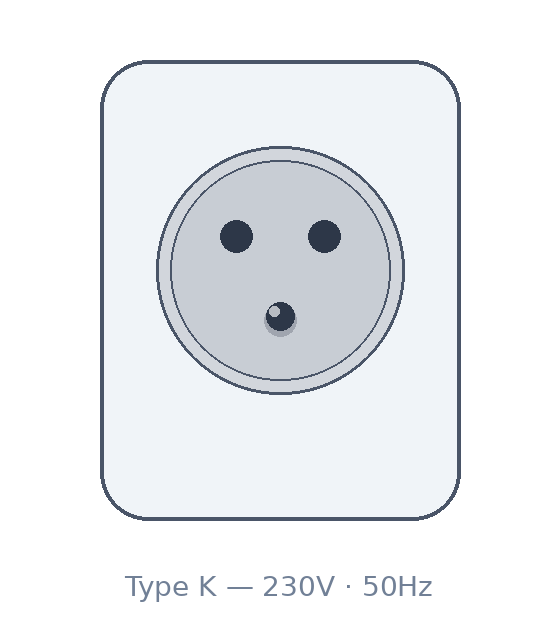
Denmark uses Type C, E, F, and K power sockets. The Type K socket (three round pins) is Denmark’s unique standard, but the two-pin Type C plug (used across most of continental Europe) fits into all Danish sockets. Voltage is 230V at 50Hz. If you’re coming from the US, Canada, or another country that uses different plug types, a standard European two-pin adapter will work. Most modern phone and laptop chargers are dual-voltage (check the label for “INPUT: 100–240V”) and need only a plug adapter, not a voltage converter.
Denmark has excellent 4G/5G coverage nationwide. Free Wi-Fi is common in hotels, cafés, trains, and public spaces. Copenhagen’s metro and most DSB trains offer free Wi-Fi. For heavy data use, consider a local SIM (TDC, Telia, 3) or international eSIM.
📱 Need mobile data? An eSIM is the easiest way to stay connected in Europe — no SIM swapping, activate before you land. Compare the best eSIM providers for Europe →
Essential Tips for Visiting Denmark
Hygge: Denmark’s concept of cozy contentment — candlelit rooms, warm drinks, blankets, good company — is genuinely woven into daily life, not just a marketing concept. You’ll notice it in the café culture, the warm interiors, and the general approach to socializing.
Cycling culture: In Copenhagen, bikes aren’t recreation — they’re primary transportation. Over half of Copenhagen residents cycle to work. Respect cycling lanes (don’t walk in them), use hand signals when turning, and expect cyclists to move fast. Renting a bike is one of the best things you can do in Copenhagen.
Smørrebrød: Denmark’s iconic open-faced sandwiches — rye bread topped with combinations like pickled herring, roast beef, or shrimp — are an art form and a must-try. Traditional smørrebrød restaurants serve them at lunch.
Alcohol: Unlike Sweden and Norway, Denmark has no state alcohol monopoly. Beer, wine, and spirits are sold in regular supermarkets at any hour. Bar prices are still high by global standards but lower than in the rest of Scandinavia.
Tipping: Not expected. Service is included in all prices. Rounding up or leaving 5–10% for exceptional service is appreciated but never obligatory.
Tap water: Excellent quality throughout Denmark. Safe to drink everywhere. Bring a reusable bottle.
Language: English is widely spoken. Nearly all Danes speak fluent English, and you’ll have no communication issues. Danish is notoriously difficult to pronounce — even other Scandinavians joke about it — so don’t worry about attempting it beyond basic pleasantries.
Greenland and the Faroe Islands: Both are part of the Kingdom of Denmark but are self-governing territories with their own entry rules. The Faroe Islands are not in the Schengen area or the EU. Greenland is not in the EU or Schengen. If you’re planning to visit either, check requirements separately.
Best time to visit: Summer (June–August) for the longest days (18+ hours of daylight), outdoor dining, and festivals. Copenhagen is particularly alive during summer. Winter (November–February) is dark and cold but atmospheric — Christmas markets, hygge, and Tivoli’s winter illumination. Spring and autumn offer fewer crowds and pleasant weather.
Frequently Asked Questions
Do I need a visa to visit Denmark?
Citizens of 59 countries — including the US, UK, Canada, and Australia — can visit Denmark visa-free for up to 90 days within any 180-day period under the Schengen 90/180-day rule. This limit is shared across all 29 Schengen countries. If you’re unsure, use the Europe Travel Planner.
Will I need ETIAS to visit Denmark in 2026?
Not in 2026. The EU removed the Q4 2026 ETIAS launch target in July 2026, and 2027 is now the most likely launch year. Once operational, visa-exempt visitors will need to apply online before traveling — €20 for adults, valid for three years, covering all 29 Schengen countries. Until ETIAS launches, you only need your valid passport. See our ETIAS guide for the latest timeline.
Is Denmark in the EU?
Yes. Denmark has been an EU member since 1973. However, it does not use the euro — the currency is the Danish krone (DKK), which is pegged to the euro at a fixed rate. Denmark is also a full Schengen member since 2001.
What currency does Denmark use?
The Danish krone (DKK). Denmark does not use the euro despite EU membership. Cards (Visa, Mastercard) are accepted virtually everywhere — Denmark is largely cashless. Some businesses don’t accept cash at all. Always pay in DKK to avoid conversion fees.
How do I get from Copenhagen to Sweden?
Öresund trains run every 20 minutes between Copenhagen and Malmö, Sweden, taking about 35 minutes. From Malmö, connect to Stockholm, Gothenburg, or the rest of Sweden. You can also drive across the Öresund Bridge (toll ~500 DKK per car).
When is the best time to visit Denmark?
Summer (June–August) for the warmest weather, longest days, and outdoor festivals — this is peak season. Tivoli’s Christmas season (mid-November to late December) is magical. Spring and autumn offer fewer crowds and lower prices. Winter is cold and dark but atmospheric.
How expensive is Denmark?
Denmark is expensive by European standards. Budget around 1,200–1,800 DKK per day (~€160–240) for mid-range travel. Use lunch specials, free museums, cycling, and supermarkets to save. The Copenhagen Card (from 469 DKK) offers excellent value for sightseeing.
Do I need travel insurance for Denmark?
Not required for entry for visa-exempt visitors, but strongly recommended — non-EU visitors aren’t covered by Denmark’s public healthcare, and private treatment costs are high. If you need a Schengen visa, travel medical insurance with at least €30,000 coverage is mandatory for your application. See our Europe travel insurance guide for options that meet the requirement.
Is the Copenhagen Card worth it?
If you plan to visit several attractions, almost certainly yes. It includes free entry to 80+ museums and attractions (including Tivoli, Rosenborg Castle, canal tours, and the Viking Ship Museum in Roskilde) plus unlimited public transport. A 72-hour card costs about 869 DKK — two or three major attractions per day make it pay for itself.
Can I use the same public transport ticket for metro, bus, and train in Copenhagen?
Yes. Copenhagen’s transit system (metro, S-tog, buses, and harbor ferries) uses the same zonal ticket system. Buy through the Rejsebillet app or at ticket machines. A single 2-zone ticket (covering central Copenhagen) costs about 24 DKK and is valid for 75 minutes across all modes.
🌍 Plan Your Trip to Denmark
Entry requirements, visa status, and a full travel briefing — personalized for your nationality.
Use the Europe Travel Planner →📚 Related Articles
- Schengen 90/180-Day Rule — How the visa-free stay limit works across Europe
- ETIAS: Europe’s New Travel Authorization — What you’ll need when it launches
- Entry/Exit System (EES) — How the new biometric borders work
- International Driving Permit in Europe — Country-by-country IDP requirements
- Best Travel Insurance for Europe — Protect your trip
- Travel to Sweden: Complete Guide
- Travel to Norway: Complete Guide
- Travel to Germany: Complete Guide
- All Europe Country Guides
This article is for informational purposes only and does not constitute legal or travel advice. Entry requirements can change — always verify with official government sources before traveling. Last updated: August 2026.