
Home › Country Guides › Travel to Portugal
Last Updated: July 2026
Portugal sits on the western edge of Europe, facing the Atlantic Ocean — a country that once built a global maritime empire and now draws travelers with its tile-covered cities, golden cliffs, world-class surf, and some of the best-value food and wine on the continent. Lisbon and Porto get the headlines, but the quieter Alentejo plains, the Douro Valley vineyards, and the wild beaches of the Algarve and the Azores give Portugal a depth that rewards slower, longer trips. Here’s everything you need to know to plan a visit in 2026.
🇵🇹 Portugal at a Glance
| Capital | Lisbon |
| Population | ~10.4 million |
| Currency | Euro (€) |
| Language | Portuguese |
| Time Zone | WET (UTC+0) · WEST in summer (UTC+1) · Azores: UTC−1 |
| Plug Type | Type C and F · 230V / 50Hz |
| Driving Side | Right |
| International Driving Permit (IDP) | Recommended — see IDP guide |
| Schengen Member | Yes |
| Emergency Number | 112 (EU-wide) |
Entry Requirements for Portugal
Portugal is part of the Schengen Area, meaning it follows the same entry rules as the other 28 Schengen member countries. What you need to enter Portugal depends on your nationality.
Visa-Exempt Visitors (US, UK, Canada, Australia, and Others)
Citizens of 59 visa-exempt countries — including the United States, United Kingdom, Canada, Australia, New Zealand, Japan, and most Latin American nations — can enter Portugal without a visa for short stays of up to 90 days within any 180-day period. This is the standard Schengen 90/180-day rule, and it applies across all 29 Schengen countries combined, not just Portugal.
To enter Portugal as a visa-exempt visitor, your passport must meet two requirements. It must have been issued within the last 10 years at the time of entry, and it must remain valid for at least three months after your planned departure date from the Schengen area.
⚠️ The 10-year rule catches people off guard. If you renewed your passport early and extra months were added, the issue date — not the expiry date — is what matters. Some travelers with technically “valid” passports have been denied boarding. Check your issue date before you book.
Not sure what applies to your nationality? Use the Europe Travel Planner to find out exactly what you need.
Visa-Required Visitors
If your country is not on the visa-exempt list, you’ll need to apply for a Schengen short-stay visa (Type C) before traveling to Portugal. This visa allows stays of up to 90 days within a 180-day period across the entire Schengen Area.
You’ll typically need to apply at the Portuguese embassy or consulate in your home country, or through an authorized visa application center. Required documents generally include a completed application form, a passport-sized photo, proof of accommodation, travel insurance with minimum €30,000 coverage, proof of financial means, and a round-trip flight reservation.
Processing times are usually 15 calendar days but can take up to 45 days during peak season. Apply early. For a full walkthrough, see the Schengen Visa Application Guide.
🛂 Need a Schengen visa for Portugal?
If your nationality isn’t visa-exempt, iVisa handles your Schengen visa application end to end — forms, appointment guidance, and document review before you submit.
Start your application on iVisa →What’s Changing at Portugal’s Borders
Two major systems are transforming how non-EU visitors enter Portugal and the rest of the Schengen area. One is already fully in place; the other arrives in late 2026.
The Entry/Exit System (EES) completed its phased rollout and has been fully operational at all Schengen border crossings since April 2026. EES replaced passport stamps with digital biometric records — fingerprints and facial scans — and automatically tracks how long you’ve stayed in the Schengen Area, flagging overstays. No more counting stamps. Your first entry under EES takes a few extra minutes for biometric registration; the data stays valid for three years, and later entries only need identity verification.
Following that, the European Travel Information and Authorization System (ETIAS) will require visa-exempt travelers (including Americans, Brits, Canadians, and Australians) to apply for a travel authorization online before arriving. The application takes roughly 10 minutes, and the fee is €20 for travelers aged 18 to 70 (free for those younger or older). Once approved, ETIAS is valid for three years or until your passport expires, and covers all 29 Schengen countries. ETIAS is expected to launch in late 2026, likely in October or November.
Bookmark our ETIAS launch date tracker for the latest updates.
Getting to Portugal
Portugal’s main international gateway is Lisbon Humberto Delgado Airport (LIS), with direct flights from across Europe, North America, South America, and Africa. TAP Air Portugal, the national carrier, operates an extensive network including direct routes from New York (JFK and Newark), Boston, Miami, Washington D.C., San Francisco, Toronto, and numerous European capitals.
Porto’s Francisco Sá Carneiro Airport (OPO) is the second-largest hub, with strong connections across Europe — particularly on low-cost carriers like Ryanair and easyJet. Faro Airport (FAO) serves the Algarve and is busy with seasonal charter and budget flights, especially from the UK and northern Europe.
Portugal’s Atlantic islands also have direct air links. Funchal Airport (FNC) in Madeira and Ponta Delgada Airport (PDL) in the Azores both receive flights from mainland Portugal and several European cities. Azores Airlines and SATA operate inter-island connections.
By land, you can enter Portugal from Spain by car, bus, or train. The Celta train runs between Porto and Vigo in Galicia. Long-distance buses operated by Rede Expressos (domestic) and FlixBus or ALSA (international) connect Lisbon and Porto to Madrid, Seville, and other Spanish cities. If you’re driving, there are no border controls between Portugal and Spain — both are Schengen members — but Portuguese motorways (autoestradas) use electronic tolling, which requires setup for rental cars.
Getting Around Portugal
Portugal is a relatively compact country and easy to navigate by public transport, though a rental car opens up the more rural areas considerably.
Trains
Comboios de Portugal (CP) runs the national rail network. The flagship Alfa Pendular (AP) is a tilting train that reaches speeds up to 220 km/h and connects Braga, Porto, Coimbra, Lisbon, and Faro — running the length of the country. Porto to Lisbon takes under 3 hours. Intercidades (IC) trains are slightly slower and cheaper, covering the same main routes plus branches to cities like Évora, Guarda, and Covilhã. Regional and InterRegional trains cover shorter routes and smaller towns.
Book through the CP website up to 60 days in advance. Promo tickets can save up to 65% — a Lisbon–Porto Alfa Pendular ticket starts as low as €12 when booked early. Seat reservations are mandatory on AP and IC trains.
Getting Around Comparison
| Mode | Best For | Cost Range | Notes |
|---|---|---|---|
| Alfa Pendular | Lisbon ↔ Porto, Faro | €12–€45 | Fastest. Book early for promo fares. Free Wi-Fi. |
| Intercidades | Main cities + branches | €10–€35 | Slightly slower but cheaper. Good network coverage. |
| Regional trains | Short hops, scenic routes | €2–€12 | No reservations. Douro Valley line is spectacular. |
| Rede Expressos (bus) | Where trains don’t go | €5–€25 | Covers the whole country. Book at rede-expressos.pt. |
| Lisbon Metro | City transport | €1.65/ride | 4 lines. Rechargeable Viva Viagem card. |
| Porto Metro | City + airport | €1.40–€4.15 | 6 lines. Andante card required. |
| Rental car | Algarve, Alentejo, rural areas | €25–€60/day | Essential for exploring beyond cities. Beware electronic tolls. |
| Uber/Bolt | City rides | €3–€15 | Widely available. Often cheaper than taxis. |
Where to Go in Portugal
Lisbon
Portugal’s capital is built across seven hills overlooking the Tagus estuary, a city of cobblestone streets, pastel-colored buildings, and rattling vintage trams. The historic neighborhoods of Alfama (the oldest district, with Fado music drifting from doorways), Baixa (the elegant grid rebuilt after the 1755 earthquake), and Belém (home to the Jerónimos Monastery, the Tower of Belém, and the legendary Pastéis de Belém bakery) form the core. But modern Lisbon is equally compelling — the LX Factory creative complex, the MAAT museum along the waterfront, and the restaurant scene in Príncipe Real and Santos have turned the city into one of Europe’s most dynamic capitals.
The Lisbon coast is an easy day trip. Cascais is a polished seaside town 30 minutes by train. Sintra — a UNESCO World Heritage cultural landscape with fairy-tale palaces like Pena Palace and the Moorish Castle perched on misty hilltops — is unmissable and reachable in 40 minutes from Rossio station.
Porto and the Douro Valley
Porto is Lisbon’s grittier, more compact counterpart in the north — a UNESCO-listed riverside city famous for its port wine cellars in Vila Nova de Gaia (lined up along the Douro across from the old town), the iconic Dom Luís I Bridge, the baroque Clérigos Tower, the São Bento railway station (with 20,000 blue-and-white azulejo tiles covering its walls), and a food scene built on francesinha sandwiches, fresh seafood, and Douro wines.
The Douro Valley, stretching east from Porto, is one of the world’s oldest demarcated wine regions (since 1756). The terraced hillsides, carved into schist slopes over centuries, produce both port wine and increasingly acclaimed still wines. A cruise or train ride up the valley — past vineyard quintas, small villages, and almond trees — is one of Portugal’s great travel experiences.
The Algarve
Portugal’s southern coast is defined by dramatic golden limestone cliffs, sea caves, and over 100 beaches. Lagos and its nearby Ponta da Piedade sea stacks are the most photographed spots. Tavira, further east, is a quieter, more authentic Algarvian town with a Roman bridge and access to the Ria Formosa lagoon system. Sagres, at the southwestern tip, draws surfers with powerful Atlantic swells and a wild, end-of-the-world atmosphere. The Algarve is also one of Europe’s top golf destinations, with over 40 courses concentrated between Vilamoura and Lagos.
⛱️ Peak season warning: The Algarve from July through August is hot, crowded, and significantly more expensive. June and September offer similar weather with fewer people.
The Alentejo
Portugal’s largest and least populated region stretches across the interior south of Lisbon — rolling plains of cork oak forests, olive groves, and wildflowers. Évora, the regional capital, is a UNESCO World Heritage city with a Roman temple, a medieval cathedral, and the macabre Chapel of Bones. The Alentejo coast (the Rota Vicentina hiking trail runs along it) is dramatically undeveloped compared to the Algarve — wild beaches backed by dunes and little else. The region’s food is arguably Portugal’s best: slow-cooked pork, migas (breadcrumb dishes), açorda (bread soup), and powerful red wines from estates that have been producing for centuries.
Central Portugal: Coimbra, Nazaré, and the Silver Coast
Coimbra is home to one of the world’s oldest universities (founded 1290), with a stunning baroque library — the Biblioteca Joanina — and a student culture that still includes black-caped academic traditions and Fado de Coimbra, a more scholarly variation of the Lisbon genre. Nazaré, on the coast, has become world-famous for its giant waves — the Praia do Norte regularly produces swells over 20 meters (the world record of 26.21 meters was ridden here). The town itself is a traditional fishing village with a funicular connecting the beach to the clifftop Sítio neighborhood. Óbidos, a walled medieval town nearby, and the Monastery of Batalha (a Gothic masterpiece and UNESCO site) are within easy reach.
Ericeira, just 35 km north of Lisbon, is one of only two World Surfing Reserves in Europe (and one of just a handful globally). The town has a dozen breaks within a short stretch of coast, from beginner-friendly beach breaks to the heavy reef at Coxos. A strong surf culture has taken root here — surf shops, board shapers, hostels, and a growing community of surfers and remote workers who came for a week and never left. The van life scene along the Ericeira and Silver Coast stretches is one of the most established in Europe.
The Azores
This archipelago of nine volcanic islands sits in the mid-Atlantic, roughly 1,500 km west of mainland Portugal. São Miguel, the largest island, is known for the Sete Cidades twin lakes (one blue, one green, filling a volcanic crater), natural hot springs at Furnas, and tea plantations — the only ones in Europe. The smaller islands offer whale watching (the Azores are one of the world’s best spots), diving, hiking through volcanic landscapes, and a level of isolation that’s increasingly rare in Europe. The islands also have a growing surf scene — São Miguel’s north coast picks up powerful Atlantic swells, and the lack of crowds means you’ll often surf alone. The Azores have become a major eco-tourism destination, and direct flights from North America (Boston, New York, Toronto) make them surprisingly accessible.
Madeira
Madeira is a subtropical island 1,000 km southwest of Lisbon, famous for its levada walking trails (irrigation channels carved into mountainsides, some dating to the 15th century), dramatic coastal cliffs, year-round mild climate, and the fortified Madeira wine. Funchal, the capital, has a lively market hall, botanical gardens, and a cable car to Monte with views across the bay. The island draws hikers, trail runners, and visitors looking for something between beach holiday and mountain adventure. Its New Year’s fireworks display is one of the world’s largest.
Practical Information for Visitors
Money and Costs
Portugal uses the euro (€). It remains one of Western Europe’s most affordable destinations, though Lisbon and the Algarve have become noticeably more expensive in recent years — particularly for accommodation, which has surged due to tourism demand and the short-term rental market.
As a rough guide: a meal at a local restaurant costs €8–€15 per person. A coffee (espresso, called “um café”) is €0.70–€1.20. A glass of house wine runs €2–€4. A pint of beer (imperial) is €1.50–€3. A three-course meal at a mid-range restaurant in Lisbon or Porto is €20–€35 per person. Budget travelers eating at tascas (small local taverns) and using public transport can manage on €50–€70 per day outside Lisbon.
Credit cards are widely accepted in cities, but smaller towns, markets, and some traditional restaurants are cash-preferred. ATMs (called Multibanco) are everywhere and typically offer good exchange rates — but decline the dynamic currency conversion if prompted.
Language
Portuguese is the official language. English is widely spoken in Lisbon, Porto, and tourist areas — Portugal consistently ranks among the top non-native English-speaking countries in Europe. In rural areas and among older generations, English is less common. Spanish is generally understood but using it can be received coolly — the Portuguese are proud of the distinction. A few words of Portuguese go a long way: “obrigado/obrigada” (thank you), “bom dia” (good morning), “faz favor” (please/excuse me).
Power and Connectivity
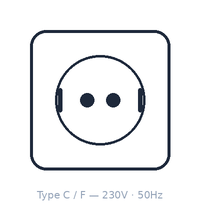
Portugal uses Type C and Type F power plugs at 230V/50Hz. If you’re traveling from the US, Canada, UK, or Australia, you’ll need a plug adapter.
Most modern electronics (phones, laptops, cameras) handle the voltage difference automatically — check the label on your charger for “INPUT: 100-240V” to confirm. Hair dryers and straighteners from North America may need a voltage converter, or it’s easier to buy or borrow one locally.
Portugal has good mobile coverage across the mainland and strong connectivity in cities. EU/EEA travelers benefit from “roam like at home” regulations with no extra charges. For visitors from outside the EU, purchasing a local SIM card or eSIM is straightforward — MEO, NOS, and Vodafone all offer prepaid options available at airports, phone shops, and some convenience stores.
📱 Need mobile data? An eSIM is the easiest way to stay connected in Europe — no SIM swapping, activate before you land. Compare the best eSIM providers for Europe →
Health and Safety
Portugal has a public healthcare system, and EU/EEA citizens can use their European Health Insurance Card (EHIC) or Global Health Insurance Card (GHIC) for treatment. Non-EU visitors should carry travel insurance with medical coverage — private hospital treatment can be expensive. Pharmacies (farmácias, marked with a green cross) are well-stocked and pharmacists can advise on minor ailments. An after-hours rotation system ensures at least one pharmacy is always open in each area.
🏥 Cover your whole European trip with one policy
SafetyWing Nomad Insurance covers Portugal and every other stop on your route — emergency medical coverage, travel delay, and lost luggage protection in one plan. Buy it before you leave or even mid-trip.
Get a quote from SafetyWing →Portugal is very safe for visitors and consistently ranks among the safest countries globally. Violent crime against tourists is extremely rare. The main concern is petty theft — pickpocketing on Lisbon’s Tram 28, in crowded tourist areas like Alfama and Baixa, and on beaches during peak season. Keep valuables secure and be aware of common distraction techniques. Outside Lisbon, crime rates are very low.
Food and Dining Culture
Portuguese cuisine is built on simplicity and quality ingredients — fresh seafood, olive oil, garlic, and bread form the foundation of most meals. The country has one of the highest per capita fish consumption rates in Europe, and it shows.
Bacalhau (salt cod) is the national obsession — the Portuguese claim there are 365 ways to prepare it, one for each day of the year. Sardines, grilled whole and eaten outdoors in summer, are a cultural institution (the Santos Populares festivals in June revolve around them). Seafood rice (arroz de marisco), cataplana (a copper-pot seafood stew from the Algarve), and grilled fish at waterfront restaurants are essential experiences.
Beyond seafood, look for cozido à portuguesa (a hearty meat-and-vegetable stew), leitão (roast suckling pig, a specialty of Bairrada near Coimbra), bifana (a pork sandwich that’s Porto and Lisbon’s answer to fast food), and francesinha (Porto’s signature — an open-faced sandwich stuffed with meats, covered in melted cheese and a beer-tomato sauce). Portuguese custard tarts — pastéis de nata — are everywhere, but the original at Pastéis de Belém in Lisbon (using a secret recipe since 1837) remains the benchmark.
Portuguese wine is arguably Europe’s most underrated. Beyond port wine and Madeira, the country produces exceptional still wines across diverse regions — Vinho Verde (crisp, slightly fizzy whites from the Minho), Douro reds, Alentejo reds, and Dão whites. Wine is served with virtually every meal, and prices are remarkable — a good bottle in a restaurant often costs €10–€20.
Mealtimes follow a southern European pattern. Lunch is served from around 12:30 to 2:30 PM and is often the main meal of the day. Dinner is typically from 7:30 to 10:00 PM. Many tascas and local restaurants serve a prato do dia (dish of the day) at lunch for €7–€10, which usually includes soup, a main course, a drink, and coffee.
Portugal: Economy and Context
Portugal has a GDP of approximately €287 billion, making it the 48th largest economy in the world. Tourism is one of the country’s most important economic sectors, contributing roughly 12% of GDP directly and supporting nearly one in four jobs when indirect impacts are included. In 2024, the sector generated record revenue of €27.7 billion from international visitors alone, with the UK, Spain, the United States, Germany, and France as the top source markets.
The country has undergone a significant economic transformation since the 2010–2014 debt crisis. Portugal’s tech sector has grown rapidly — Lisbon’s Web Summit (the world’s largest tech conference) relocated here in 2016, and the city has become a hub for startups and digital nomads. The Golden Visa program (though modified in 2023 to exclude residential real estate in most areas) and the Non-Habitual Resident (NHR) tax regime (wound down for new applicants from 2024) attracted significant foreign investment and remote workers, reshaping Lisbon’s economy and real estate market.
Portugal is a founding member of NATO, a member of the EU since 1986, and part of both the Eurozone and the Schengen Area. The minimum wage stands at €920 per month as of January 2026. Despite its economic progress, Portugal remains one of Western Europe’s lower-income countries, with living costs that — outside Lisbon — remain significantly below the EU average.
Frequently Asked Questions
Do I need a visa to visit Portugal?
Citizens of 59 countries, including the US, UK, Canada, and Australia, can visit Portugal without a visa for up to 90 days within any 180-day period. This is the standard Schengen 90/180-day rule. Other nationalities need a Schengen visa.
Will I need ETIAS to visit Portugal in 2026?
ETIAS is expected to launch in late 2026, likely October or November. Once operational, visa-exempt visitors will need to apply online before traveling — the fee is €20 for travelers aged 18 to 70, and approval is valid for three years. Until ETIAS launches, you only need your valid passport. See our ETIAS guide for the latest timeline.
Is Portugal expensive?
Portugal is one of the most affordable countries in Western Europe. Outside Lisbon, you can eat well for €8–€15 per meal, and a glass of wine costs €2–€4. Lisbon and the Algarve are pricier, but still cheaper than Paris, Rome, or Barcelona. Budget travelers can manage on €50–€70 per day.
What’s the best time to visit Portugal?
Spring (April–June) and early fall (September–October) offer the best balance of warm weather, smaller crowds, and reasonable prices. July and August are hot and busy, especially in the Algarve and Lisbon. Winter is mild in the south and the islands, making it a good low-season option — but expect rain in the north.
How do I get from Lisbon to Porto?
The Alfa Pendular train takes under 3 hours and costs €12–€45 depending on when you book. Intercidades trains are slightly slower and cheaper. Rede Expressos buses take about 3.5 hours and cost €10–€20. Domestic flights exist but aren’t worth it once you factor in airport time.
Do I need an International Driving Permit to drive in Portugal?
EU/EEA license holders do not need an IDP. Non-EU visitors should carry an IDP alongside their home license — Portuguese law requires it for non-EU licenses, and rental agencies commonly ask for one. See our IDP guide for how to get one in your country.
Is Portugal safe?
Portugal is one of the safest countries in the world — it consistently ranks in the top 10 of the Global Peace Index. Violent crime against tourists is extremely rare. Pickpocketing is the main risk, particularly on Lisbon’s Tram 28 and in crowded tourist areas. Use normal precautions and you’ll be fine.
Do I need travel insurance for Portugal?
Visa-exempt visitors aren’t required to show travel insurance to enter Portugal, but it is strongly recommended — non-EU visitors aren’t covered by Portugal’s public healthcare, and private hospital treatment can be expensive. If you need a Schengen visa, travel medical insurance with at least €30,000 in coverage is mandatory for your application. See our Europe travel insurance guide for options that meet the requirement.
What about the Azores and Madeira — do I need anything extra to visit?
No. The Azores and Madeira are autonomous regions of Portugal and part of the EU (though not part of the Schengen Area’s customs territory). The same entry requirements apply. Flights from mainland Portugal are domestic — no passport control. Direct flights from North America to the Azores are available seasonally.
Can I use Spanish in Portugal?
Portuguese people generally understand Spanish, but they prefer you don’t assume the languages are the same — it’s a point of national pride. English is a better default in tourist areas. Learning a few Portuguese phrases will be appreciated far more than defaulting to Spanish.
🌍 Plan Your Trip to Portugal
Beyond entry rules — get currencies, plug types, driving permits, and eSIM options for 45+ European countries in one personalized briefing. Free, no signup.
Use the Europe Travel Planner →📚 Related Articles
- Schengen 90/180-Day Rule — How the visa-free stay limit works across Europe
- ETIAS: Europe’s New Travel Authorization — What you’ll need starting late 2026
- Entry/Exit System (EES) — How the new biometric borders work
- International Driving Permit in Europe — Country-by-country IDP requirements
- Best Travel Insurance for Europe — Protect your trip
- Travel to Spain: Complete Guide
- All Europe Country Guides
This article is for informational purposes only and does not constitute legal or travel advice. Entry requirements can change — always verify with official government sources before traveling. Last updated: July 2026.